Clinical feasibility of two cardiac deep learning cine magnetic resonance imaging sequences: Single-breath-hold and free-breathing motion-corrected approaches
Huihui Kong, Zhaozhao Wang, Zekun Zhou, Dan YU, Guang Li, Jinchen Li, Jianmin Yuan, Xiangming Li, Yi He

TL;DR
This study shows that deep learning can significantly reduce MRI scan time for heart imaging without sacrificing image quality or function measurements.
Contribution
The study introduces and validates two new deep learning-based MRI techniques that drastically shorten scan times while maintaining clinical accuracy.
Findings
Single-BH DL cine reduced acquisition time by 73% compared to traditional methods.
FB-MOCO DL cine reduced acquisition time by 62% with no significant loss in image quality or cardiac function metrics.
Both DL methods showed lower edge sharpness and signal ratios compared to traditional cine sequences.
Abstract
Cine cardiovascular magnetic resonance (CMR) faces the challenges of prolonged examination times and repeated breathhold (BH). This study evaluated the clinical feasibility of deep learning (DL)-accelerated cine sequences, which shorten the acquisition time (AT) while achieving comparable image quality (IQ) and function. This prospective study included patients who underwent 3T CMR from August 2024 to March 2025. The examination included three cine sequences (2D segmented cine, 2D single-BH DL cine, and 2D free-breathing motion-corrected DL cine [FB-MOCO DL cine]). The actual total AT (including the time for short and long-axis scans, BH instructions, and resting time between BHs) was recorded. The overall IQ, blood pool to myocardium signal ratio (BMC), edge sharpness, three-dimensional volumetric mesh contour quality, biventricular cardiac function parameters, and left ventricular…
Genes, proteins, chemicals, diseases, species, mutations and cell lines named across the full text — each resolved to its canonical identifier and authoritative record.
Click any figure to enlarge with its caption.
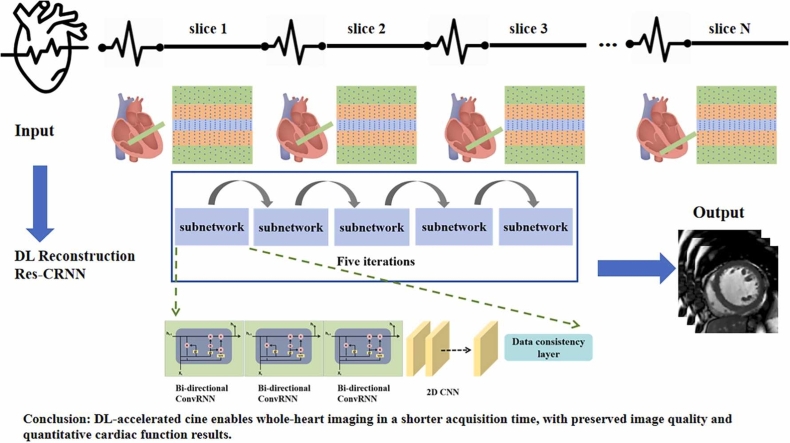 Figure 1
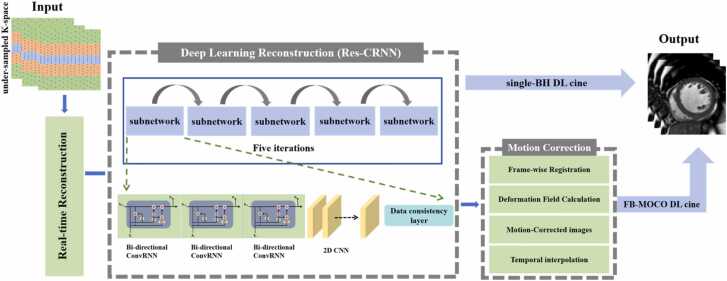 Figure 2
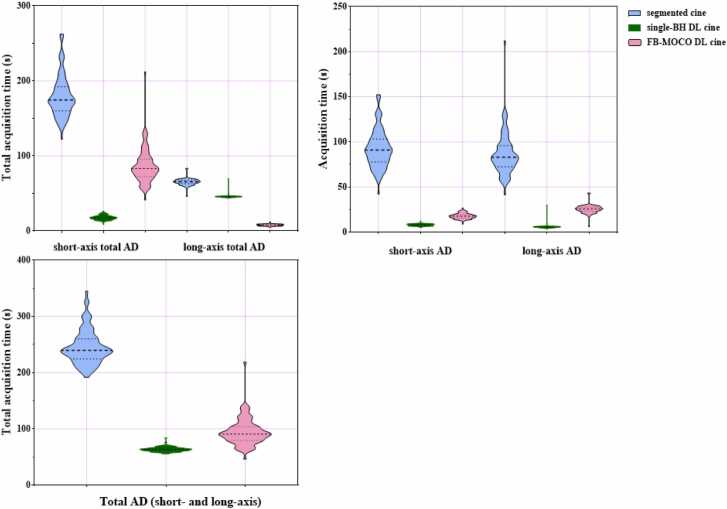 Figure 3
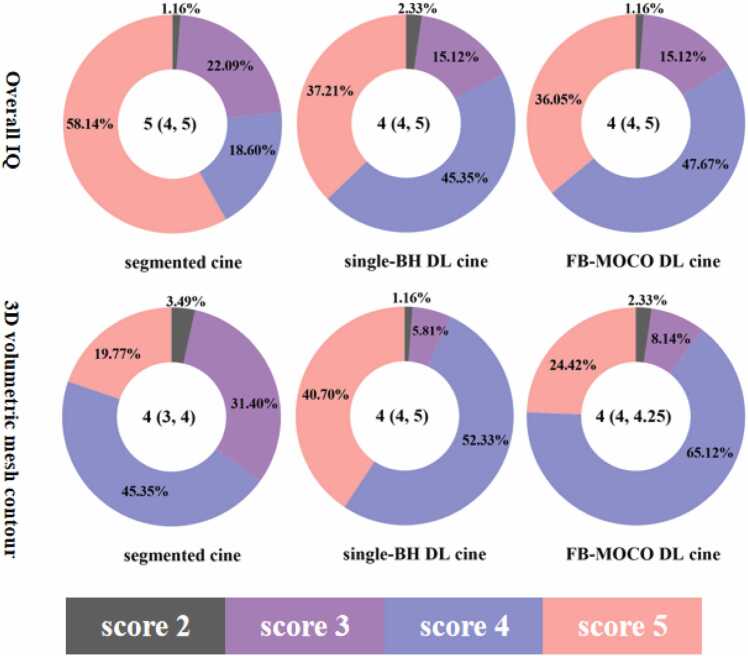 Figure 4
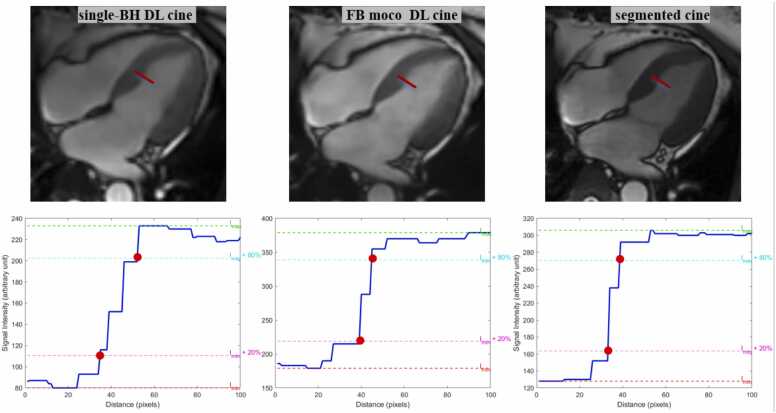 Figure 5
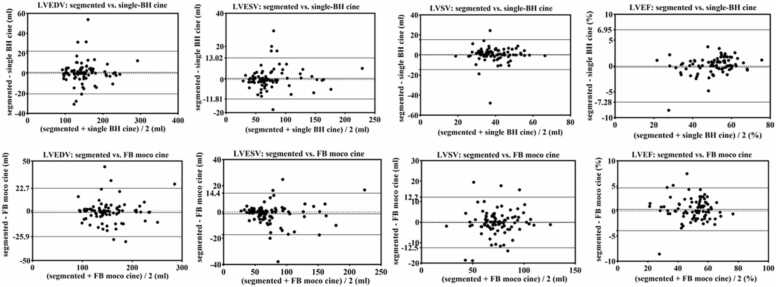 Figure 6
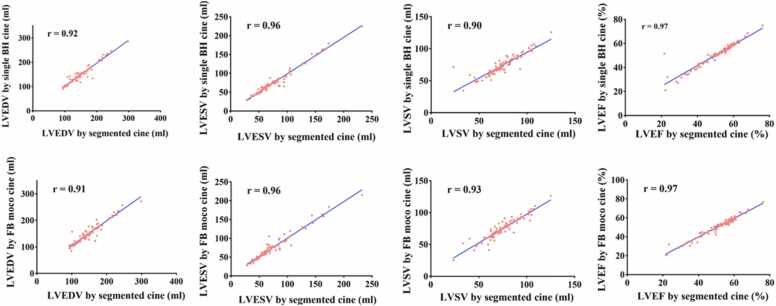 Figure 7
Peer Reviews
No public reviews on file for this paper yet. If you reviewed it on a platform where reviews are public (OpenReview, ICLR, NeurIPS, ICML), you can paste yours below so the community can read it here.
Videos
No videos yet. Explain this paper in a talk, walkthrough, or lecture? Add one.
Taxonomy
TopicsAdvanced MRI Techniques and Applications · Cardiac Imaging and Diagnostics · Cardiac electrophysiology and arrhythmias