Efficacy and safety of a modified sound therapy for patients with subjective tinnitus (MOST): a multicentre, double-blind, randomised controlled trial
Dongmei Tang, Dantong Gu, Jiamin Gong, Guangyu Liu, Lei Zhou, Aqiang Dai, Yan Huo, Pengfei Guan, Jianning Zhang, Xinsheng Huang, Yunfeng Wang, Shan Sun, Huawei Li

TL;DR
A study tested sound therapies for tinnitus and found that a personalized sound therapy showed the most improvement in tinnitus severity over nine months.
Contribution
The study introduces a modified digital frequency-customised relieving sound therapy as a promising treatment for chronic tinnitus.
Findings
Digital frequency-customised relieving sound (DFCRS) showed superior efficacy compared to unmodified music.
Tinnitus severity significantly decreased over time in all groups, with effects sustained posttreatment.
Only one participant achieved complete remission, highlighting the need for further refinement of treatment methods.
Abstract
Tinnitus is a common and often debilitating auditory condition with limited treatment options. While sound therapy is widely used, robust evidence from long-term randomised trials is scarce. We aimed to evaluate the 9-month efficacy and 3-month posttreatment durability of four sound therapies for adults with chronic subjective tinnitus and identify predictors of response. In this multicentre, double-blind, randomised controlled clinical trial, participants (aged 18–80 years) with chronic subjective tinnitus from three academic hospitals in China were included. Participants were randomly 1:1:1:1 assigned to receive one of four daily 2-h interventions: unmodified music (UM), UM plus pitch-centered narrowband noise (UM + NBN), high-frequency–enhanced music (HFEM), or digital frequency-customised relieving sound (DFCRS). Primary outcome was tinnitus severity assessed by Tinnitus Handicap…
Genes, proteins, chemicals, diseases, species, mutations and cell lines named across the full text — each resolved to its canonical identifier and authoritative record.
Click any figure to enlarge with its caption.
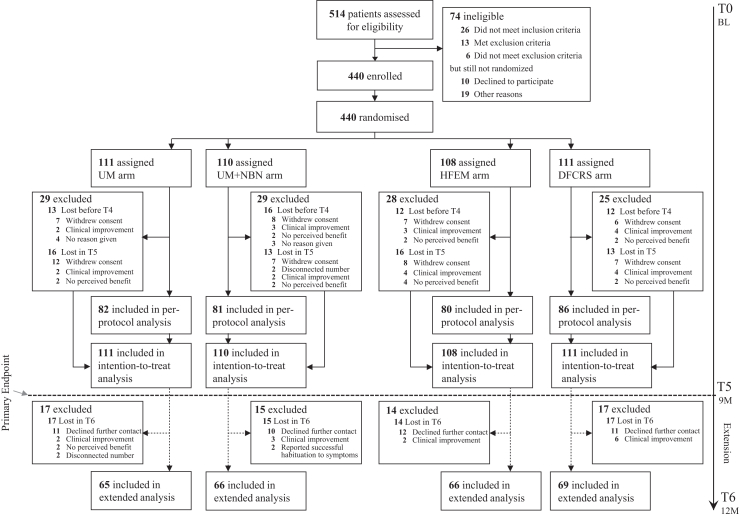 Figure 1
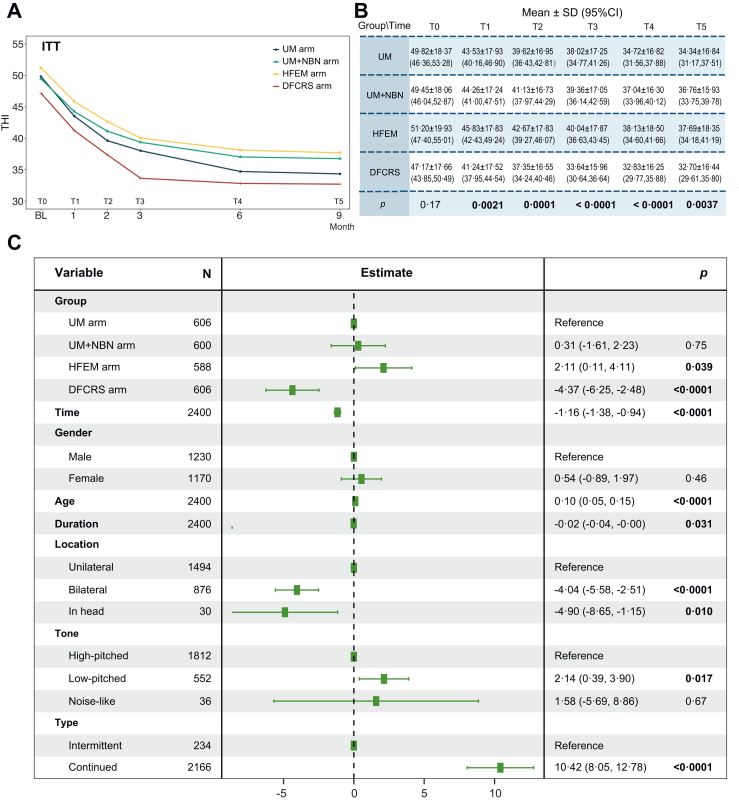 Figure 2
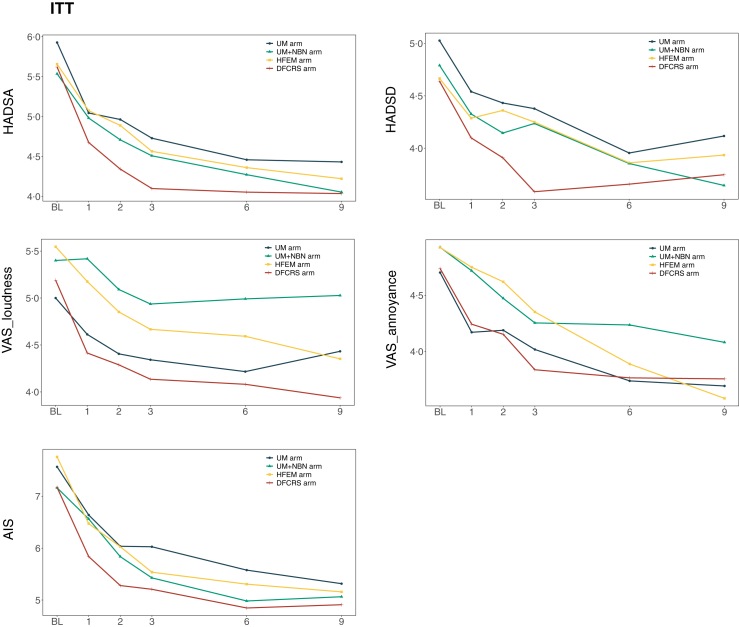 Figure 3
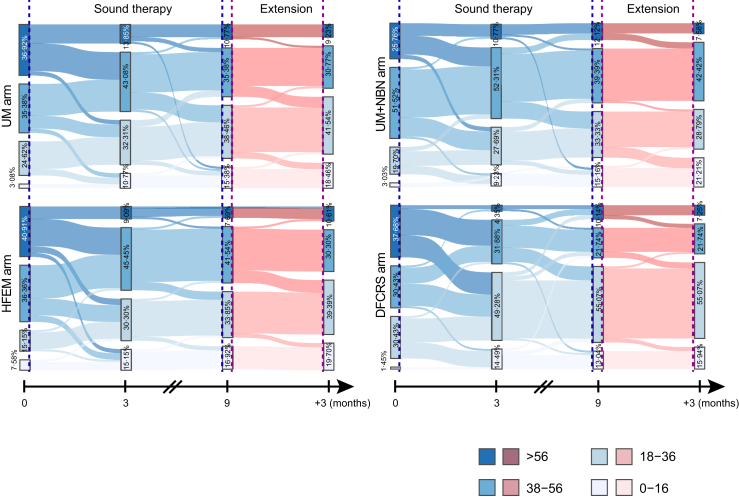 Figure 4
Peer Reviews
No public reviews on file for this paper yet. If you reviewed it on a platform where reviews are public (OpenReview, ICLR, NeurIPS, ICML), you can paste yours below so the community can read it here.
Videos
No videos yet. Explain this paper in a talk, walkthrough, or lecture? Add one.
Taxonomy
TopicsHearing, Cochlea, Tinnitus, Genetics · Hearing Loss and Rehabilitation · Noise Effects and Management