Age-specific chikungunya outbreak response immunisation strategies in Brazil: a modelling study
Hyolim Kang, Ahyoung Lim, Andrew Clark, Felipe J. Colón González, Hannah Eleanor Clapham, Jean-Paul Carrera, Jong-Hoon Kim, Megan Auzenbergs, Preethi Lakshminarayanan, Sandra López-Vergès, So Yoon Sim, Su Myat Han, Thiago Cerqueira-Silva, Timothy Endy, Zulma M. Cucunubá

TL;DR
This study models how vaccinating different age groups in Brazil could reduce chikungunya outbreaks, finding that children and working-age adults are key targets.
Contribution
The study evaluates age-specific vaccination strategies for chikungunya in Brazil using a transmission model calibrated to real data.
Findings
Vaccinating children aged 1–11 years had the lowest number needed to vaccinate (NNV) for both Ixchiq and Vimkunya vaccines.
Vaccinating adults aged 18–59 years averted the most symptomatic cases, with over 60% reduction using either vaccine.
Vaccinating adolescents aged 12–17 years followed by adults aged 18–59 years is an efficient strategy under current vaccine licensure.
Abstract
Two chikungunya vaccines, Ixchiq and Vimkunya are licensed. In April 2025, Brazil is the first endemic country to license Ixchiq, but optimal age groups for vaccination remain unclear. Our aim is to model the public health impact of age-specific chikungunya outbreak response immunisation strategies in Brazil and infer broader implications for vaccine use case scenarios in outbreak prone regions. We developed an age-structured transmission dynamic model calibrated with state-level Brazilian surveillance data for 2022 and long-term average annual force of infections. We simulated outbreak response immunisation strategies targeting ages 1–11, 12–17, 18–59, and ≥60 years for Ixchiq and Vimkunya across 11 out of 27 states in Brazil. We assessed vaccine impact by symptomatic cases, deaths, and disability-adjusted life years (DALYs) averted and number needed to vaccinate (NNV) based on…
Genes, proteins, chemicals, diseases, species, mutations and cell lines named across the full text — each resolved to its canonical identifier and authoritative record.
Click any figure to enlarge with its caption.
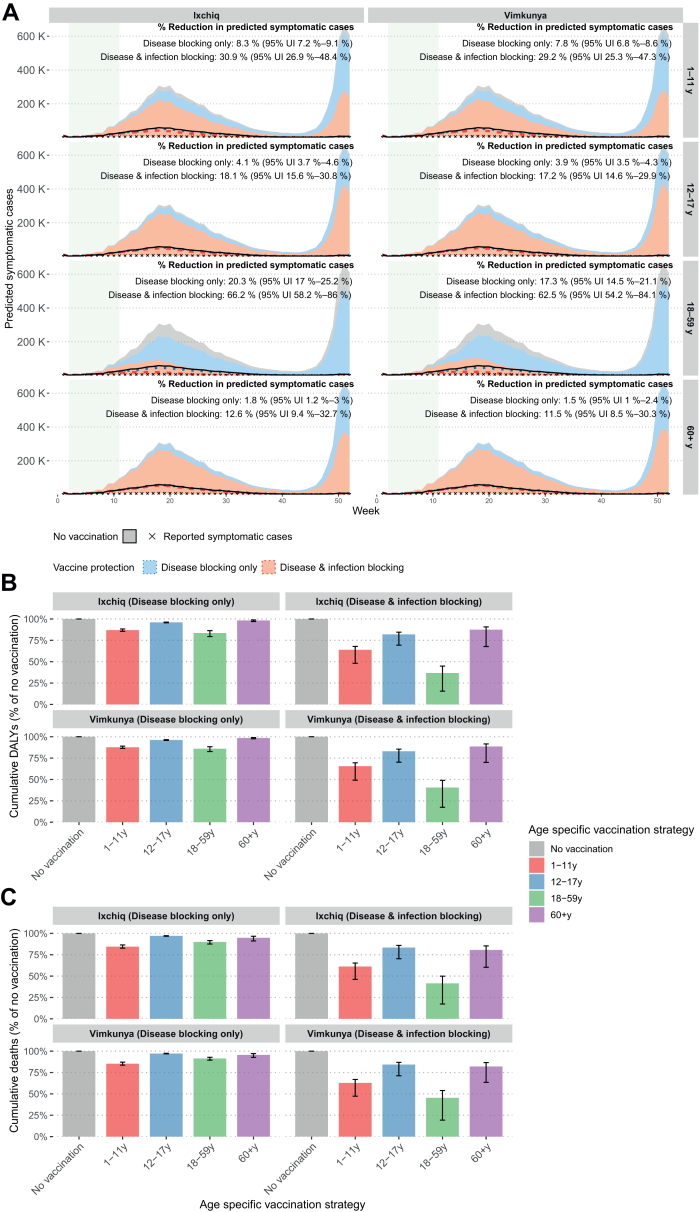 Figure 1
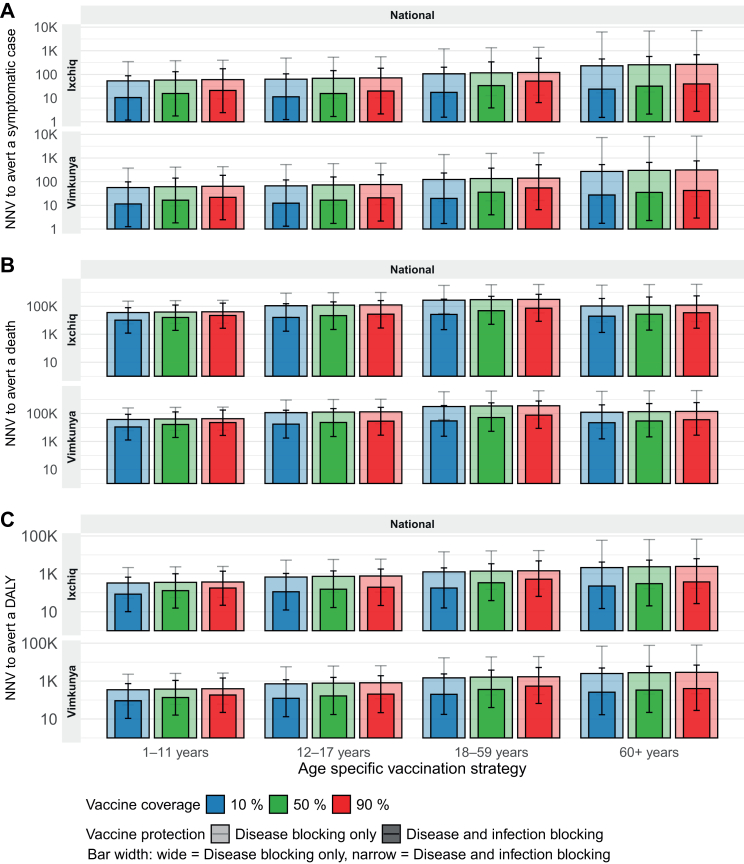 Figure 2
Peer Reviews
No public reviews on file for this paper yet. If you reviewed it on a platform where reviews are public (OpenReview, ICLR, NeurIPS, ICML), you can paste yours below so the community can read it here.
Videos
No videos yet. Explain this paper in a talk, walkthrough, or lecture? Add one.
Taxonomy
TopicsMosquito-borne diseases and control · COVID-19 epidemiological studies · Influenza Virus Research Studies