Protocol for 3D direct reprogramming of human glia into dopaminergic neurons with gene expression and immunocytochemistry validation
Jessica Giacomoni, Kerstin Laurin, Malin Parmar, Mette Habekost

TL;DR
This paper presents a detailed protocol for converting human glial cells into dopaminergic neurons using 3D reprogramming techniques validated by gene expression and immunocytochemistry.
Contribution
A novel 3D protocol for direct reprogramming of human glial progenitor cells into dopaminergic neurons with validation methods is described.
Findings
3D spheroid formation combined with lentiviral transduction enables efficient neuronal conversion.
Doxycycline-induced neuronal induction was successfully validated using gene expression and immunostaining.
The protocol provides a versatile approach for generating dopaminergic neurons from human glial cells.
Abstract
Direct reprogramming of somatic cells into neurons offers a promising strategy for studying neurological disorders and developing cell-based therapies. This protocol describes the 3D direct reprogramming of human glial progenitor cells into dopaminergic neurons. It includes spheroid formation, lentiviral transduction, neuronal induction using doxycycline, and validation via gene expression and immunocytochemistry. This versatile approach enables efficient reprogramming of human cells into dopaminergic neurons. For complete details on the use and execution of this protocol, please refer to Giacomoni et al.1 •Steps for thawing and expanding human glial progenitor cells before reprogramming•Instructions for co-seeding glial cells with lentivirus to initiate 3D spheroid formation•Guidance on applying media changes to transduced spheroids to induce neuronal conversion•Procedures for…
Genes, proteins, chemicals, diseases, species, mutations and cell lines named across the full text — each resolved to its canonical identifier and authoritative record.
Click any figure to enlarge with its caption.
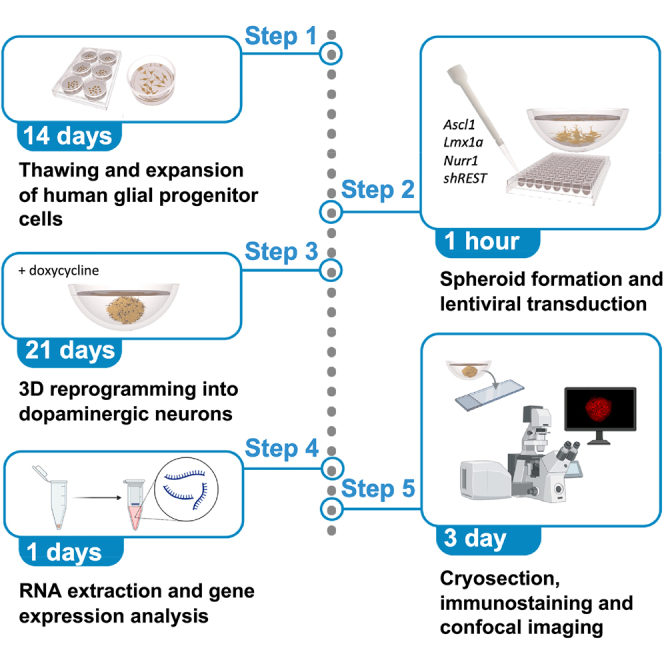 Figure 1
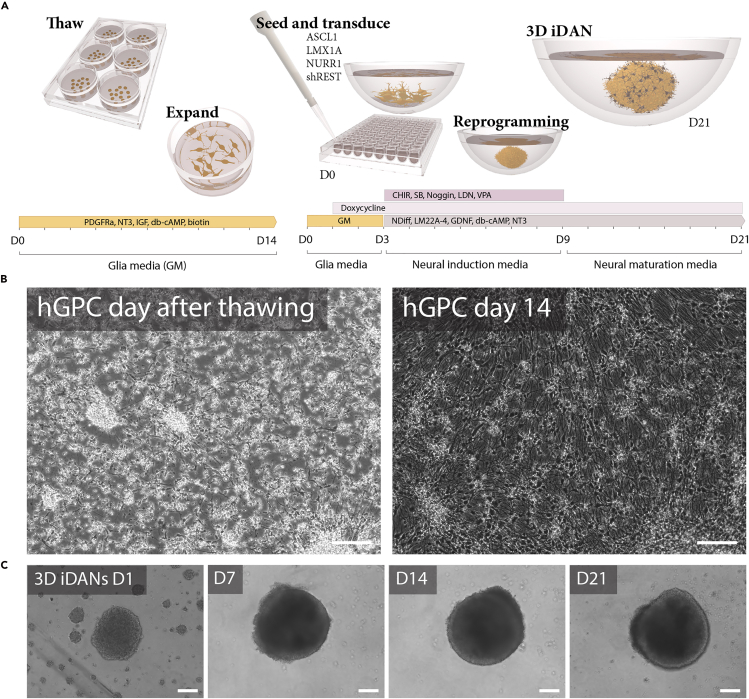 Figure 2
 Figure 3
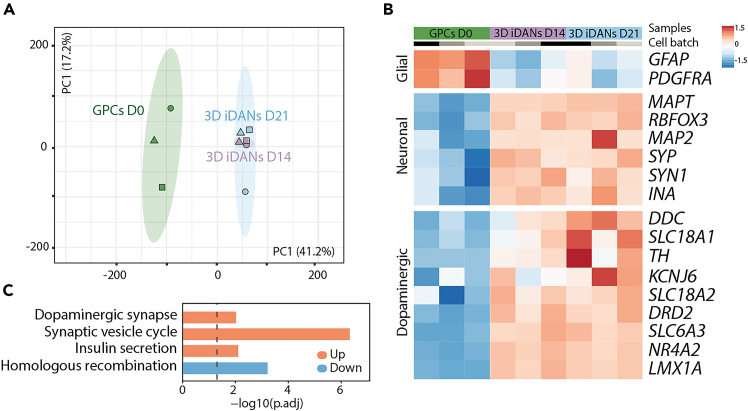 Figure 4
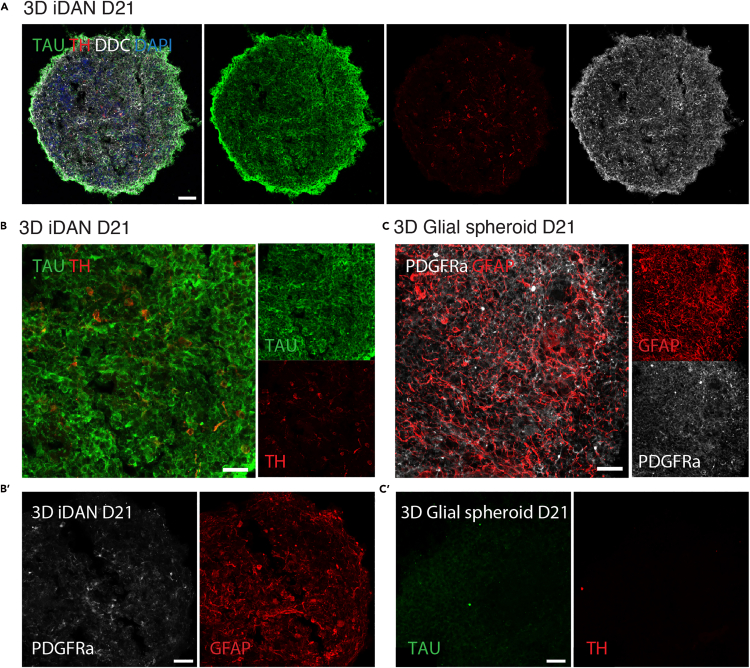 Figure 5
Peer Reviews
No public reviews on file for this paper yet. If you reviewed it on a platform where reviews are public (OpenReview, ICLR, NeurIPS, ICML), you can paste yours below so the community can read it here.
Videos
No videos yet. Explain this paper in a talk, walkthrough, or lecture? Add one.
Taxonomy
TopicsPluripotent Stem Cells Research · 3D Printing in Biomedical Research · Neuroscience and Neural Engineering