DNA Methylation Episignature as a Novel Diagnostic Tool for Diamond‐Blackfan Anemia Syndrome
Paola Quarello, Karim Karimi, Slavica Trajkova, Emanuela Garelli, Mehdi Samadieh, Emanuela Iovino, Tommaso Pippucci, Giovanni Papagni, Sandra Dalfonso, Lucia Corrado, Serena Rizzo, Adriana Carando, Jennifer Kerkhof, Jessica Rzasa, Haley McConkey, Michael Levy, Marco Zecca

TL;DR
This study introduces DNA methylation profiling as a new diagnostic tool for Diamond-Blackfan Anemia Syndrome, offering a reliable biomarker for all patients and subtypes.
Contribution
The study identifies a distinct DNA methylation episignature for Diamond-Blackfan Anemia Syndrome and its subtypes, enabling accurate diagnosis and differentiation from similar disorders.
Findings
A DNA methylation episignature was identified that differentiates DBAS from Fanconi anemia and other disorders.
A DNAm classifier was developed for the DBA6 and DBA7 subtypes, aiding in accurate diagnosis.
Methylation profiling successfully identified DBAS in molecularly uncharacterized cases and validated through genome sequencing.
Abstract
Diamond‐Blackfan Anemia Syndrome (DBAS) is a rare inherited bone marrow failure syndrome (IBMFS) characterized by impaired erythropoiesis and significant genetic heterogeneity. Diagnosis can be challenging due to clinical variability and the lack of sensitive and specific biomarkers. We investigated the evidence for a DNA methylation (DNAm) episignature in a cohort of 80 DBAS patients with causative variants in various ribosomal protein genes: DBA1 (RPS19, n = 30), DBA4 (RPS17, n = 6), DBA5 (RPL35A, n = 8), DBA6 (RPL5, n = 15), DBA7 (RPL11, n = 13), DBA10 (RPS26, n = 8). We identified a distinct and highly accurate episignature biomarker for DBAS, clearly differentiating it from both Fanconi anemia and a broad spectrum of other episignature‐positive disorders. Furthermore, we developed a specific DNAm classifier for the clinically similar DBA6 and DBA7 subtypes. Applying the DBAS…
Genes, proteins, chemicals, diseases, species, mutations and cell lines named across the full text — each resolved to its canonical identifier and authoritative record.
Click any figure to enlarge with its caption.
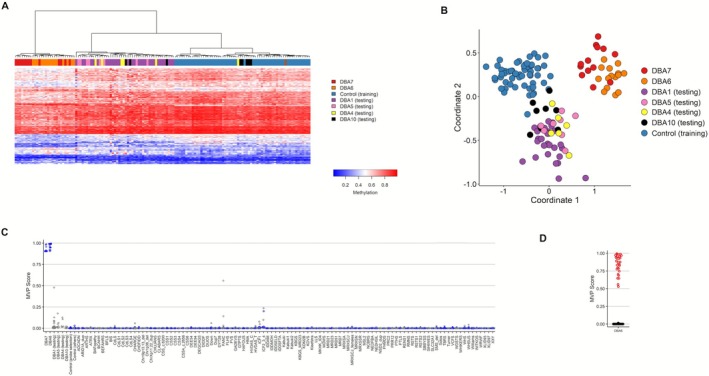 Figure 1
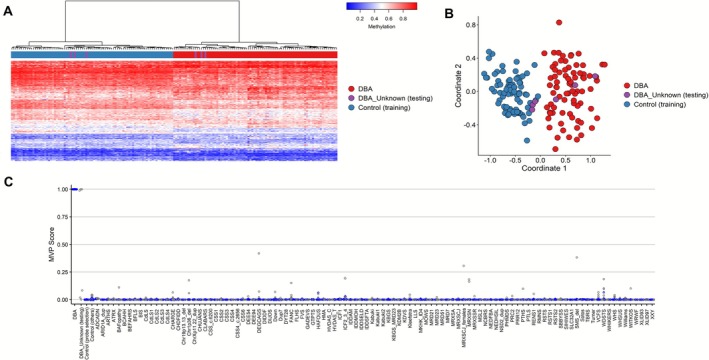 Figure 2
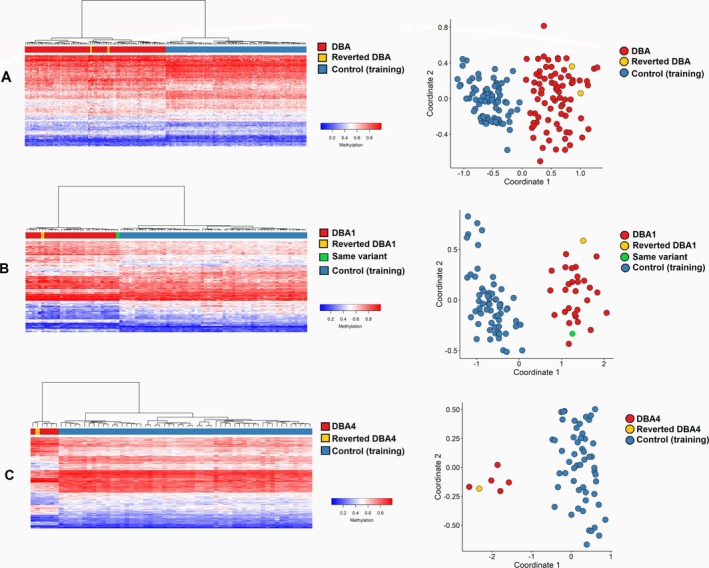 Figure 3
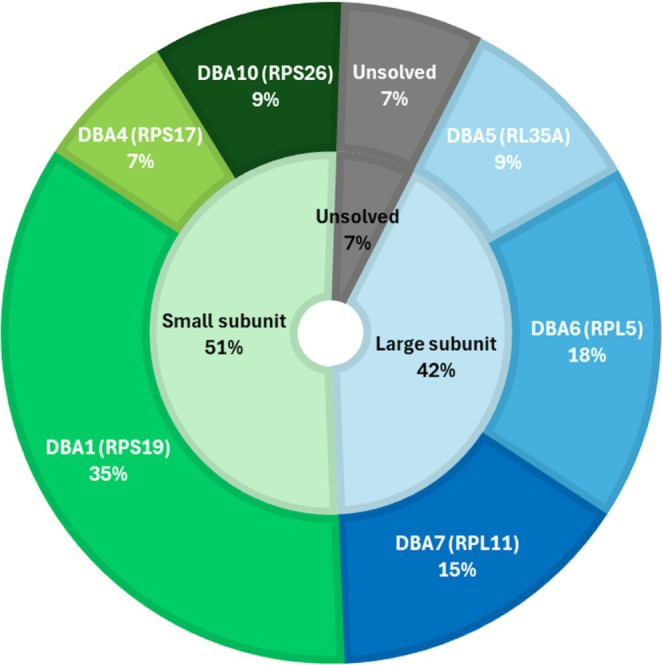 Figure 4
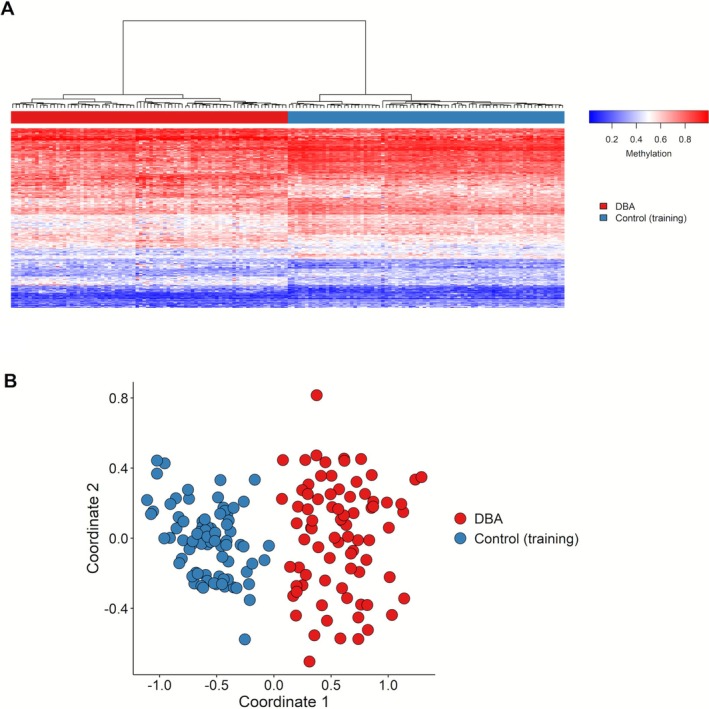 Figure 5
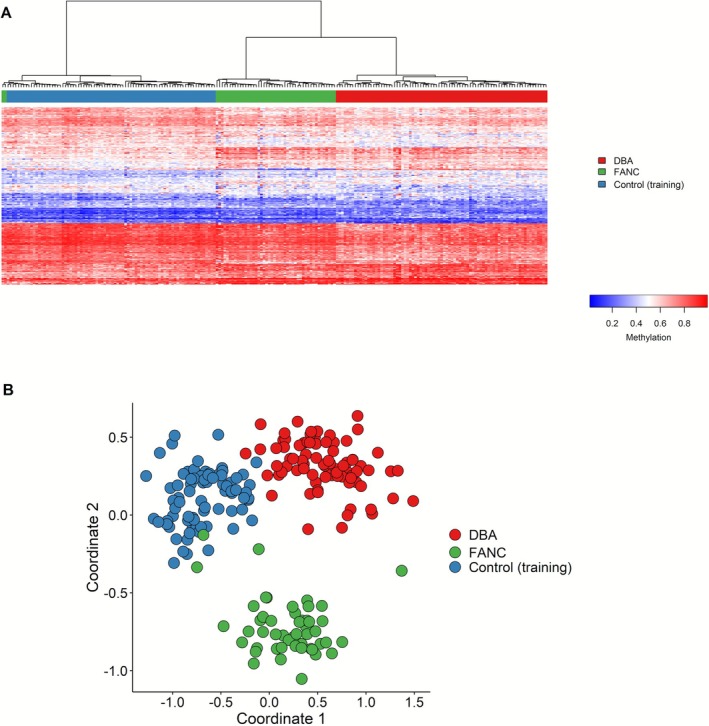 Figure 6
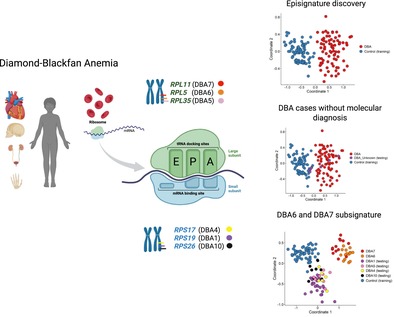 Figure 7
Peer Reviews
No public reviews on file for this paper yet. If you reviewed it on a platform where reviews are public (OpenReview, ICLR, NeurIPS, ICML), you can paste yours below so the community can read it here.
Videos
No videos yet. Explain this paper in a talk, walkthrough, or lecture? Add one.
Taxonomy
TopicsRNA modifications and cancer · Epigenetics and DNA Methylation · Cancer-related gene regulation