Node-equivariant message passing for efficient and accurate machine learning interatomic potentials
Yaolong Zhang, Hua Guo

TL;DR
A new machine learning framework for modeling atomic interactions achieves high accuracy while being much more efficient computationally.
Contribution
Introduces a node-equivariant message-passing framework that reduces computational costs while maintaining or improving accuracy.
Findings
NEMP achieves comparable or better accuracy than edge-equivariant models across various systems.
NEMP reduces memory and computational costs by 1–2 orders of magnitude.
The framework enables large-scale simulations previously inaccessible due to computational limits.
Abstract
Machine learned interatomic potentials, particularly equivariant message-passing (MP) models, have demonstrated high fidelity in representing first-principles data, revolutionizing computational studies in materials science, biophysics, and catalysis. However, these equivariant MP models still incur substantial computational and memory needs due to their expensive tensor product operations over edge space, significantly limiting their applicability in large-scale or long-time simulations. In this work, we propose a novel node-equivariant MP (NEMP) framework that performs equivariant operations between the central node and a virtual summed node encoding structure information of its neighbors. Crucially, NEMP maintains comparable or even superior accuracy across diverse test systems—including molecules, extended systems, and universal potential benchmarks—while achieving 1–2 orders of…
Genes, proteins, chemicals, diseases, species, mutations and cell lines named across the full text — each resolved to its canonical identifier and authoritative record.
Click any figure to enlarge with its caption.
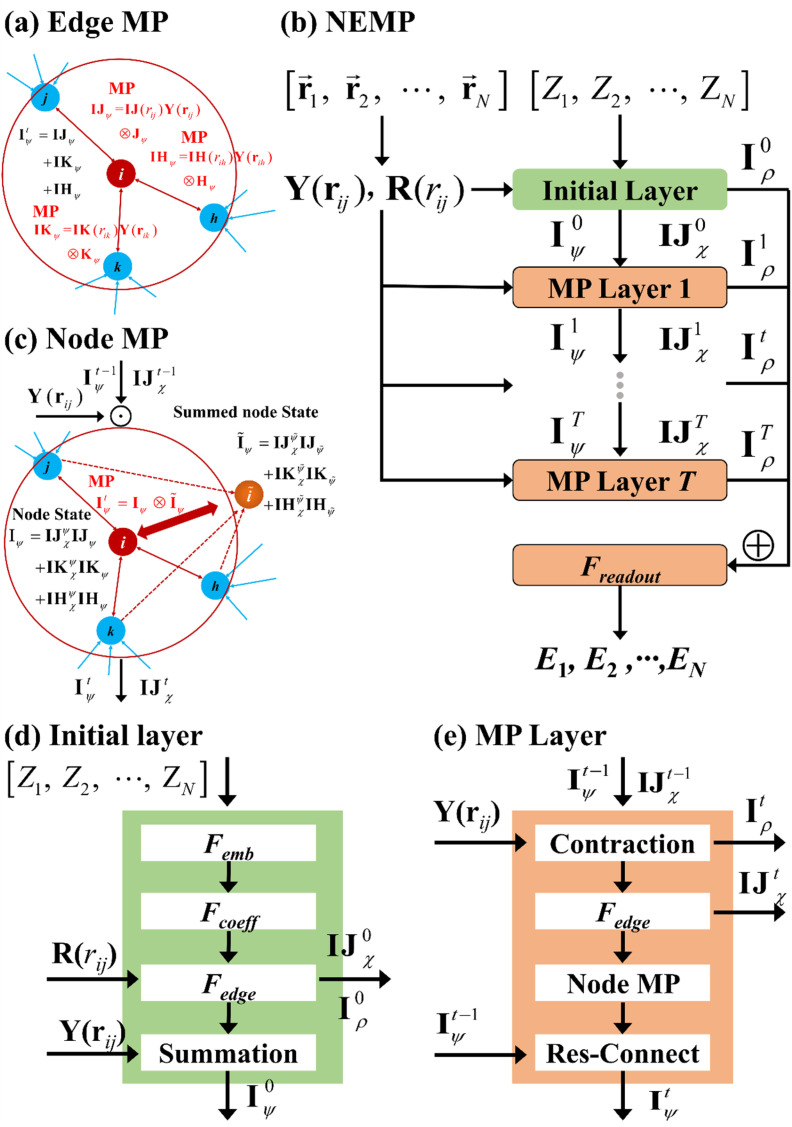 Figure 1
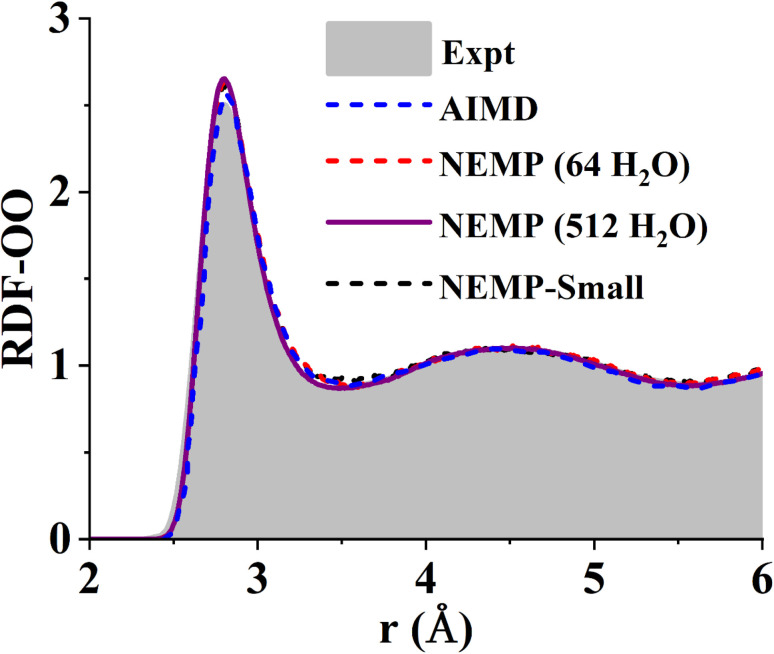 Figure 2
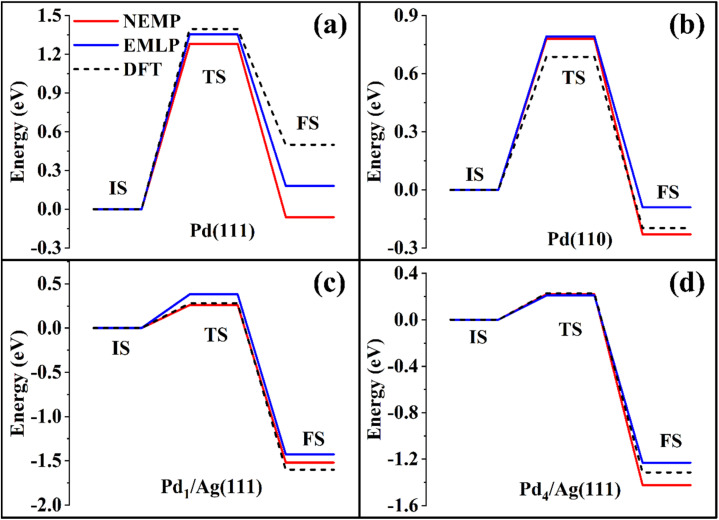 Figure 3
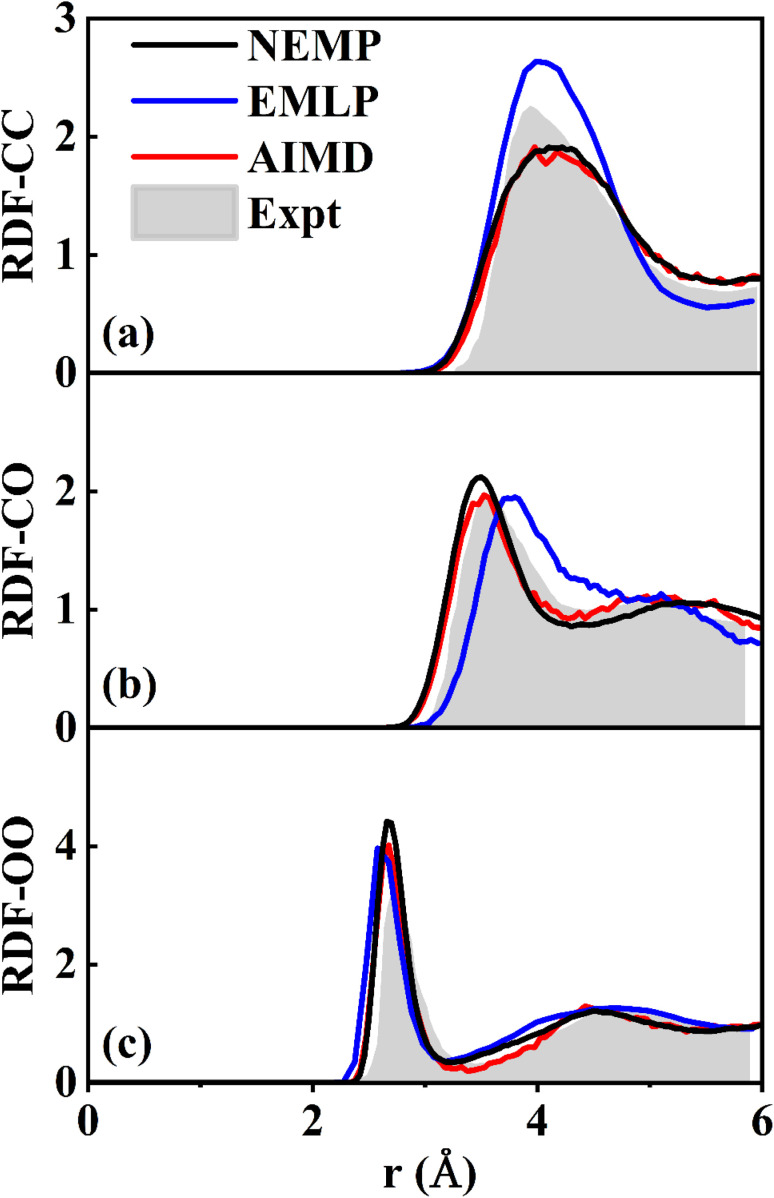 Figure 4
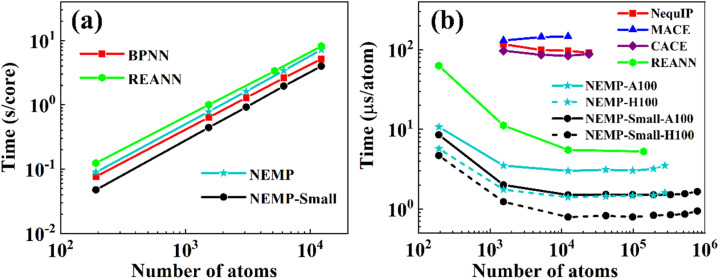 Figure 5
 Figure 6
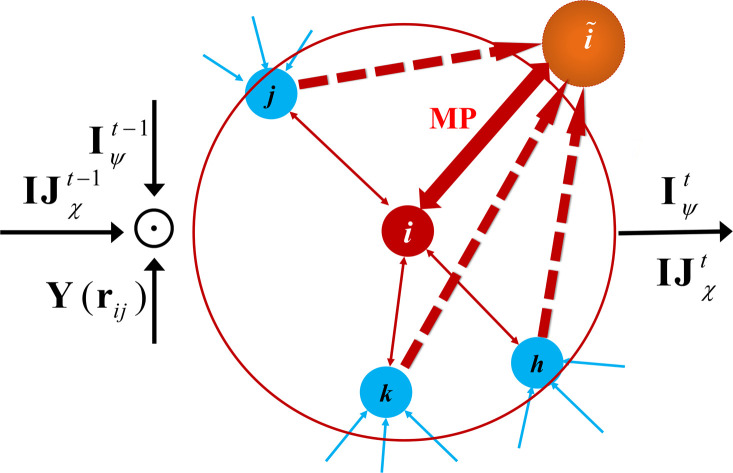 Figure 7
 Figure 8
 Figure 9
 Figure 10
 Figure 11
 Figure 12
 Figure 13
 Figure 14
 Figure 15
 Figure 16
 Figure 17
 Figure 18
 Figure 19
 Figure 20
 Figure 21
 Figure 22
 Figure 23
Peer Reviews
No public reviews on file for this paper yet. If you reviewed it on a platform where reviews are public (OpenReview, ICLR, NeurIPS, ICML), you can paste yours below so the community can read it here.
Videos
No videos yet. Explain this paper in a talk, walkthrough, or lecture? Add one.
Taxonomy
TopicsMachine Learning in Materials Science · Advanced Graph Neural Networks · Quantum many-body systems