Engineering ε-polylysine-based photodynamic therapy agents with oxygen carrying and membrane-targeting capabilities for enhanced therapy under hypoxic conditions
Lianjun Mou, Xiaoyan Lou, Chang Liu, Qian Yuan, Qingmeng Zhang, Xilei Xie, Xiaoyun Jiao, Heng Liu, Jian Zhang

TL;DR
Researchers developed a new photodynamic therapy agent that works better in low-oxygen tumor environments by combining a photosensitizer, a targeting molecule, and an oxygen-carrying compound.
Contribution
A novel method for creating oxygen-carrying, membrane-targeting photodynamic therapy nanocomplexes that function effectively under hypoxic conditions.
Findings
PLY-1/2/3 nanocomplexes efficiently generate singlet oxygen in both normoxic and hypoxic conditions.
O2-loaded PLY-1 showed enhanced PDT efficacy and higher apoptosis rates compared to non-O2-loaded versions.
The method provides a general approach for designing hypoxia-targeted photodynamic therapy composites.
Abstract
Photodynamic therapy (PDT) offers exceptional spatial and temporal precision, minimal invasiveness, and negligible side effects. However, the hypoxic microenvironment of tumors greatly limits the effectiveness of conventional photodynamic therapy (PDT) and severely reduces its therapeutic efficiency. Here, a simple and versatile method for the preparation of PDT nanocomplexes based on ε-polylysine (PLY-1/2/3) was developed. By covalently combining a photosensitiser 5,10,15,20-tetra (4-carboxyl phenyl) porphyrin (H2TCPP), a biotin-targeting moiety (d-Bio) and an O2-carrying agent, perfluorohexanoic acid (PF-HA), the nanocomplex achieved specific targeting of HeLa cell membranes and was capable of efficiently generating cytotoxic singlet oxygen (1O2) in both normoxic and hypoxic conditions. Furthermore, O2-loaded PLY-1 had enhanced PDT efficacy, and it also showed a higher degree of…
Genes, proteins, chemicals, diseases, species, mutations and cell lines named across the full text — each resolved to its canonical identifier and authoritative record.
Click any figure to enlarge with its caption.
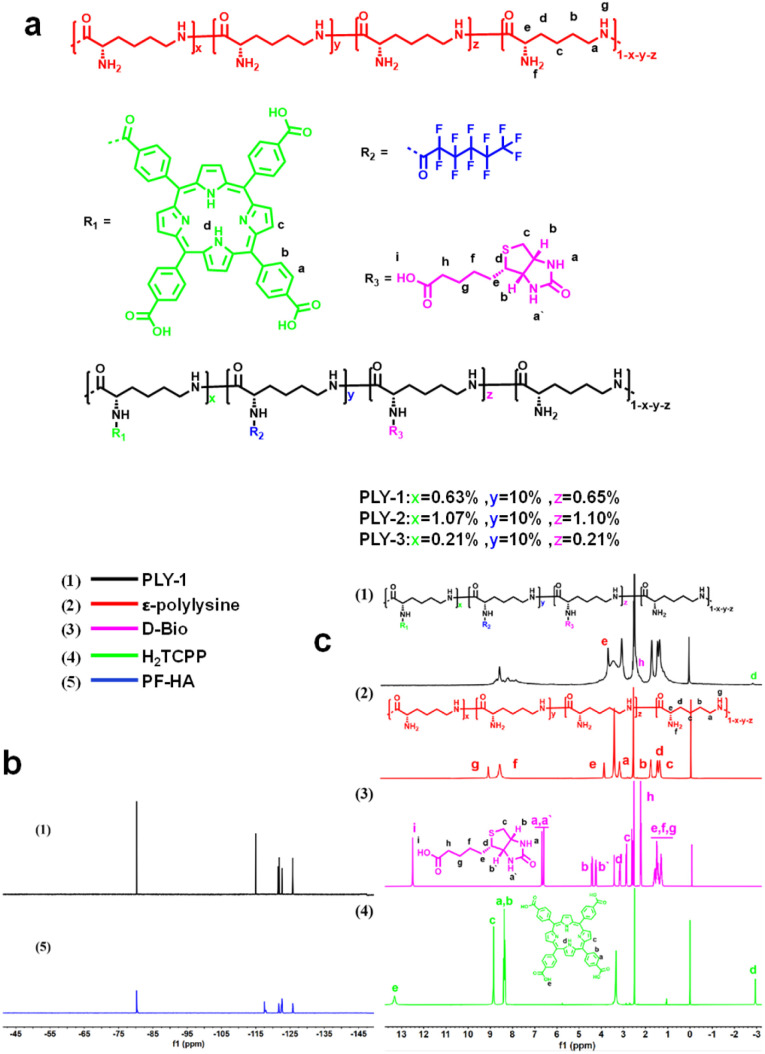 Figure 1
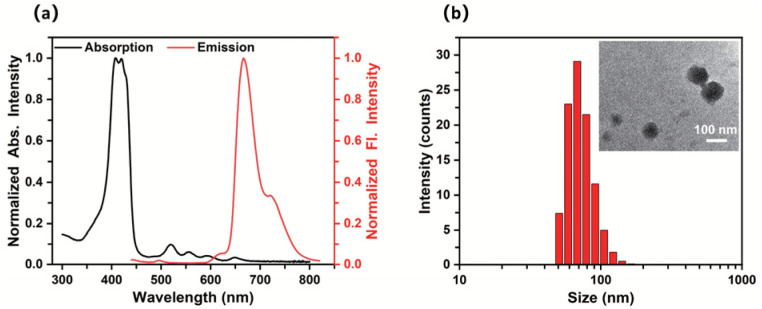 Figure 2
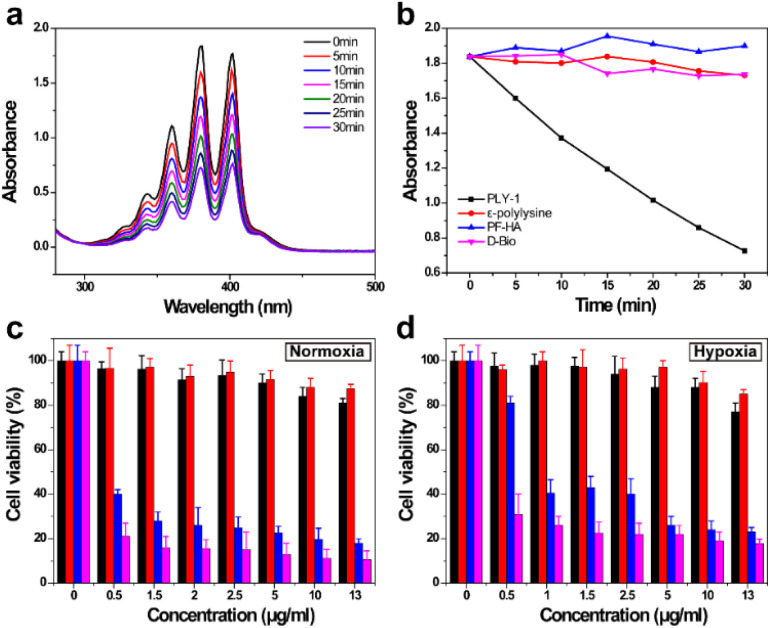 Figure 3
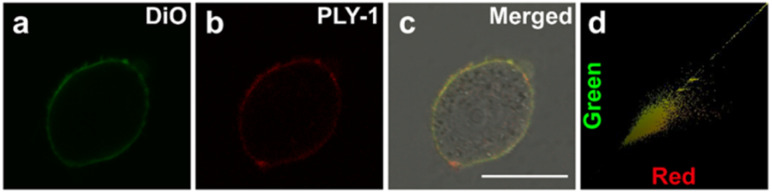 Figure 4
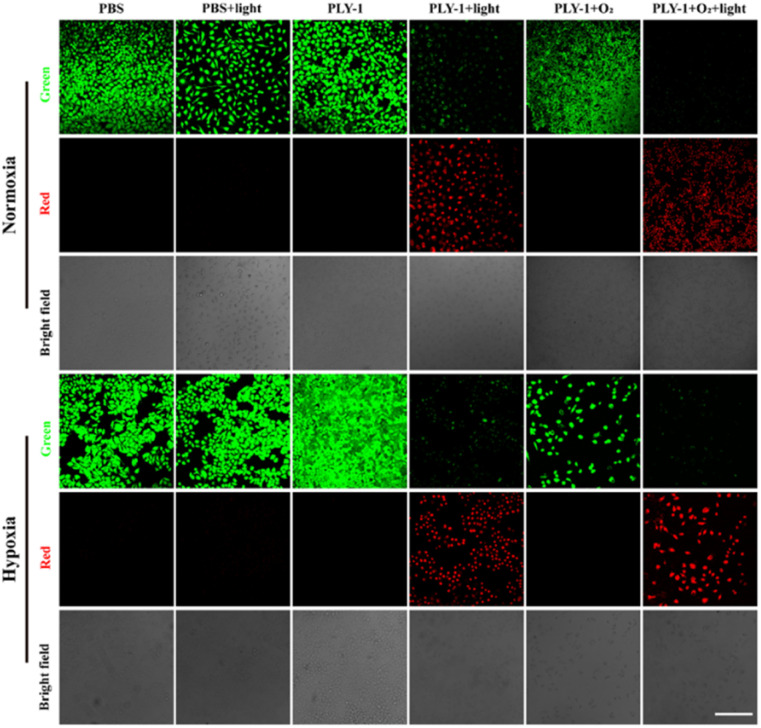 Figure 5
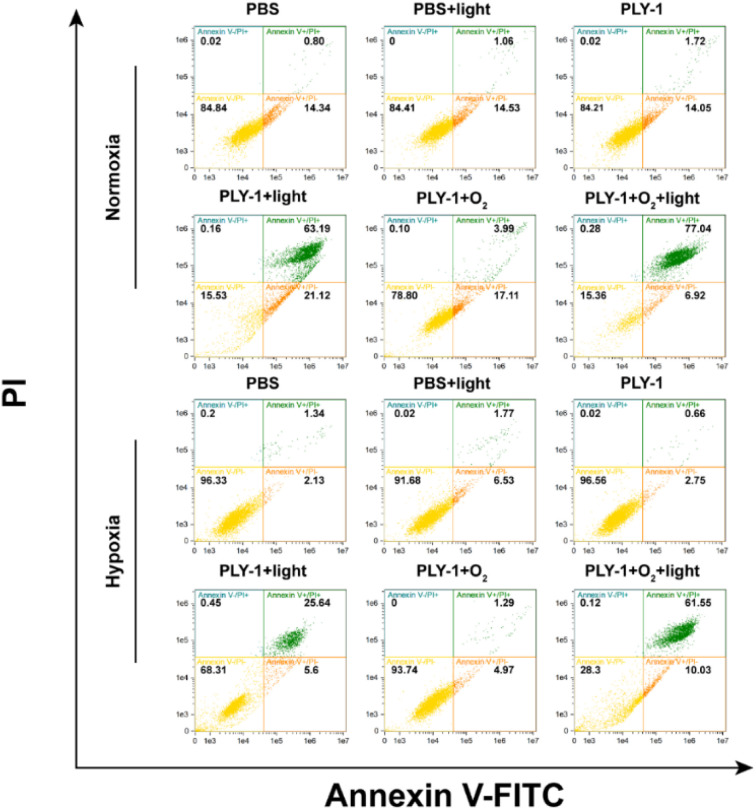 Figure 6
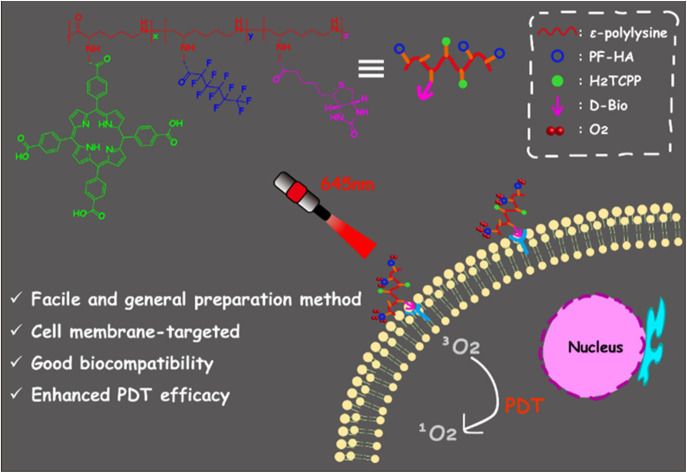 Figure 7
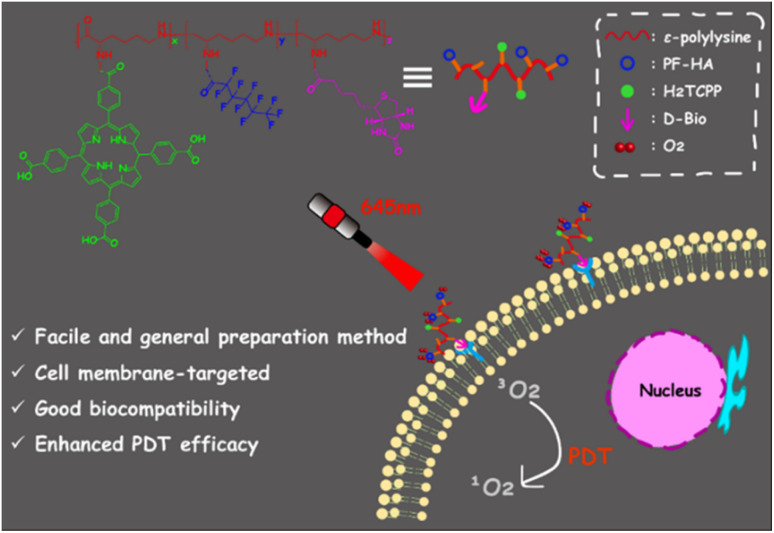 Figure 8
Peer Reviews
No public reviews on file for this paper yet. If you reviewed it on a platform where reviews are public (OpenReview, ICLR, NeurIPS, ICML), you can paste yours below so the community can read it here.
Videos
No videos yet. Explain this paper in a talk, walkthrough, or lecture? Add one.
Taxonomy
TopicsNanoplatforms for cancer theranostics · Photodynamic Therapy Research Studies · Cancer, Hypoxia, and Metabolism