Magnetic dipole imaging of magnetite nanoparticles in brain tissue
Leon Kaub, Stuart A. Gilder, Roger R. Fu, Barbara A. Maher, Gabriel Maxemin, Aaron T. Kuan, Andreas Büttner, Stefan Milz, Christoph Schmitz

TL;DR
Researchers used quantum sensing to directly detect and characterize magnetite nanoparticles in brain tissue for the first time.
Contribution
The study introduces quantum diamond microscopy as a novel method for high-sensitivity magnetic imaging of brain magnetite nanoparticles.
Findings
Quantum diamond microscopy detected magnetite particles as small as 50 nm in brain tissue.
The technique achieved the highest magnetic moment sensitivity for wide-field magnetic microscopy over areas >1 mm².
Detected particles ranged from 60–135 nm, aligning with previously observed magnetite sizes in brain tissue.
Abstract
The human brain contains magnetic iron oxide nanoparticles in the form of magnetite (Fe3O4); however, the origin and physiological implications of these crystals remain debated. Due to their low concentrations in brain tissue (∼1–20 ng g−1), the identification and characterization of individual magnetic particles require nanometer-scale spatial resolution over large scan volumes. In contrast to conventional electron microscopy techniques that have field of views typically on micron scales, the Quantum Diamond Microscope (QDM), based on wide-field nitrogen-vacancy center imaging, can generate magnetic field maps over areas of several square millimeters while detecting nanoscale particles. Moreover, the QDM can directly quantify the strength and direction of the particles' magnetic moments. Operating the QDM in a high-sensitivity mode, coupled with long acquisition times, enabled the…
Genes, proteins, chemicals, diseases, species, mutations and cell lines named across the full text — each resolved to its canonical identifier and authoritative record.
Click any figure to enlarge with its caption.
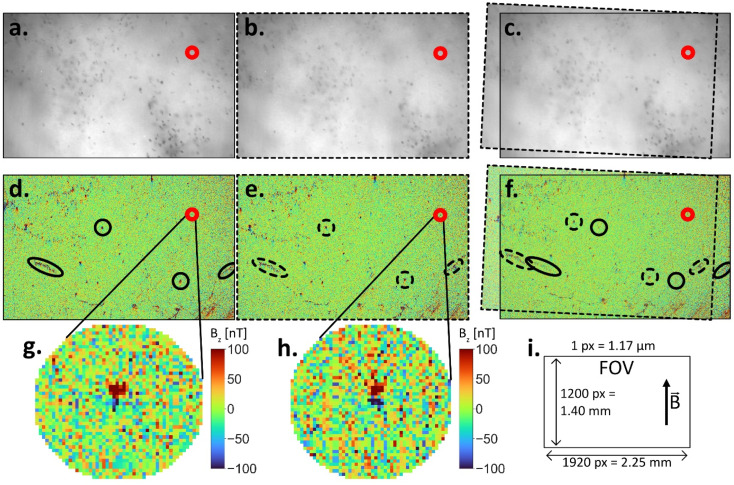 Figure 1
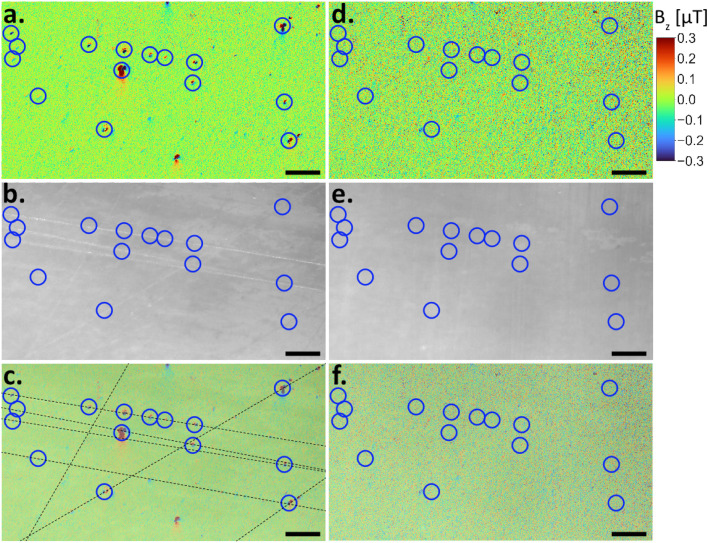 Figure 2
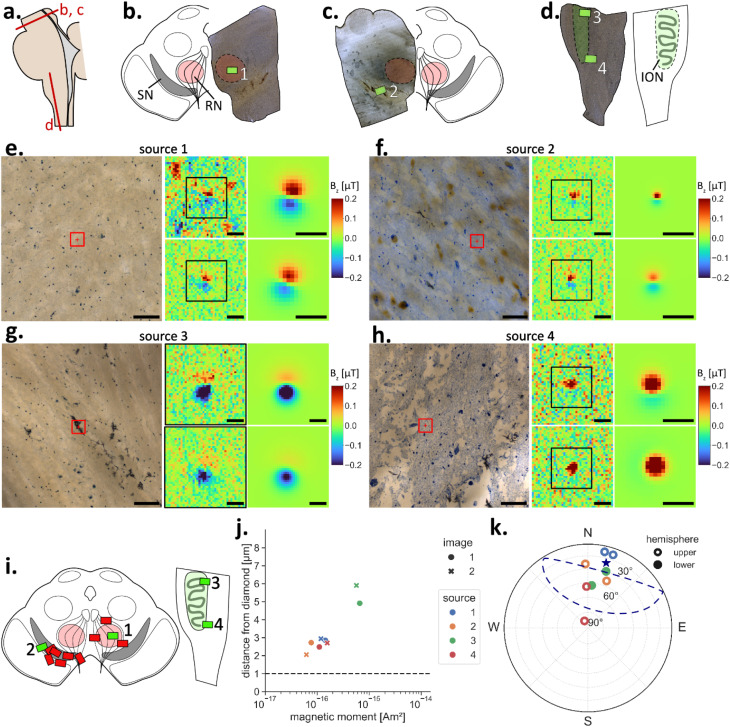 Figure 3
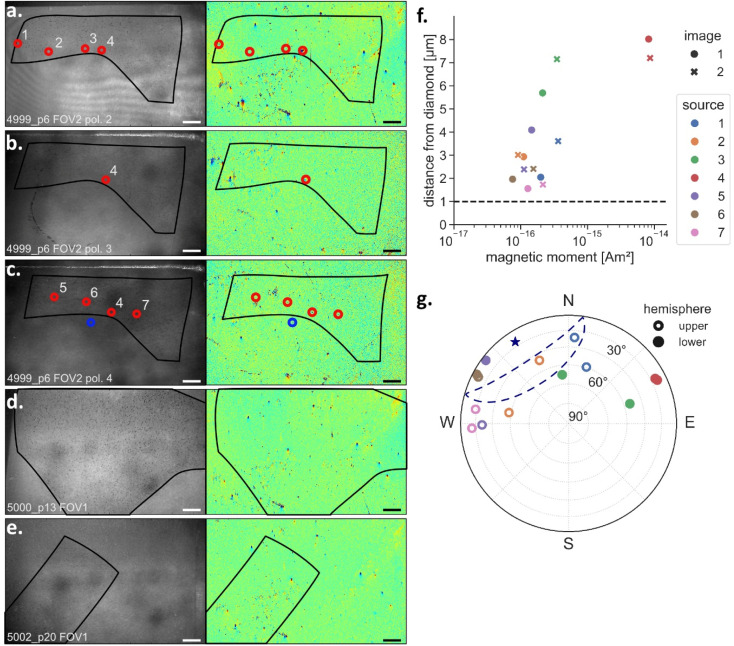 Figure 4
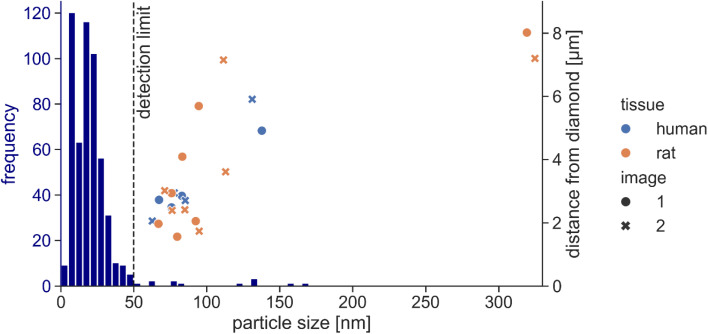 Figure 5
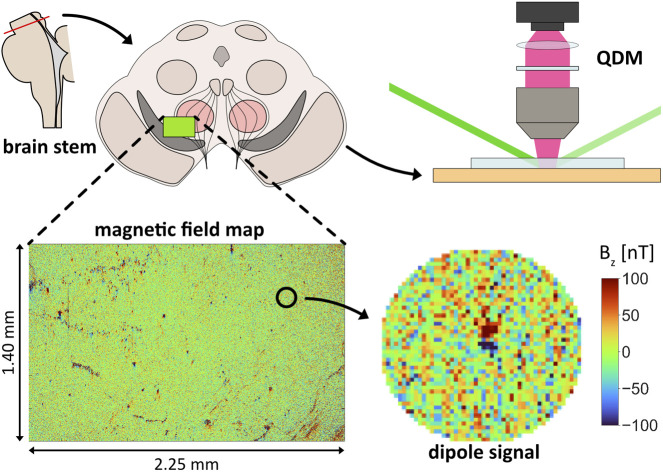 Figure 6
 Figure 7
 Figure 8
Peer Reviews
No public reviews on file for this paper yet. If you reviewed it on a platform where reviews are public (OpenReview, ICLR, NeurIPS, ICML), you can paste yours below so the community can read it here.
Videos
No videos yet. Explain this paper in a talk, walkthrough, or lecture? Add one.
Taxonomy
TopicsCharacterization and Applications of Magnetic Nanoparticles · Nanoparticle-Based Drug Delivery · Geomagnetism and Paleomagnetism Studies