Migration in unicompartmental knee arthroplasty with the Persona Partial Knee: a cohort study of 26 patients using radiostereometry with 60 months of follow-up
Jantsje H PASMA, Brechtje HESSELING, Nicole DE ESCH, Hennie VERBURG, Dieu D NIESTEN, Nina M C MATHIJSSEN

TL;DR
This study tracked the movement of knee implants in 26 patients over five years and found that the femoral implant remained stable while the tibial implant showed some movement.
Contribution
The study provides 5-year radiostereometric data on component migration in unicompartmental knee arthroplasty using the Persona Partial Knee.
Findings
Low migration of both tibial and femoral components at 5 years (<0.21 mm translation, <0.75° rotation).
Tibial components showed increased migration compared to 2 years, while femoral components remained stable.
Clinical scores (PROMs) remained stable, but Knee Society Score decreased between 2 and 5 years.
Abstract
Migration is an early sign of loosening. We investigated the migration and stability of the cemented Persona Partial Knee (PPK, Zimmer Biomet, Warsaw, IN, USA), for both the femoral and tibial component, and evaluated the clinical results at 5 years’ follow-up. In this prospective cohort study, primary cemented PPKs were implanted. Migration of the tibial and femoral component at 5 years postoperatively was calculated using model-based radiostereometric analysis (mRSA) in terms of translations and rotations. To evaluate the clinical results, a clinical examination was performed using the Knee Society Score (KSS), and PROMs (NRS pain, KOOS-PS, OKS, EQ-5D) were registered. 26 patients were included. At 5 years postoperatively, we found low migration of both the tibial and femoral component, namely a translation of < 0.21 mm and rotation of < 0.75° in all directions for both components.…
Genes, proteins, chemicals, diseases, species, mutations and cell lines named across the full text — each resolved to its canonical identifier and authoritative record.
Click any figure to enlarge with its caption.
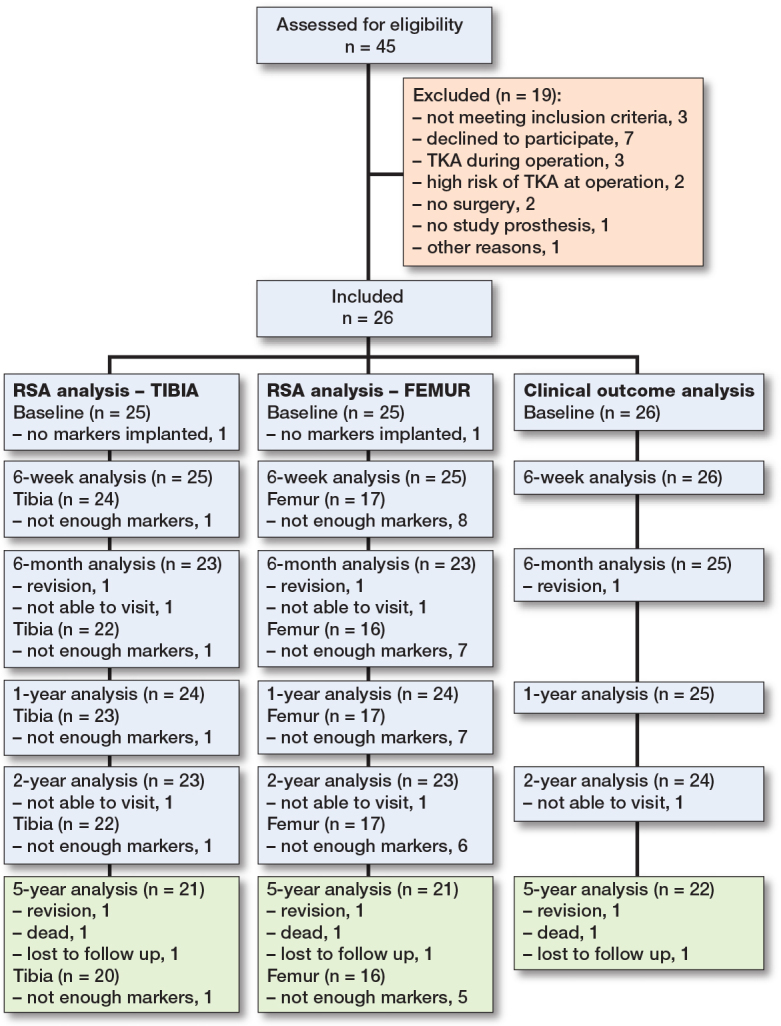 Figure 1
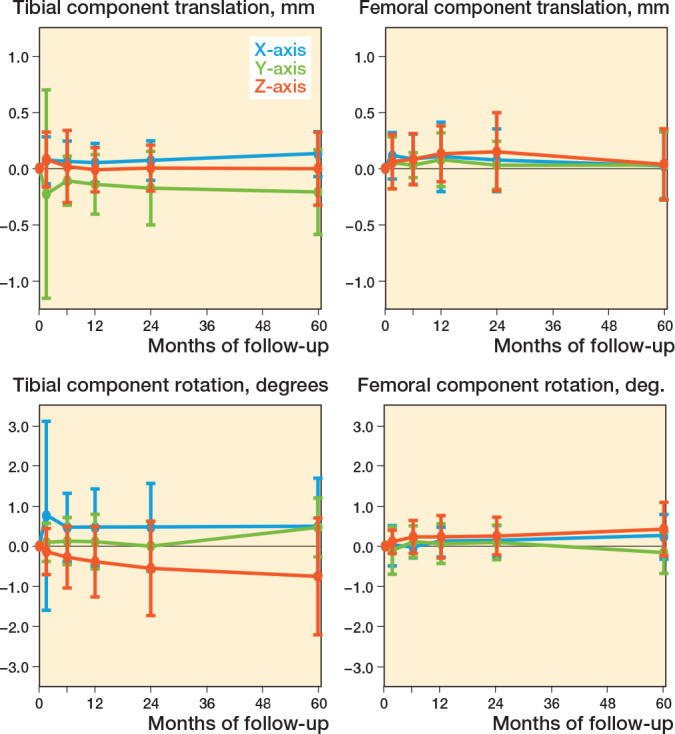 Figure 2
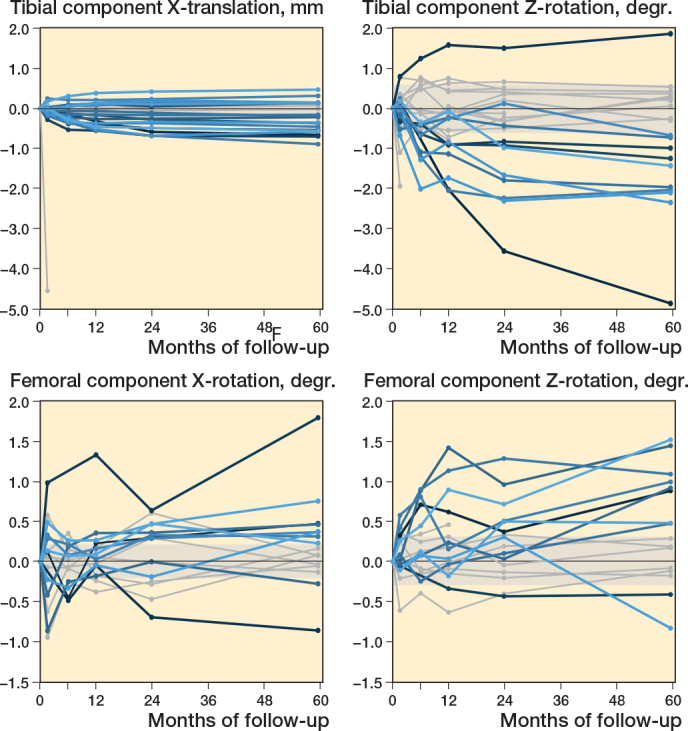 Figure 3
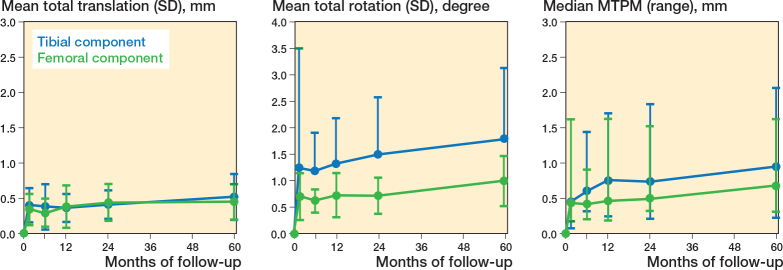 Figure 4
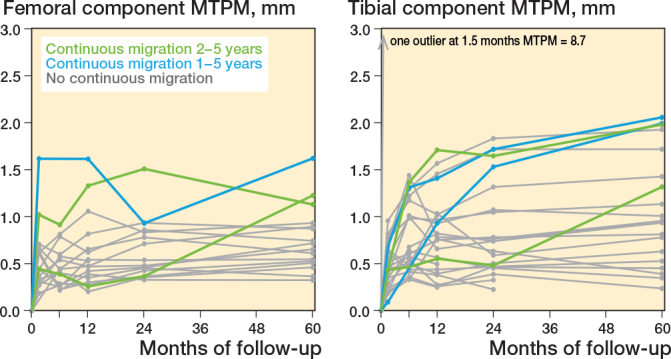 Figure 5
Peer Reviews
No public reviews on file for this paper yet. If you reviewed it on a platform where reviews are public (OpenReview, ICLR, NeurIPS, ICML), you can paste yours below so the community can read it here.
Videos
No videos yet. Explain this paper in a talk, walkthrough, or lecture? Add one.
Taxonomy
TopicsTotal Knee Arthroplasty Outcomes · Orthopaedic implants and arthroplasty · Orthopedic Infections and Treatments