Essential Roles of Heparan Sulfate Endosulfatase Sulf1 in Reward and Aversion Learning Through Distinct Dopamine D1 and D2 Receptor Pathways in Male Mice
Ken Miya, Kent Ohta, Kazuko Keino‐Masu, Takuya Okada, Seiya Mizuno, Satoru Takahashi, Tom Macpherson, Takatoshi Hikida, Masayuki Masu

TL;DR
This study shows that Sulf1, an enzyme in the brain, is important for learning about rewards and avoiding unpleasant experiences through different dopamine pathways in mice.
Contribution
The study reveals distinct roles of Sulf1 in dopamine D1 and D2 receptor pathways for reward and aversion learning in adult mice.
Findings
Sulf1 knockout mice showed impaired reward learning in the cocaine-induced CPP test and aversion learning in the IA test.
Conditional Sulf1 disruption in D1-expressing cells impaired reward learning, while disruption in D2-expressing cells impaired aversion learning.
Sulf1 is essential for proper function of NAc circuitry in reward and aversion behaviors.
Abstract
Sulf1 and Sulf2 are extracellular sulfatases that remove 6‐O‐sulfate from heparan sulfate and thereby regulate cell signaling. Previous studies have revealed that Sulf1/Sulf2 double knockout (KO) mice had defects in differentiation and axon guidance during development, but their functional roles in the adult brain remain largely unknown. We recently found that Sulf1 mRNA is highly expressed in the nucleus accumbens (NAc) shell and that Sulf1 expression is detected in both types of medium spiny neurons expressing dopamine D1 or D2 receptors. Moreover, we found that Sulf1 KO led to changes in membrane excitability and excitatory synaptic transmission in medium spiny neurons of the NAc in adult mice. These findings suggest possible roles of Sulf1 in the functions of NAc circuitry. To address this question, we performed behavioral tests using Sulf1 KO mice. We found that constitutive Sulf1…
Genes, proteins, chemicals, diseases, species, mutations and cell lines named across the full text — each resolved to its canonical identifier and authoritative record.
Click any figure to enlarge with its caption.
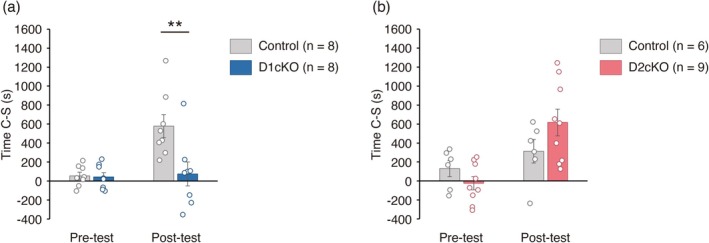 Figure 1
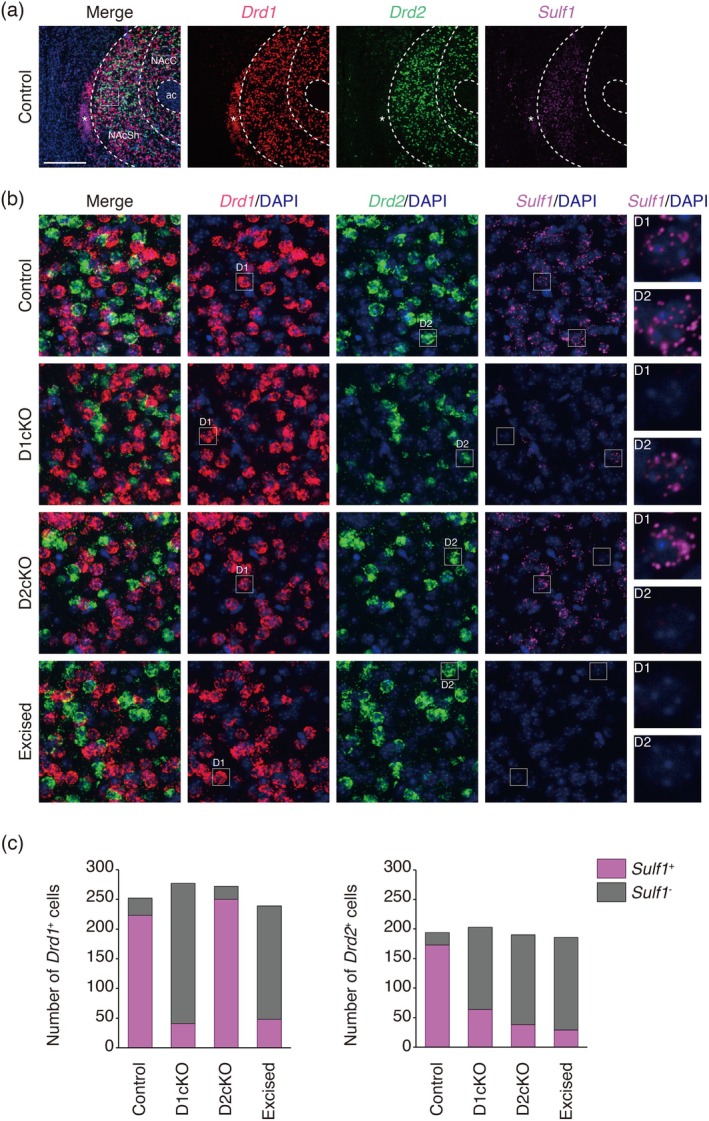 Figure 2
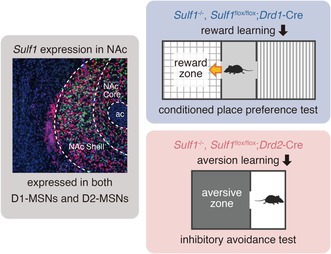 Figure 3
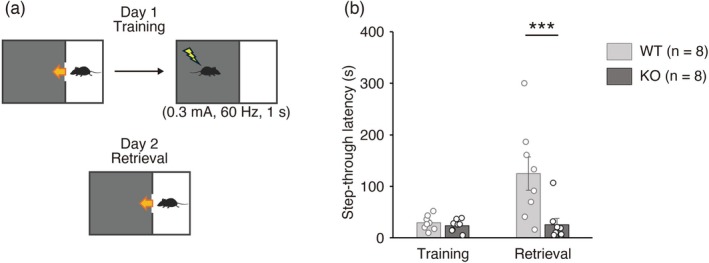 Figure 4
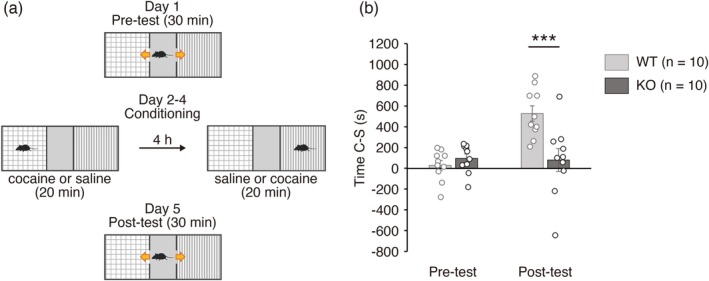 Figure 5
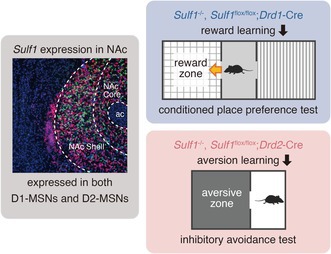 Figure 6
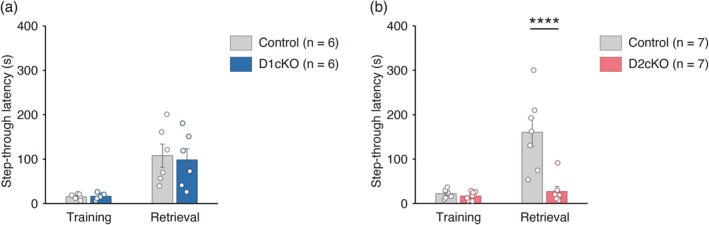 Figure 7
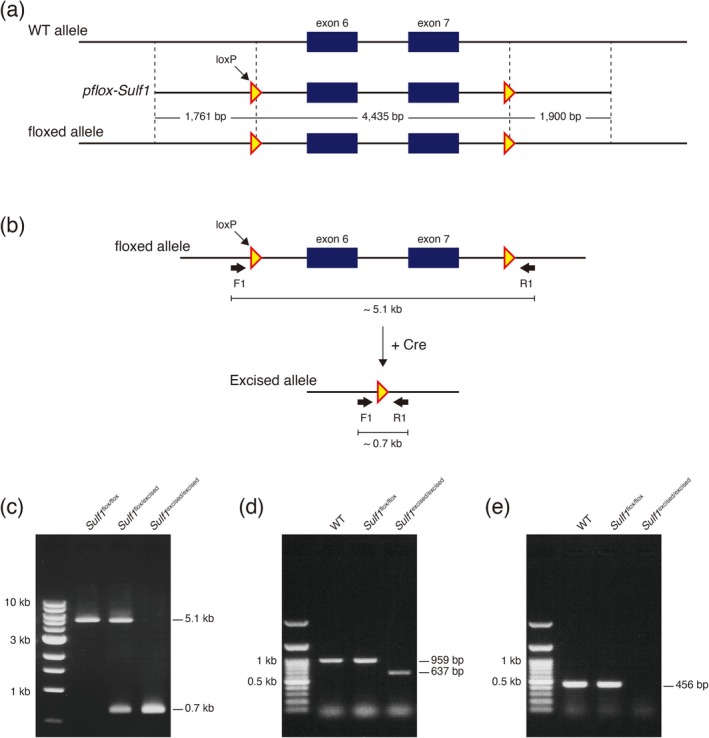 Figure 8
Peer Reviews
No public reviews on file for this paper yet. If you reviewed it on a platform where reviews are public (OpenReview, ICLR, NeurIPS, ICML), you can paste yours below so the community can read it here.
Videos
No videos yet. Explain this paper in a talk, walkthrough, or lecture? Add one.
Taxonomy
TopicsProteoglycans and glycosaminoglycans research · Protein Kinase Regulation and GTPase Signaling · Biomedical Research and Pathophysiology