A Systematic Review on Caesarean Niche and Postmenstrual Spotting Syndrome: The Scar That Speaks
Saja Saifaldeen Abdalrahman Damra, Athkar Yasir Hussien Abdalla, Sara Awad Fageer Farah, Salma Awadelkarim Elshikh Ahmed, Abdelrahman Edris Osman Ali, Roua Ahmed Abbas, Asim Ahmed

TL;DR
This review examines how caesarean scar defects are linked to postmenstrual spotting and other gynaecological issues, highlighting the need for better diagnostic standards and treatment guidelines.
Contribution
The study systematically reviews the clinical associations, diagnostic methods, and management outcomes of caesarean scar defects, emphasizing the lack of standardized approaches.
Findings
Postmenstrual spotting is the most common symptom associated with caesarean scar defects.
Hysteroscopic resection is frequently used and shows improvement in bleeding symptoms.
Laparoscopic and vaginal repairs are preferred for women with thin myometrium or fertility concerns.
Abstract
The global increase in caesarean section rates has intensified concern about long-term gynaecological outcomes. Among these, the caesarean scar defect, also known as isthmocele or niche, has emerged as a notable cause of postmenstrual spotting, abnormal uterine bleeding, and infertility. Despite its clinical relevance, diagnostic criteria and management strategies remain heterogeneous and poorly standardised. This systematic review synthesised existing evidence on the association between caesarean scar defects and postmenstrual spotting, while also describing commonly used diagnostic approaches, symptom profiles, and reported management outcomes. Comprehensive searches of major medical databases were undertaken, with records managed in EndNote X9 and findings synthesised narratively. Across the literature, postmenstrual spotting was the predominant manifestation, frequently accompanied…
Genes, proteins, chemicals, diseases, species, mutations and cell lines named across the full text — each resolved to its canonical identifier and authoritative record.
Click any figure to enlarge with its caption.
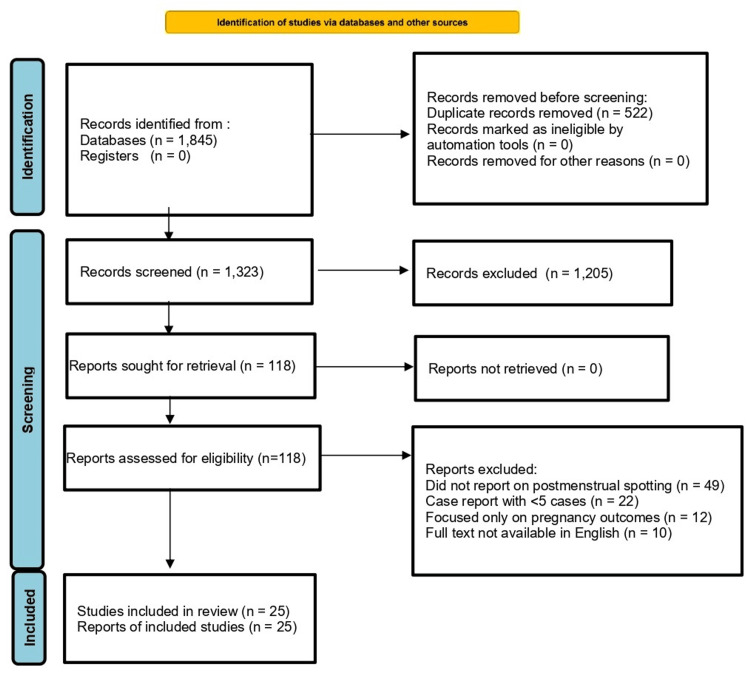 Figure 1
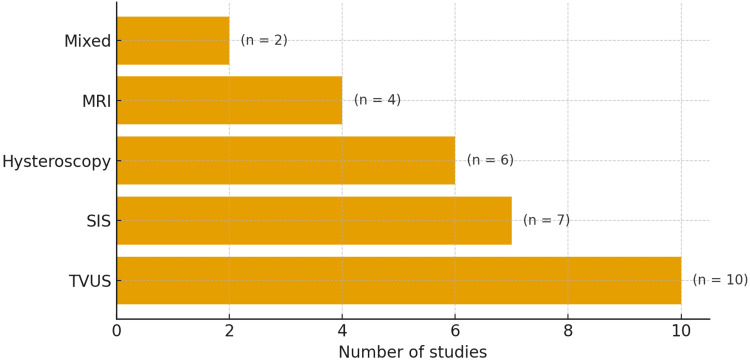 Figure 2
Peer Reviews
No public reviews on file for this paper yet. If you reviewed it on a platform where reviews are public (OpenReview, ICLR, NeurIPS, ICML), you can paste yours below so the community can read it here.
Videos
No videos yet. Explain this paper in a talk, walkthrough, or lecture? Add one.
Taxonomy
TopicsGynecological conditions and treatments · Maternal and Perinatal Health Interventions · Pelvic floor disorders treatments