Regional Variation in Skull Thickness Along a Horizontal Plane: Implications for Neuroanatomy Teaching, Neurosurgery, Radiology and Forensic Analysis
Chandan Lal Gupta, Shyamalendu Medda, Subhash Bhukya, Paramita Mukhopadhyay, Anirban Das Gupta, Biswabina Ray, Vineet Kumar Kamal

TL;DR
This study measures skull thickness across six regions on a horizontal plane to aid neuroanatomy teaching, surgery, radiology, and forensic analysis.
Contribution
A standardized six-region classification for skull thickness is proposed with precise morphometric data.
Findings
Skull thickness decreases from the anteromedial to lateral anterior regions and increases toward the posteromedial region.
The lateral anterior region is the thinnest, while the posteromedial region is the thickest.
High inter-observer reliability was confirmed with ICC exceeding 0.9 for over 80% of measurements.
Abstract
Objective To quantify skull thickness variation at a horizontal plane passing 2 cm above the highest points of the left and right supraorbital margins anteriorly and the external occipital protuberance posteriorly and to propose a standardized six-region classification for cranial margins. Methods Fifteen adult dry basilar skulls from four publicly funded medical institutions in Eastern India were studied. The skull margin at the defined plane was marked at 1-cm intervals between the anterior and posterior midlines on both sides. Thickness was measured using a digital micrometer by three independent observers, with mean values used for analysis. The margin was divided into six regions per side: anteromedial (AM), anterolateral (AL), lateral anterior (LA), lateral posterior (LP), posterolateral (PL), and posteromedial (PM). Inter-observer reliability was assessed using a two-way…
Genes, proteins, chemicals, diseases, species, mutations and cell lines named across the full text — each resolved to its canonical identifier and authoritative record.
Click any figure to enlarge with its caption.
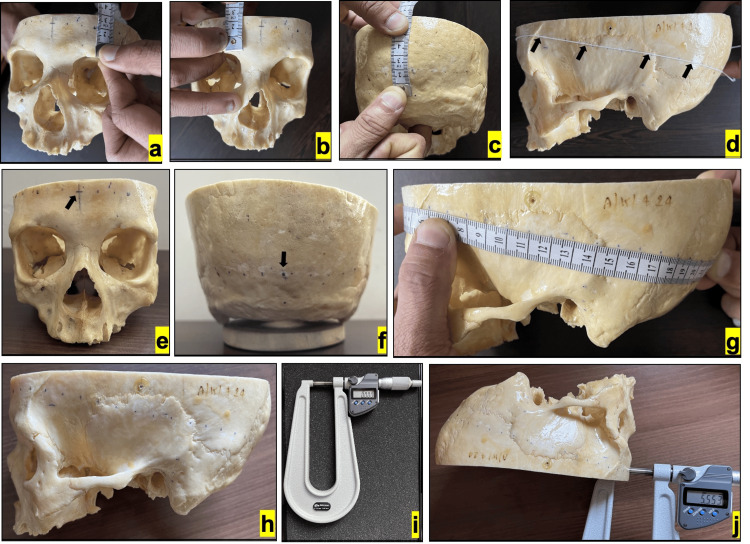 Figure 1
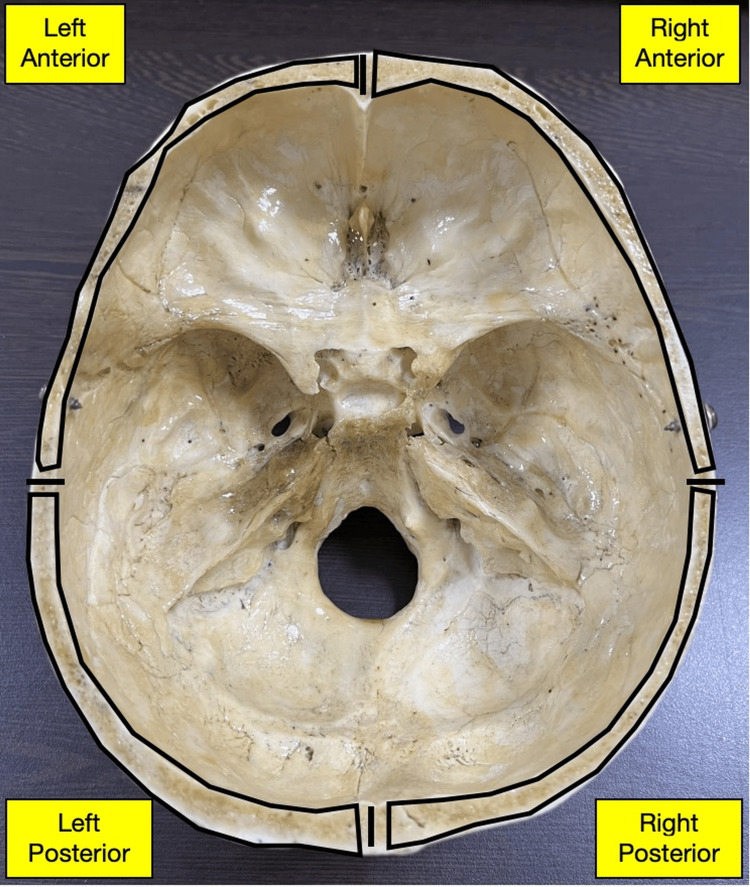 Figure 2
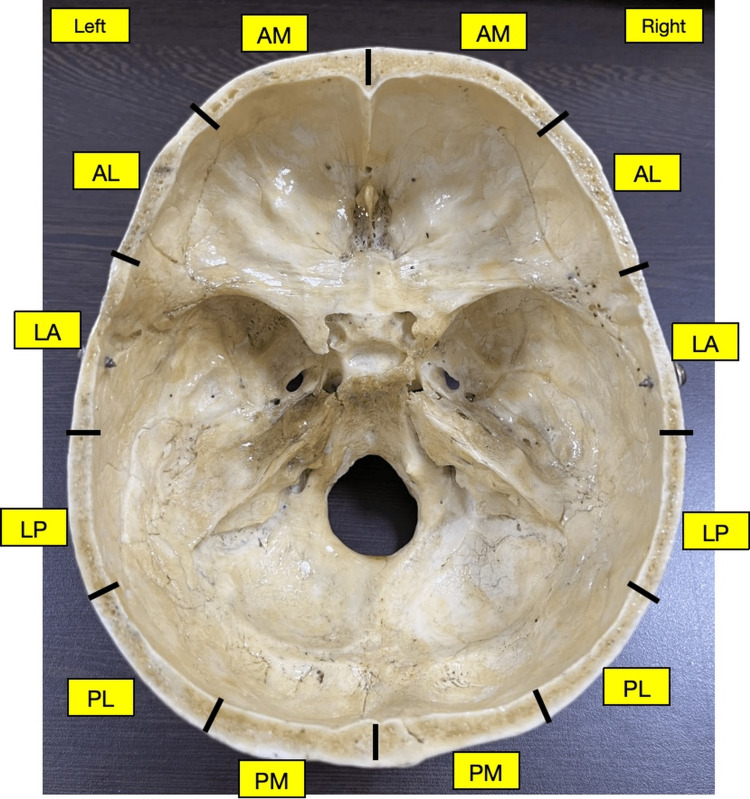 Figure 3
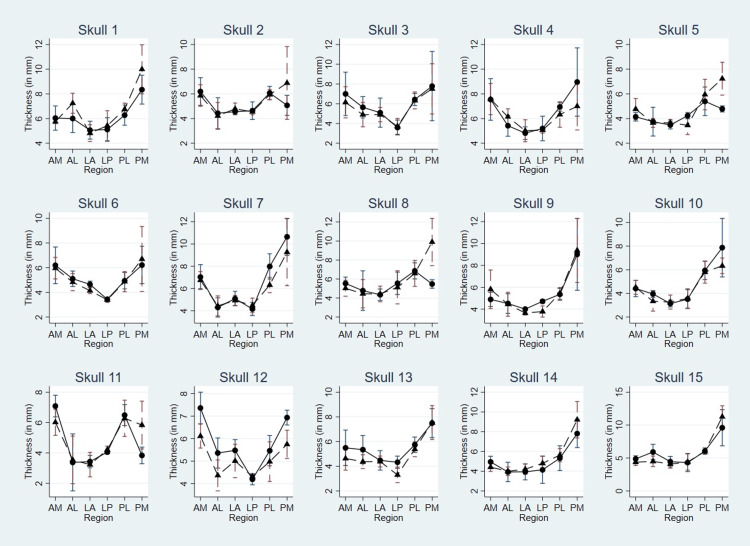 Figure 4
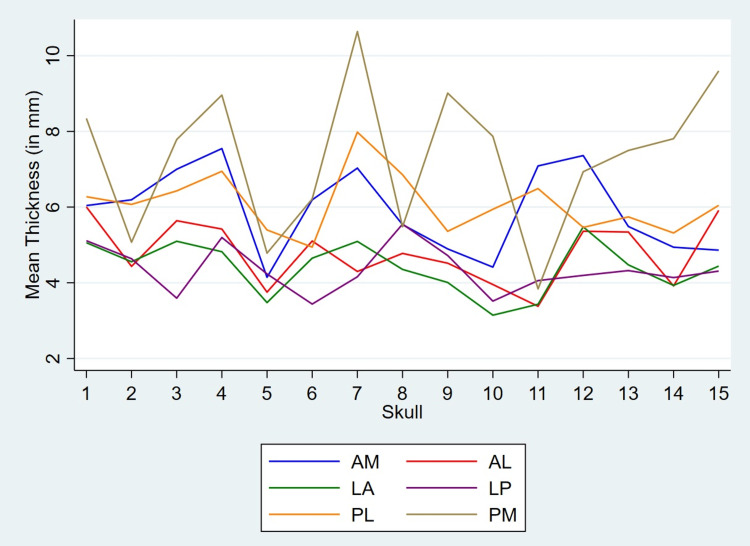 Figure 5
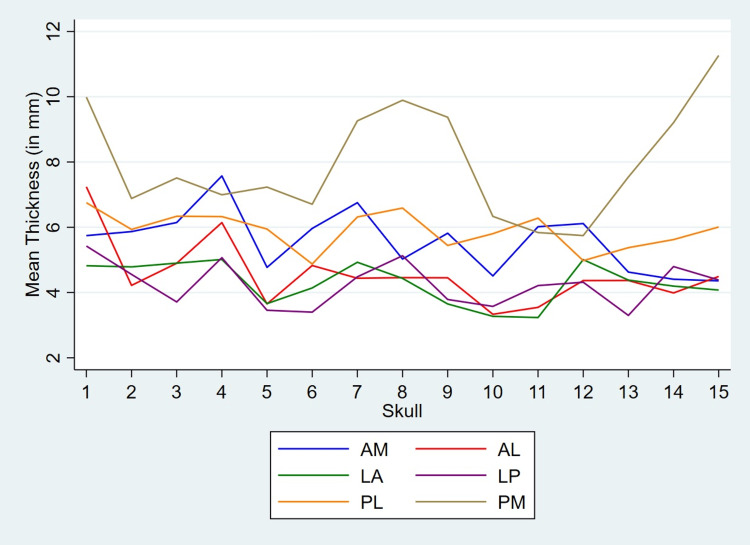 Figure 6
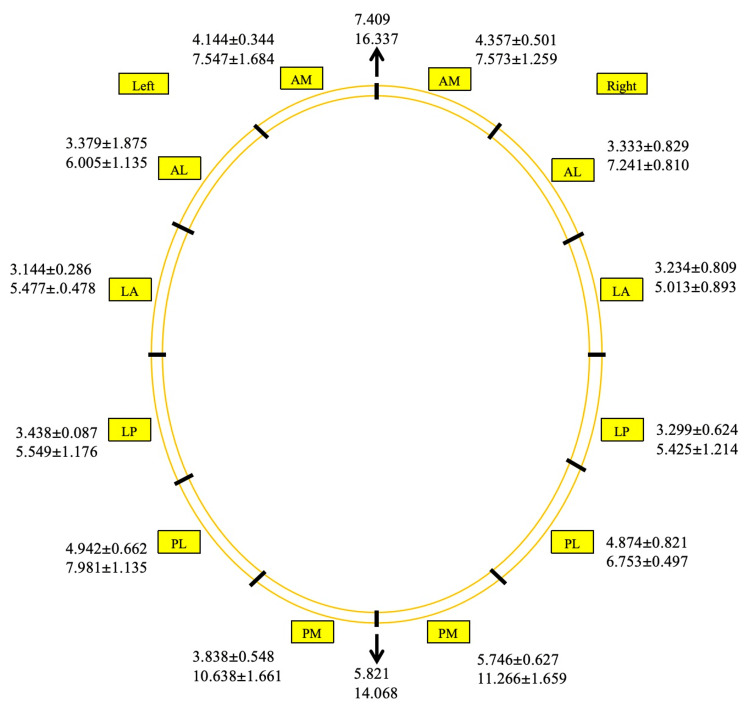 Figure 7
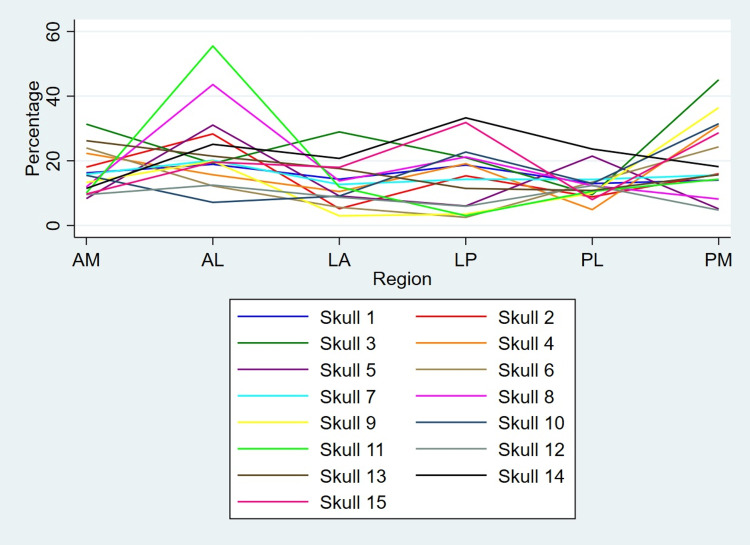 Figure 8
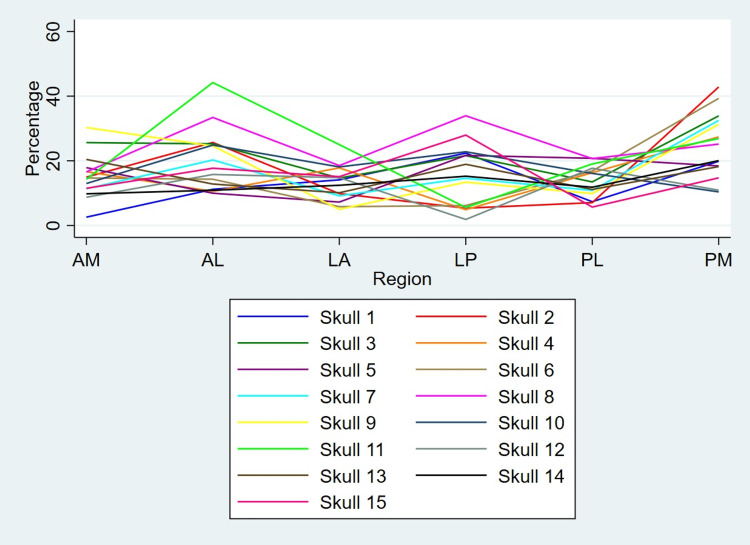 Figure 9
Peer Reviews
No public reviews on file for this paper yet. If you reviewed it on a platform where reviews are public (OpenReview, ICLR, NeurIPS, ICML), you can paste yours below so the community can read it here.
Videos
No videos yet. Explain this paper in a talk, walkthrough, or lecture? Add one.
Taxonomy
TopicsTraumatic Brain Injury and Neurovascular Disturbances · Head and Neck Surgical Oncology · Meningioma and schwannoma management