De Novo Genome Assembly of the Myanmar Puddle Frog, Phrynoglossus myanhessei (Anura: Dicroglossidae)
Katharina Geiß, Gunther Köhler, Axel Janke

TL;DR
This paper presents a new genome assembly for the Myanmar puddle frog, aiming to support future genetic and taxonomic research.
Contribution
The study provides a de novo PacBio CLR genome assembly for Phrynoglossus myanhessei, improving on prior Illumina-based data.
Findings
The genome assembly has a size of 2.28 Gbp with a scaffold N50 of 44 kbp.
BUSCO analysis shows 49% completeness, with 26.9% complete and 22.3% fragmented BUSCOs.
Approximately 43% of the genome consists of repetitive elements and 22,500 genes were predicted.
Abstract
The Myanmar puddle frog, Phrynoglossus myanhessei, is a recently described, small dicroglossid frog distributed across central and southern Myanmar, typically inhabiting areas adjacent to small stagnant water bodies. With that new species description, rudimentary genome data from 30-fold Illumina sequencing were published as a novel approach in taxonomy to routinely publish genome data for new holotypes. While the data allowed to assemble the entire mitochondrial genome, it was not possible to extract basic population genetic data. Therefore, we present a de novo PacBio CLR genome assembly of P. myanhessei, to aid population genomic, evolutionary and taxonomic studies. The assembled genome has a size of 2.28 Gbp, with a scaffold N50 of 44 kbp and largest scaffold being 270 kbp long. BUSCO analysis indicates a completeness score of 49%, with 26.9% complete and 22.3% fragmented BUSCOs.…
Genes, proteins, chemicals, diseases, species, mutations and cell lines named across the full text — each resolved to its canonical identifier and authoritative record.
Click any figure to enlarge with its caption.
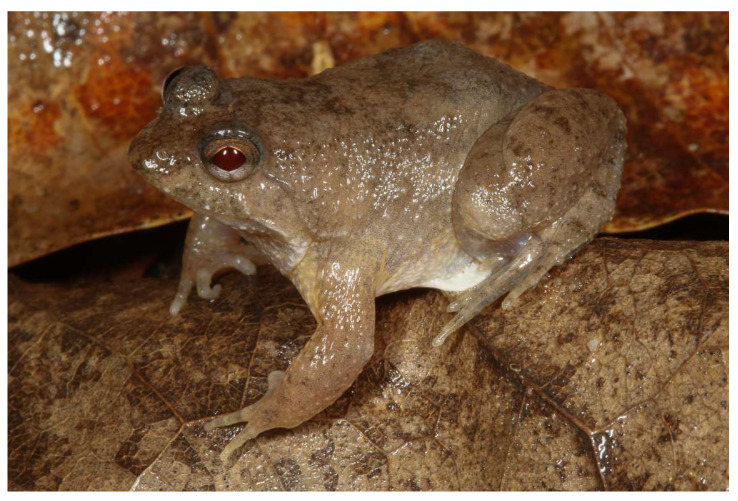 Figure 1
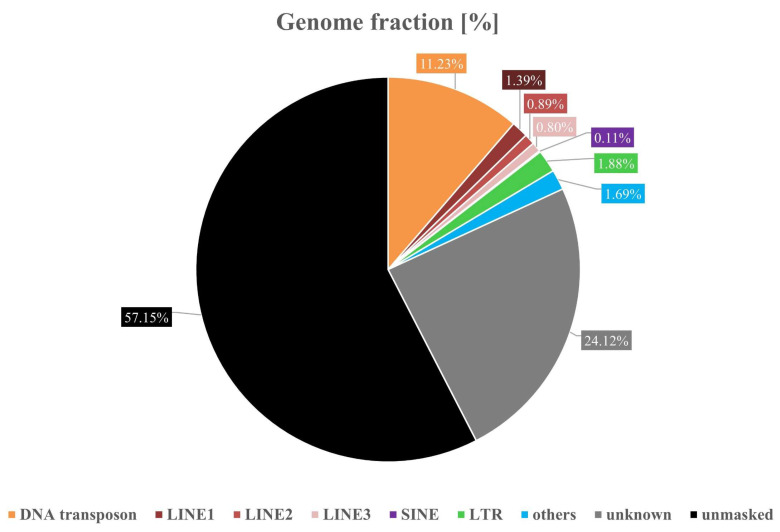 Figure 2
Peer Reviews
No public reviews on file for this paper yet. If you reviewed it on a platform where reviews are public (OpenReview, ICLR, NeurIPS, ICML), you can paste yours below so the community can read it here.
Videos
No videos yet. Explain this paper in a talk, walkthrough, or lecture? Add one.
Taxonomy
TopicsGenomics and Phylogenetic Studies · Amphibian and Reptile Biology · Ichthyology and Marine Biology