Integrated Management of Striga hermonthica in Sorghum Using Glomus mosseae, Bacillus megaterium, and Phosphorus
Suha Hassan Ahmed Elhag, Migdam Elsheikh Abdelghani, Hanan Ibrahim Mudawi, Abdel Gabar E. Tayeb Babiker

TL;DR
This study shows that using Glomus mosseae and Bacillus megaterium, alone or together, can reduce the parasitic weed Striga hermonthica and improve sorghum growth in poor soils.
Contribution
The study demonstrates the effectiveness of combining biocontrol agents and phosphorus to manage Striga hermonthica in sorghum cultivation.
Findings
Glomus mosseae alone reduced Striga hermonthica emergence and biomass by 87%–100% and 93%, respectively.
Combining Glomus mosseae with Bacillus megaterium increased sorghum height by 116%–139% and shoot biomass by 314%.
Phosphorus suppressed arbuscular mycorrhizal fungus colonization, while Bacillus megaterium had no significant effect.
Abstract
The root parasitic weed Striga hermonthica , a member of the Orobanchaceae family, is a major constraint to cereal production in sub‐Saharan Africa. Its germination is triggered by host‐derived stimulants, which are upregulated under phosphorus (P) and nitrogen deficiencies. This study evaluated the effects of the arbuscular mycorrhizal fungus Glomus mosseae, the phosphorus‐solubilizing bacterium Bacillus megaterium var. phosphaticum (BMP), and inorganic phosphorus (P2O5), applied individually and in combination, on S. hermonthica incidence and sorghum ( Sorghum bicolor ) growth. Uncontrolled S. hermonthica parasitism reduced sorghum height by 48%–54% and shoot biomass by 71%. G. mosseae alone reduced S. hermonthica emergence and biomass by 87%–100% and 93%, respectively, while increasing sorghum height by 89%–115% and shoot biomass by 351%. The combination of G. mosseae with…
Genes, proteins, chemicals, diseases, species, mutations and cell lines named across the full text — each resolved to its canonical identifier and authoritative record.
Click any figure to enlarge with its caption.
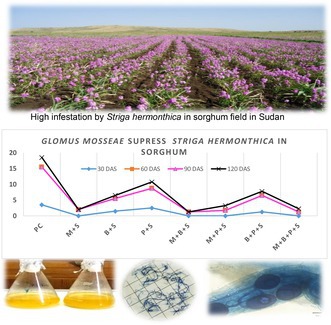 Figure 1
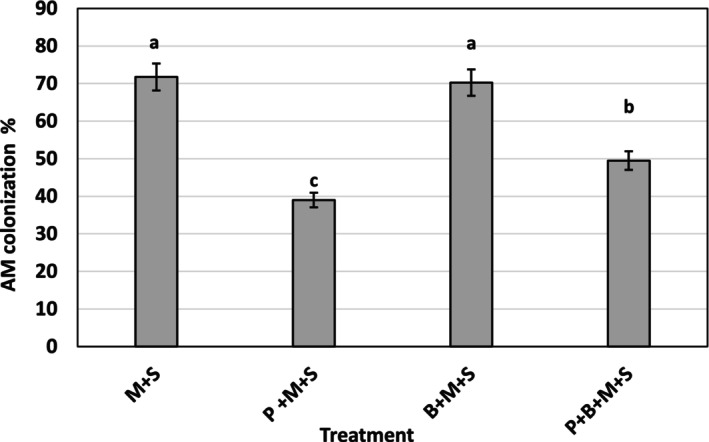 Figure 2
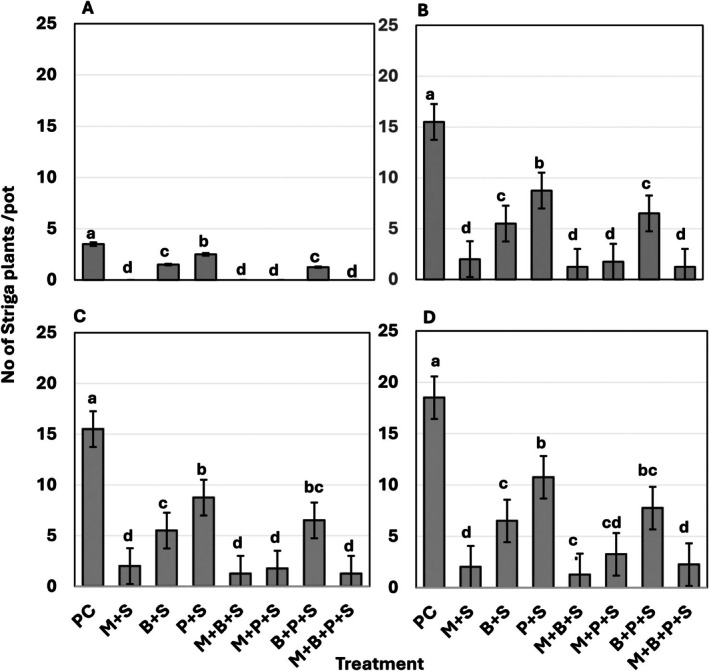 Figure 3
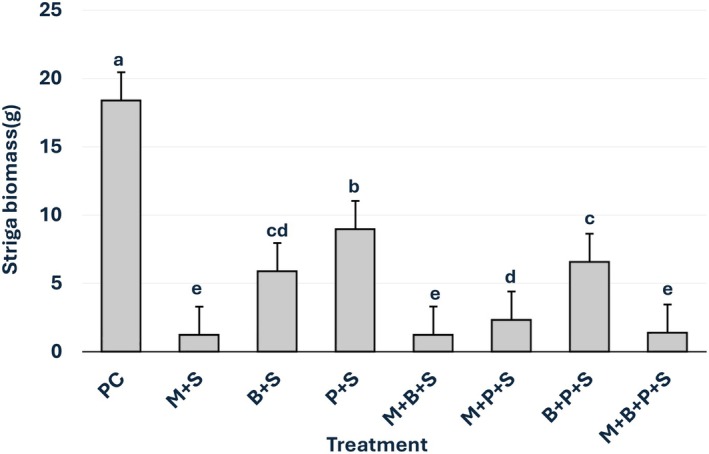 Figure 4
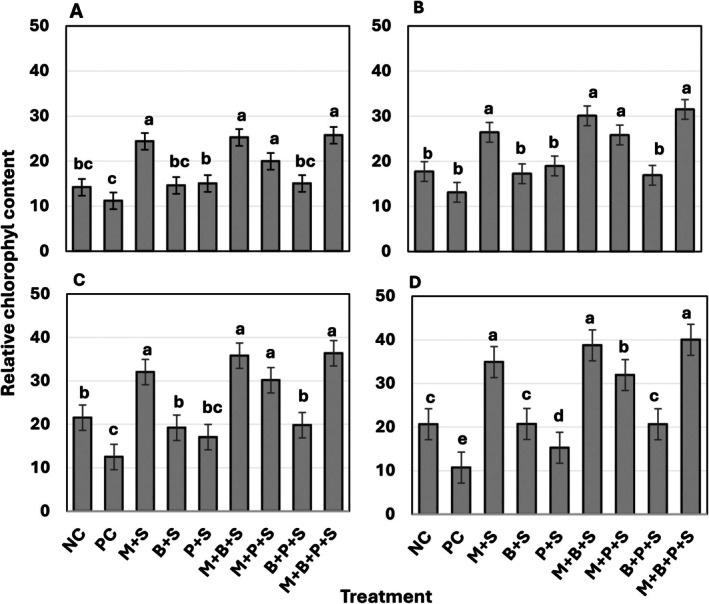 Figure 5
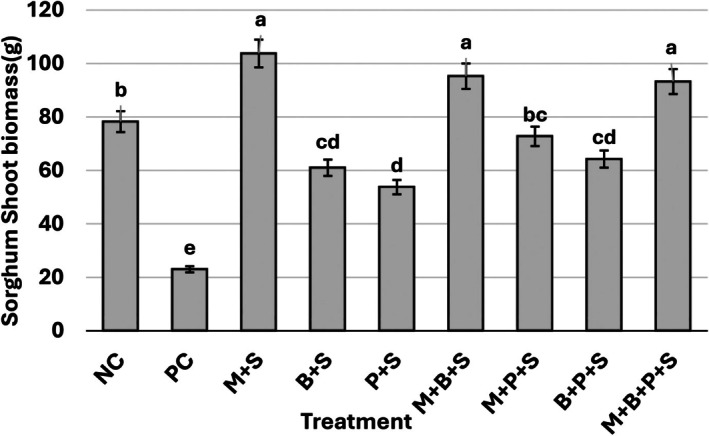 Figure 6
Peer Reviews
No public reviews on file for this paper yet. If you reviewed it on a platform where reviews are public (OpenReview, ICLR, NeurIPS, ICML), you can paste yours below so the community can read it here.
Videos
No videos yet. Explain this paper in a talk, walkthrough, or lecture? Add one.
Taxonomy
TopicsPlant Parasitism and Resistance · Mycorrhizal Fungi and Plant Interactions · Insect-Plant Interactions and Control