Comparative Effectiveness of Balloon Aortic Valvuloplasty via Transradial and Transfemoral Access
Jonathan X. Fang, Pedro A. Villablanca, Tiberio M. Frisoli, Pedro Engel Gonzalez, James C. Lee, Georgi K. Fram, Leo Kar Lok Lai, Gennaro Giustino, Hussayn Alrayes, Louie B. Kamel-Abusalha, Rama Ellauzi, Samuel Gregerson, Michael Chiang, Kent Chak-yu So, Dee Dee Wang

TL;DR
This study compares two methods for performing balloon aortic valvuloplasty and finds that the transradial approach has fewer complications without sacrificing effectiveness.
Contribution
The study provides the first comparative data on safety and outcomes of transradial versus transfemoral balloon aortic valvuloplasty.
Findings
Transradial valvuloplasty had significantly lower periprocedural complication rates compared to transfemoral valvuloplasty.
Technical and hemodynamic success rates were similar between the two approaches.
Short-term clinical outcomes were comparable for both transradial and transfemoral valvuloplasty.
Abstract
Balloon aortic valvuloplasty (BAV) is commonly performed as a bridge to therapy, for stratification, or as a palliative procedure in cases of severe aortic stenosis. The complication rate of transfemoral access BAV (transfemoral valvuloplasty [TFV]) is comparable to that of transcatheter aortic valve replacement. Transradial access BAV (transradial valvuloplasty [TRV]) is technically feasible; however, comparative data for TFV are lacking. We aim to compare TFV and TRV in terms of technical and hemodynamic success, periprocedural safety, and short-term clinical outcomes. Consecutive patients undergoing BAV at a tertiary center from 2021 to 2024 were assessed. TRV was performed with ultrasound guidance and an 8F short sheath equipped with compatible balloons. Hemodynamic success was defined as a reduction in gradient of 30% or more. The primary outcome was the periprocedural composite…
Genes, proteins, chemicals, diseases, species, mutations and cell lines named across the full text — each resolved to its canonical identifier and authoritative record.
Click any figure to enlarge with its caption.
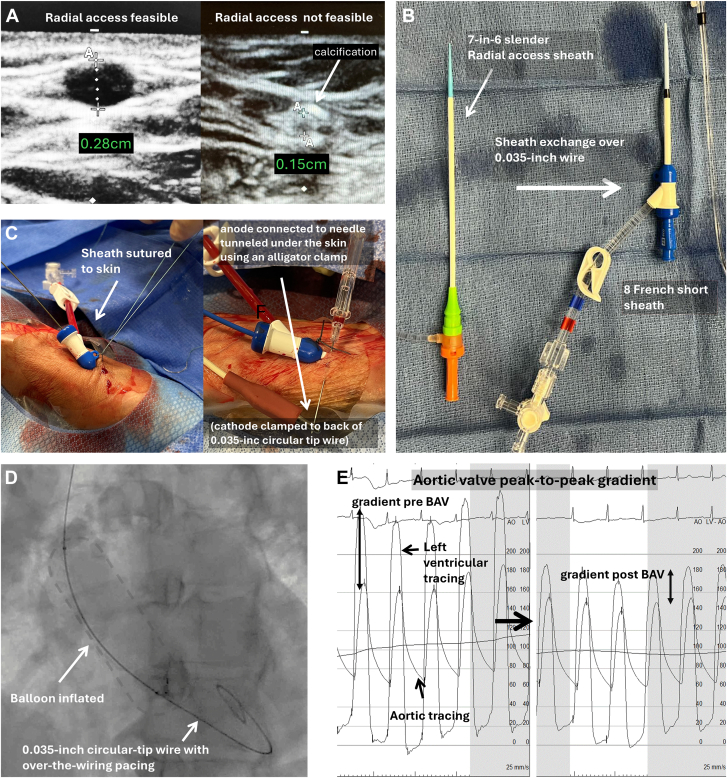 Figure 1
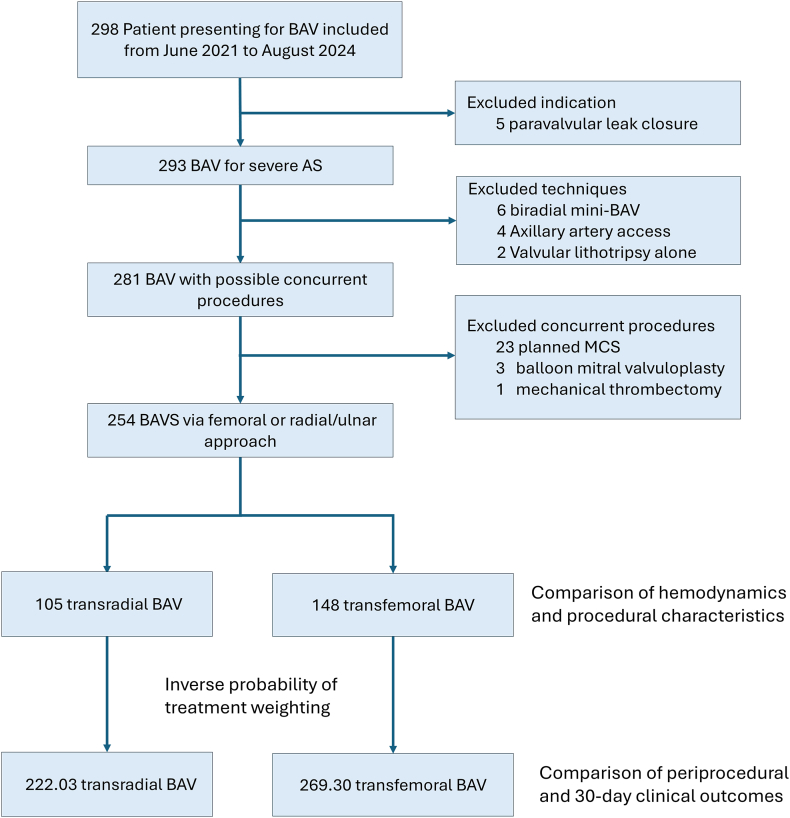 Figure 2
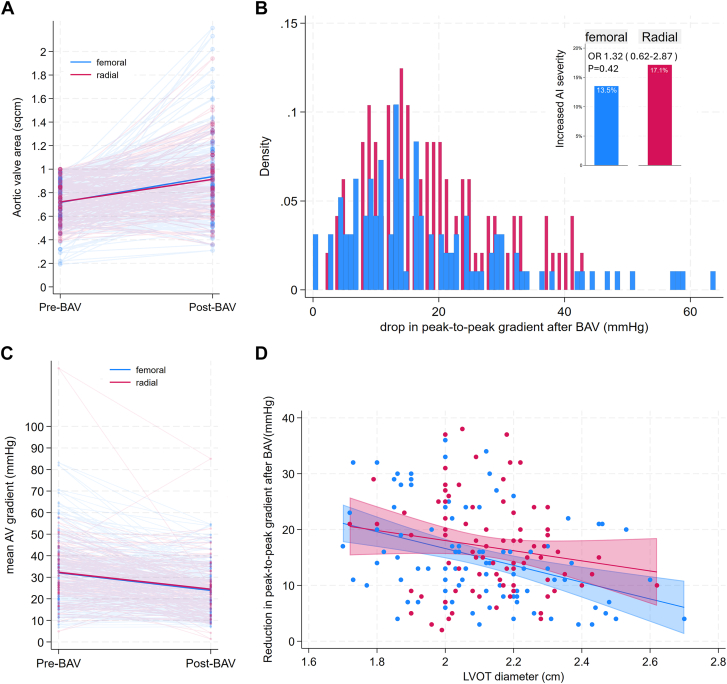 Figure 3
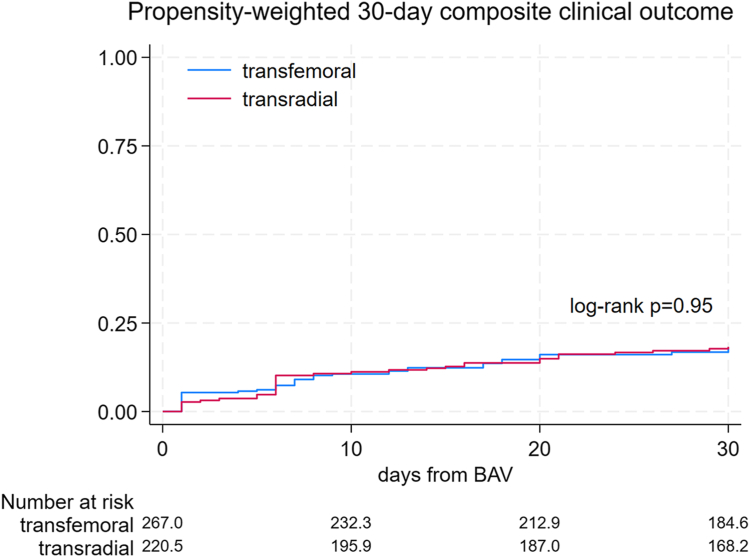 Figure 4
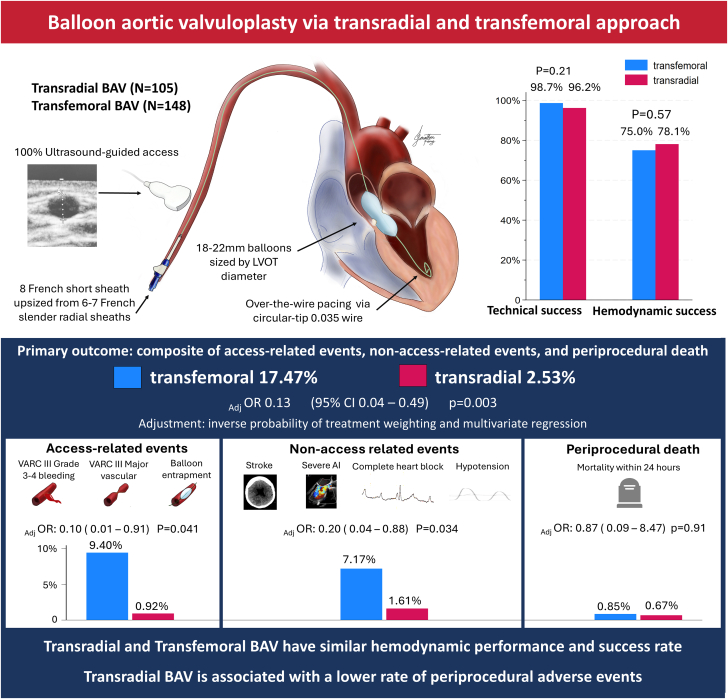 Figure 5
Peer Reviews
No public reviews on file for this paper yet. If you reviewed it on a platform where reviews are public (OpenReview, ICLR, NeurIPS, ICML), you can paste yours below so the community can read it here.
Videos
No videos yet. Explain this paper in a talk, walkthrough, or lecture? Add one.
Taxonomy
TopicsVascular Procedures and Complications · Cardiac Valve Diseases and Treatments · Peripheral Artery Disease Management