Effect of Anticholinergic Drug Burden on Postoperative Delirium in Elderly Patients: A Nested Case–Control Study
Ting Zhang, Tianqi Shen, Ningxin Li, Xiaoying Zhang, Kai Zhang, Chang Liu, Bingbing Meng, Shaohua Zhang, Guangyu Tang, Ziyi Zhang, Qiang Fu, Yanhong Liu, Jingsheng Lou, Jiangbei Cao, Weidong Mi, Hao Li

TL;DR
Higher preoperative use of anticholinergic drugs increases the risk of postoperative delirium in elderly patients, especially when the drug burden score is 3 or higher.
Contribution
This study demonstrates that anticholinergic drug burden is an independent predictor of postoperative delirium in elderly patients.
Findings
Each 1-point increase in ACB score raises delirium odds by 10%.
Patients with ACB scores ≥3 had a 77% higher risk of postoperative delirium.
Kaplan-Meier analysis showed higher cumulative delirium incidence in the ACB ≥3 group.
Abstract
Postoperative delirium (POD) is a common complication in elderly patients. This study aimed to investigate the association between preoperative anticholinergic drug burden and POD in elderly patients. This nested case–control study included patients aged ≥ 65 years who underwent general anesthesia between April 2020 and April 2022 at multiple hospitals in China. POD occurring within 7 days postoperatively was assessed using the 3‐Minute Diagnostic Interview for Confusion Assessment Method. Preoperative anticholinergic drug burden was quantified using the Anticholinergic Cognitive Burden (ACB) scale. Univariate and multivariate logistic regression models with random effects were used to determine the association between ACB scores and POD occurrence. Kaplan–Meier survival analysis with log‐rank tests was plotted to compare the cumulative POD incidence across groups. Subgroup analyses…
Genes, proteins, chemicals, diseases, species, mutations and cell lines named across the full text — each resolved to its canonical identifier and authoritative record.
Click any figure to enlarge with its caption.
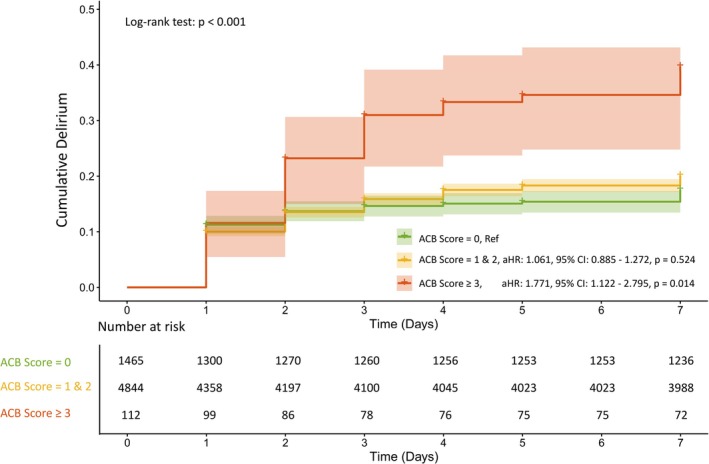 Figure 1
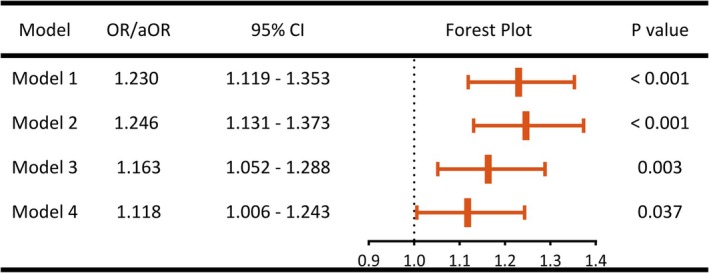 Figure 2
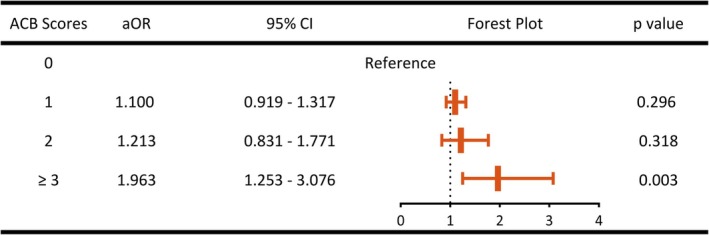 Figure 3
 Figure 4
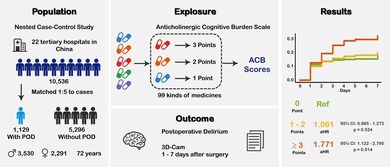 Figure 5
Peer Reviews
No public reviews on file for this paper yet. If you reviewed it on a platform where reviews are public (OpenReview, ICLR, NeurIPS, ICML), you can paste yours below so the community can read it here.
Videos
No videos yet. Explain this paper in a talk, walkthrough, or lecture? Add one.
Taxonomy
TopicsIntensive Care Unit Cognitive Disorders · Anesthesia and Sedative Agents · Enhanced Recovery After Surgery