Linkage disequilibrium score regression identifies genetic correlations between hepatocellular carcinoma and clinically relevant traits
Younghun Han, Vikram R. Shaw, Jinyoung Byun, Aaron P. Thrift, Catherine Zhu, Donghui Li, Rikita I. Hatia, Robin Kate Kelley, Sean P. Cleary, Anna S. Lok, Paige M. Bracci, Jennifer B. Permuth, Roxana Bucur, Jennifer Knox, Jian‐Min Yuan, Amit G. Singal, Prasun K. Jalal

TL;DR
This study uses genetic data to find links between nonviral liver cancer and traits like diabetes and high blood pressure, suggesting shared genetic factors.
Contribution
The study identifies novel genetic correlations between nonviral hepatocellular carcinoma and metabolic and liver-related traits using linkage disequilibrium score regression.
Findings
Positive genetic correlations were found between nonviral HCC and blood biomarkers of liver injury and allostatic load.
Genetic links were observed between nonviral HCC and diseases like diabetes, hypertension, and heart disease.
The findings suggest shared genetic pathways between nonviral HCC and metabolic dysfunction-associated liver disease.
Abstract
Hepatocellular carcinoma (HCC) mortality is increasing globally, partly due to the growing prevalence of nonviral liver diseases. Genome‐wide association studies (GWAS) have identified genetic variants associated with HCC development. Leveraging GWAS summary statistics and linkage disequilibrium score regression (LDSR), we investigated disease co‐development with hepatitis C virus‐negative (HCV‐negative) HCC to provide unique insights into HCC etiology and prioritize relationships for further causal inquiry. We utilized the LDSR statistical framework to estimate the genetic correlation and heritability between HCV‐negative HCC with 901 epidemiologic, behavioral, and clinical traits from the United Kingdom Biobank (UKBB). First, we set the threshold for observed scale heritability of each trait at 0.02 to ensure reliable inferences with adequate study power. Next, we observed significant…
Genes, proteins, chemicals, diseases, species, mutations and cell lines named across the full text — each resolved to its canonical identifier and authoritative record.
Click any figure to enlarge with its caption.
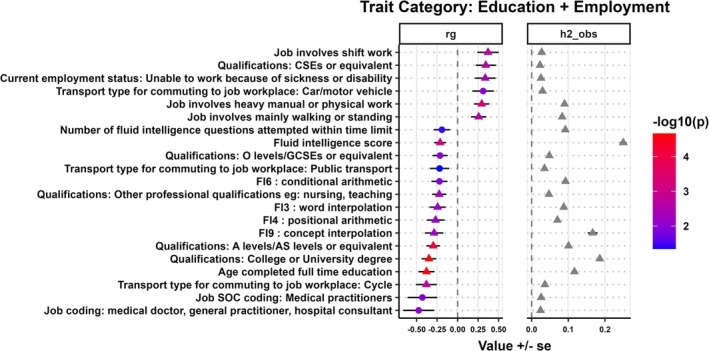 Figure 1
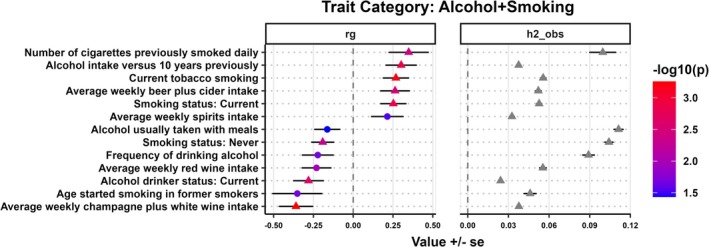 Figure 2
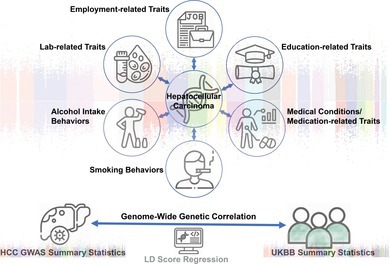 Figure 3
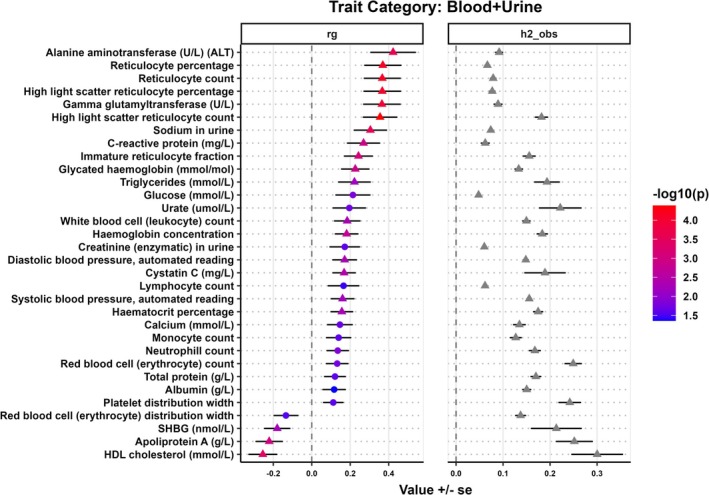 Figure 4
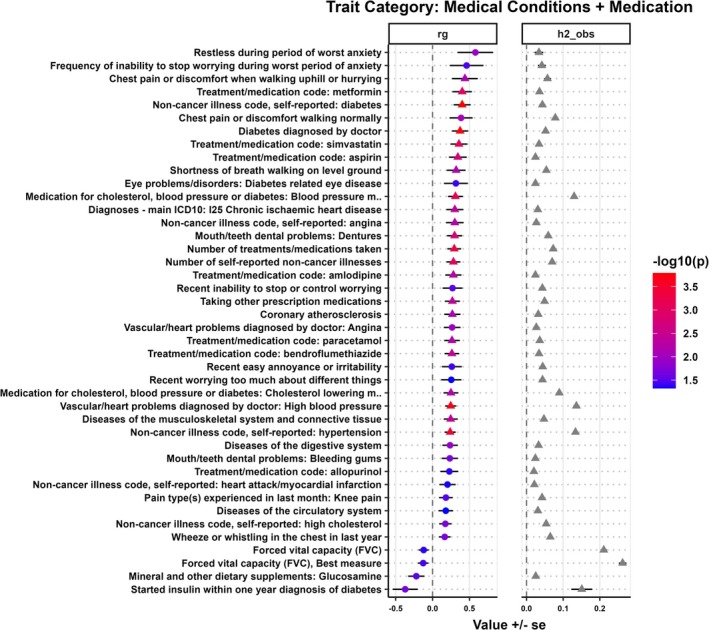 Figure 5
Peer Reviews
No public reviews on file for this paper yet. If you reviewed it on a platform where reviews are public (OpenReview, ICLR, NeurIPS, ICML), you can paste yours below so the community can read it here.
Videos
No videos yet. Explain this paper in a talk, walkthrough, or lecture? Add one.
Taxonomy
TopicsLiver Disease Diagnosis and Treatment · Genetic Associations and Epidemiology · Hepatitis C virus research