Risk of cancer among individuals with a history of bacterial sexually transmitted infections: A population‐based study in Alberta, Canada
Hina M. Qureshi, Taylor Hughes, Eduardo L. Franco, Kirsten M. Fiest, Jennifer Gratrix, Petra A. Smyczek, Ronald Read, Arfan R. Afzal, Rob Deardon, Aliya Kassam, Miranda M. Fidler‐Benaoudia

TL;DR
This study found that people with a history of bacterial STIs like chlamydia, gonorrhea, or syphilis have an increased risk of certain cancers compared to the general population.
Contribution
The study is one of the first to quantify cancer risk following bacterial STIs using population-based data and identifies specific cancer associations.
Findings
Females with bacterial STIs had higher risks of cervical and colon cancers compared to the general population.
Males with bacterial STIs showed increased risks of prostate, testicular, and lung cancers.
Overall cancer risk was elevated in the STI cohort compared to the general population.
Abstract
We investigated cancer risk among individuals with a prior bacterial sexually transmitted infection (STI) diagnosis using a retrospective cohort study of all Albertan residents diagnosed with chlamydia, gonorrhea, or syphilis during 2000–2014, that was then linked to the Alberta Cancer Registry. Follow‐up started 5 years from their first bacterial STI diagnosis and continued until the first instance of a cancer diagnosis, death, or the study end date (December 31, 2019). Internal comparisons between the bacterial STI groups were undertaken using adjusted hazard ratios, while sex‐specific standardized incidence ratios (SIRs) were calculated to compare cancer risk with the Alberta general population. The likelihood of developing cancer was largely comparable within the bacterial STI cohort, though head/neck cancer was more common after only gonorrhea exposure, and lung cancer was more…
Genes, proteins, chemicals, diseases, species, mutations and cell lines named across the full text — each resolved to its canonical identifier and authoritative record.
Click any figure to enlarge with its caption.
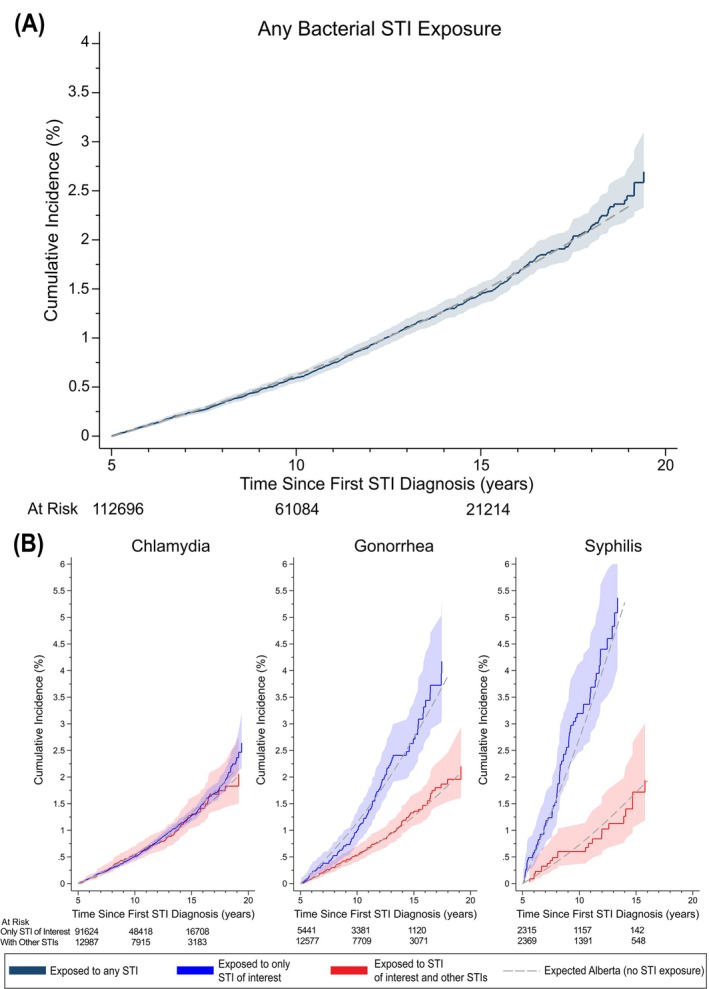 Figure 1
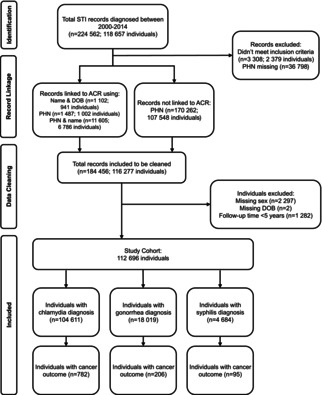 Figure 2
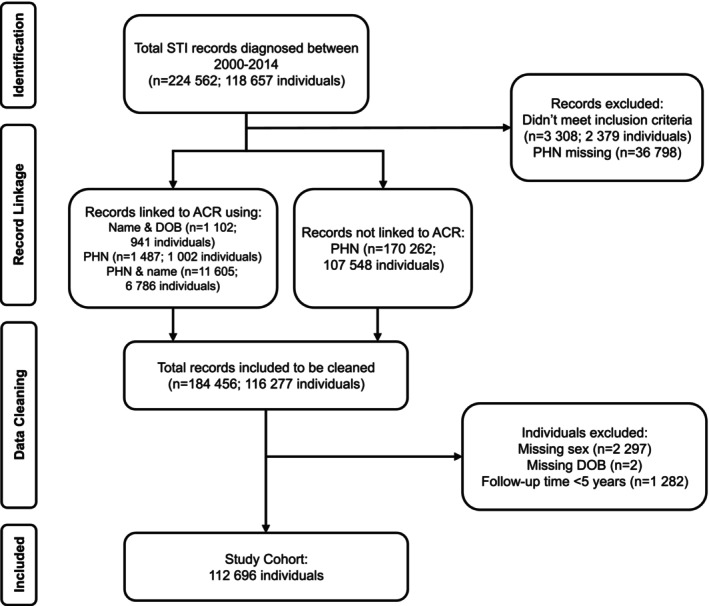 Figure 3
Peer Reviews
No public reviews on file for this paper yet. If you reviewed it on a platform where reviews are public (OpenReview, ICLR, NeurIPS, ICML), you can paste yours below so the community can read it here.
Videos
No videos yet. Explain this paper in a talk, walkthrough, or lecture? Add one.
Taxonomy
TopicsReproductive tract infections research · Cervical Cancer and HPV Research · Syphilis Diagnosis and Treatment