Sustained impact of bivalent HPV immunisation on CIN incidence over two rounds of cervical screening
Timothy J. Palmer, Kimberley Kavanagh, Kate Cuschieri, Ross L. Cameron, Catriona Graham, Allan Wilson, Kirsty Roy

TL;DR
This study shows that the bivalent HPV vaccine remains effective for several years, especially in younger women and those from deprived areas.
Contribution
The study provides real-life longitudinal evidence of the bivalent HPV vaccine's sustained effectiveness over time.
Findings
Vaccine effectiveness against CIN2+ was 72.6% in 12–13-year-olds and 63.2% in 14–16-year-olds.
Herd protection was observed in all immunized cohorts, with the most deprived women showing the greatest reduction in CIN.
No benefit was found for vaccination in women over 18 years of age.
Abstract
Vaccination against high‐risk HPV has been shown to reduce significantly the incidence of pre‐invasive and invasive cervical disease. Clinical trials show immunity and vaccine effectiveness for over 12 years but real‐life longitudinal data are lacking. Vaccination with the bivalent vaccine (3 dose schedule) for women aged 12–18 years began in Scotland in 2008; immunised women entered screening in 2010. Women immunised at age12–13 years entered screening in 2015. Linked data from ≤12 years of routine screening activity shows adjusted VE against CIN2+ at age 12–13 of 72·6% (95%CI: 67.7–76.8) and at age 14–16 of 63·2 (CI 60·4–65·8), and against CIN3+ of 81·7 (CI 76·2–78·6; age 12–13) and 68·1 (CI 64·1–71·6; age 14–16) after 3 doses or two doses 5 months apart. Adjusted VE following two doses 1 month apart or one dose only at age14 was 20.5 (95%CI: 6.1–32.6) for CIN2+ and 34.9…
Genes, proteins, chemicals, diseases, species, mutations and cell lines named across the full text — each resolved to its canonical identifier and authoritative record.
Click any figure to enlarge with its caption.
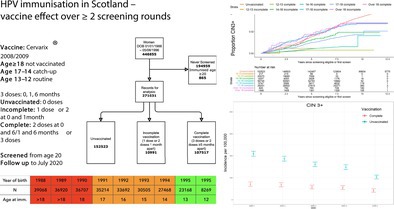 Figure 1
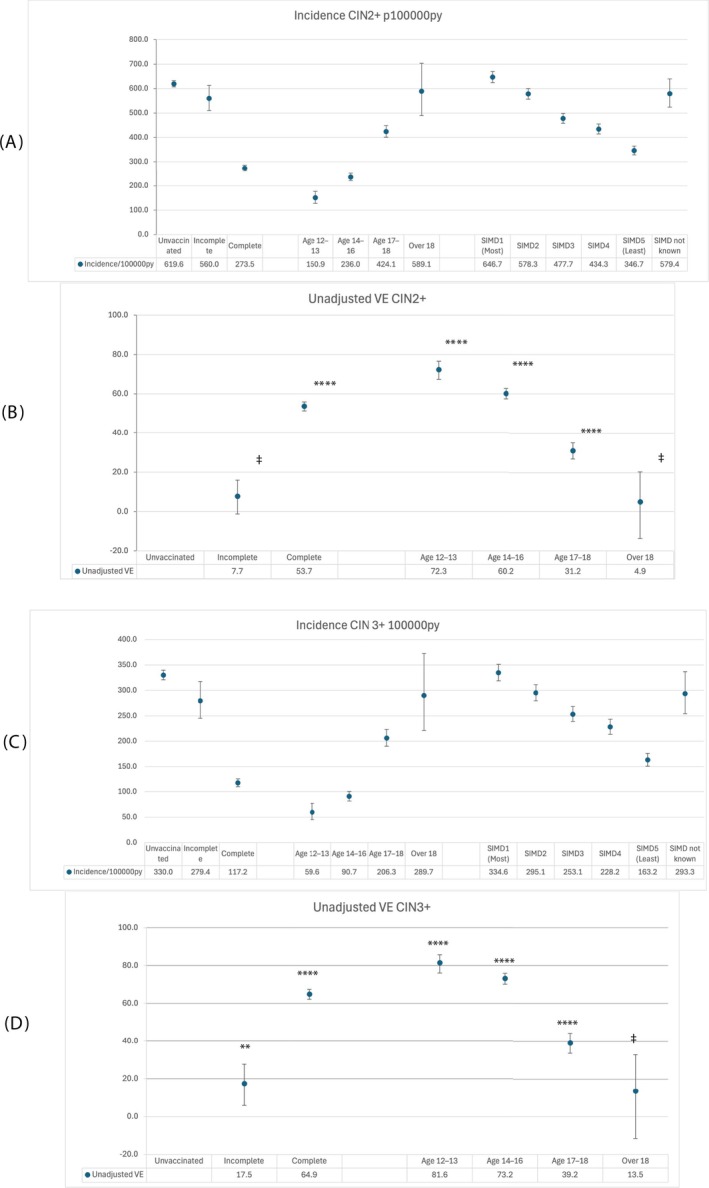 Figure 2
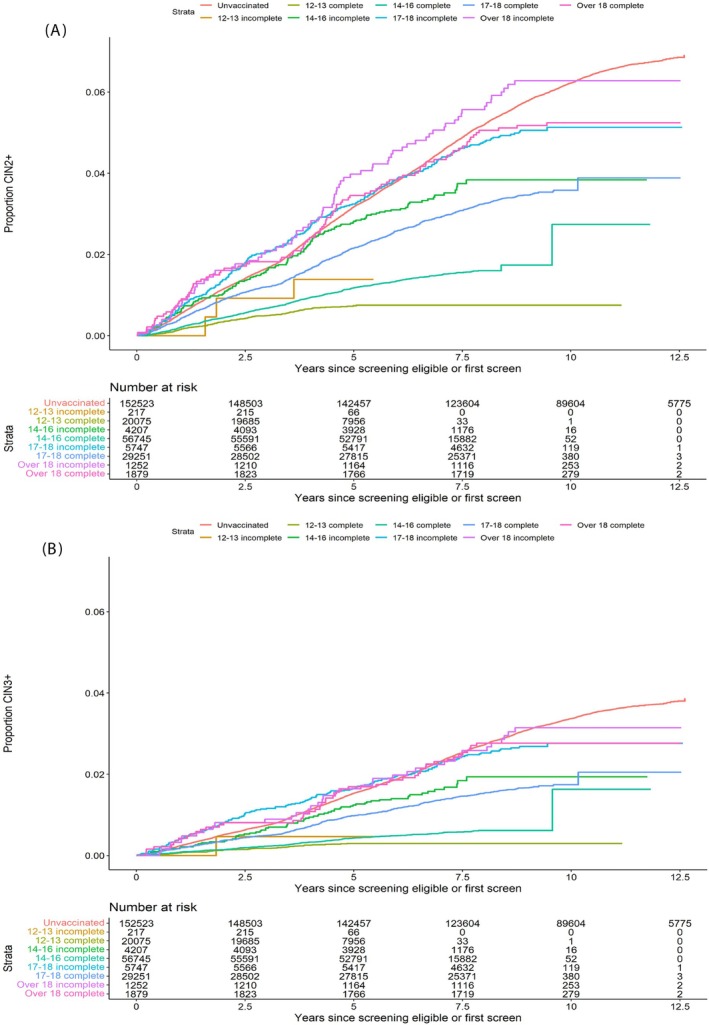 Figure 3
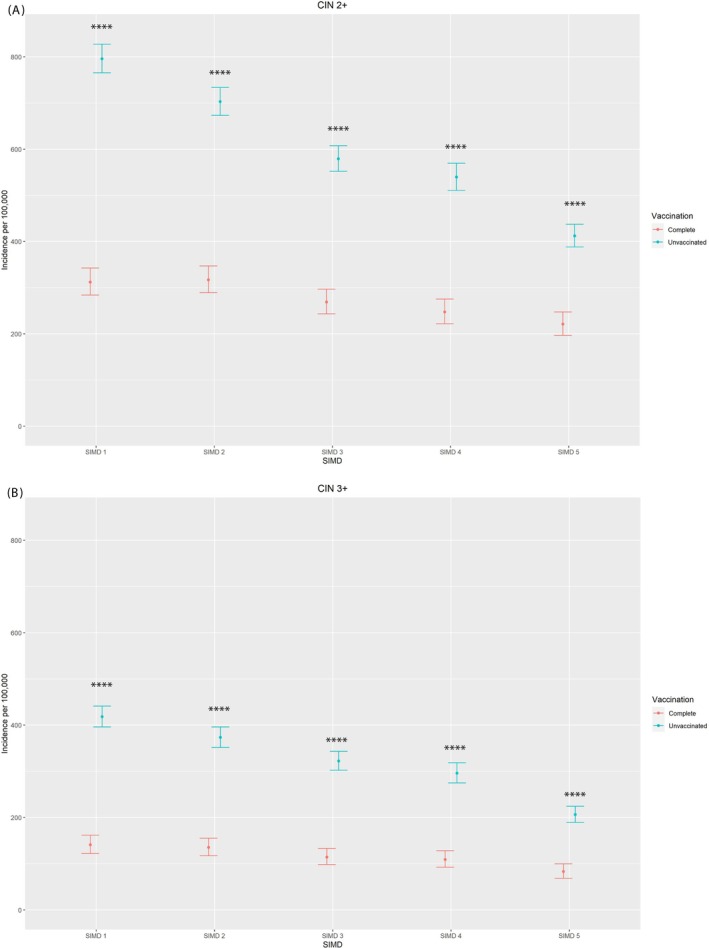 Figure 4
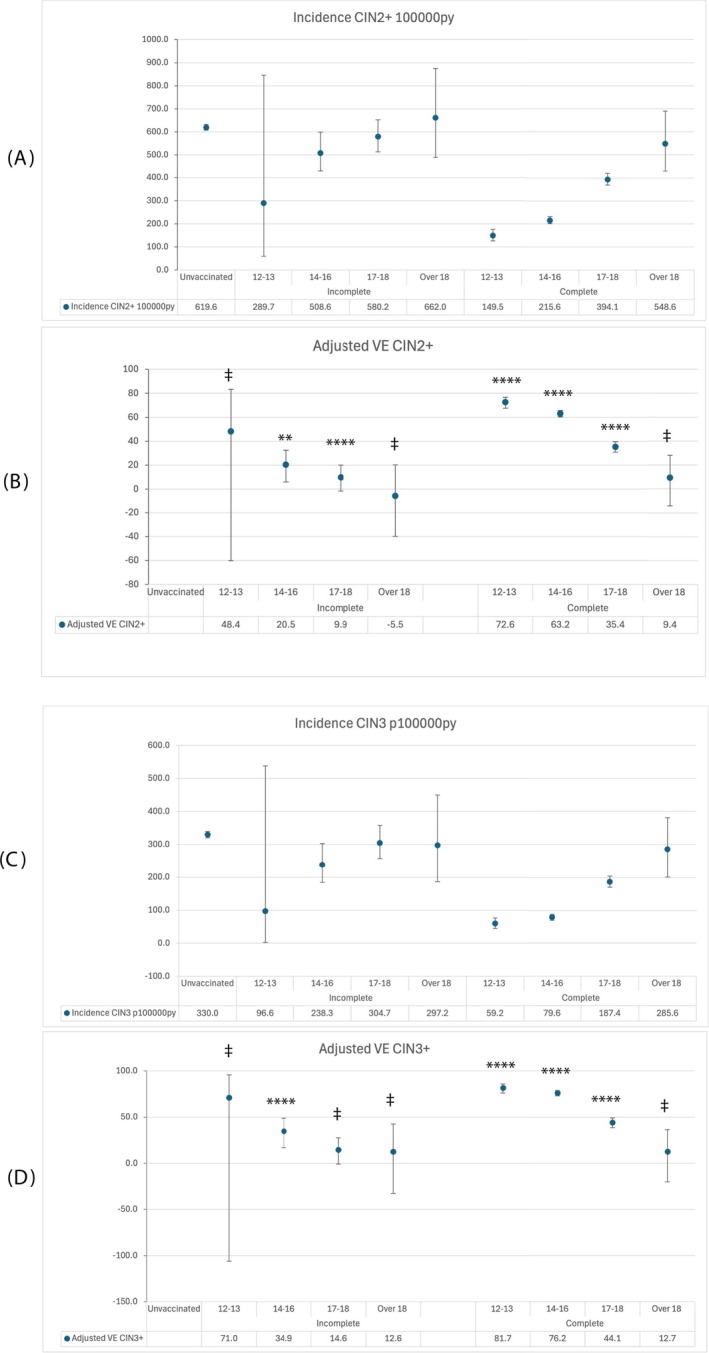 Figure 5
Peer Reviews
No public reviews on file for this paper yet. If you reviewed it on a platform where reviews are public (OpenReview, ICLR, NeurIPS, ICML), you can paste yours below so the community can read it here.
Videos
No videos yet. Explain this paper in a talk, walkthrough, or lecture? Add one.
Taxonomy
TopicsCervical Cancer and HPV Research · Reproductive tract infections research · Virology and Viral Diseases