Areca palm velarivirus 1 encoded CP suppresses antiviral RNA silencing by mediating the autophagic degradation of SGS3 and disrupting the SGS3–RDR6 interaction
Jiawei Wen, Huili Li, Zemu Li, Hongxing Wang, Xianmei Cao, Xi Huang

TL;DR
This study reveals how a virus in areca palms evades the plant's antiviral defenses by degrading a key protein and disrupting its interactions.
Contribution
The study identifies a novel dual mechanism by which APV1 CP suppresses RNA silencing through autophagic degradation and complex disruption.
Findings
APV1 CP acts as a viral suppressor of RNA silencing by inhibiting local and systemic silencing.
CP promotes the autophagic degradation of AcSGS3, a key RNA silencing component.
CP disrupts the interaction between SGS3 and AcRDR6, impairing RNAi signaling.
Abstract
Areca palm velarivirus 1 (APV1) is the causative agent of yellow leaf disease (YLD), leading to severe yield losses in areca palms. However, how APV1 counteracts host immunity remains largely underexplored, and the underlying mechanisms are still poorly understood. RNA silencing is an evolutionarily conserved antiviral defense mechanism in eukaryotes. In this study, we identify the APV1-encoded capsid protein (CP) as a viral suppressor of RNA silencing (VSR) that inhibits both local and systemic silencing triggered by single-stranded RNA (ssRNA). Mechanistically, CP interacts with host Suppressor of Gene Silencing 3 (AcSGS3), a key component of the RNA silencing pathway, and promotes its degradation via autophagy. Additionally, CP disrupts the SGS3–AcRDR6 (RNA-dependent RNA polymerase 6) interaction, impairing the RNAi signaling cascade. Our findings reveal a novel dual mechanism to…
Genes, proteins, chemicals, diseases, species, mutations and cell lines named across the full text — each resolved to its canonical identifier and authoritative record.
Click any figure to enlarge with its caption.
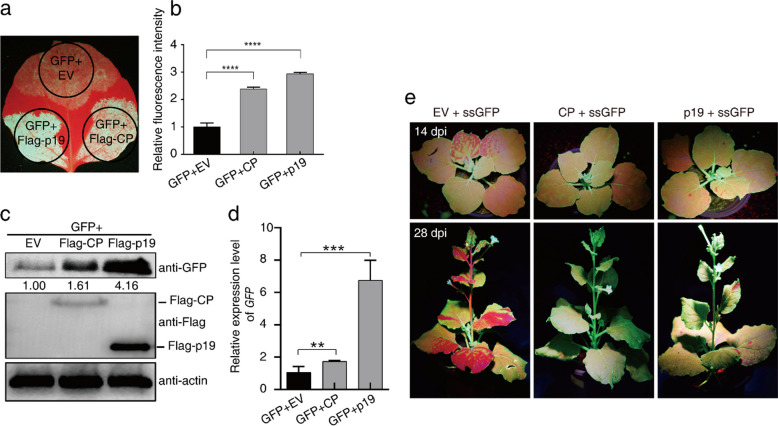 Figure 1
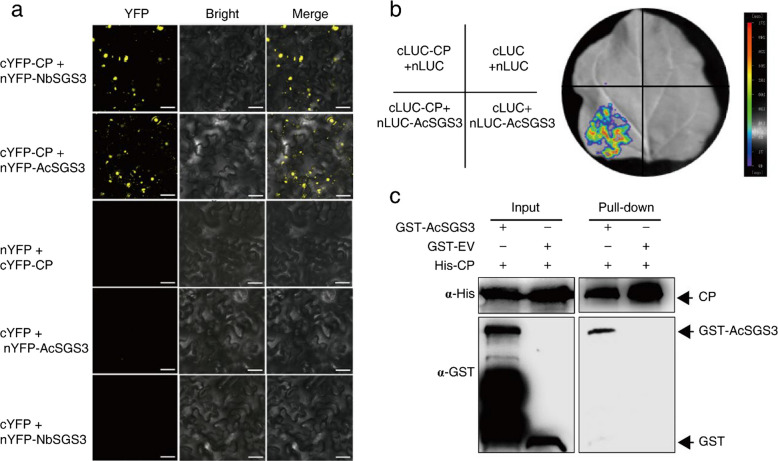 Figure 2
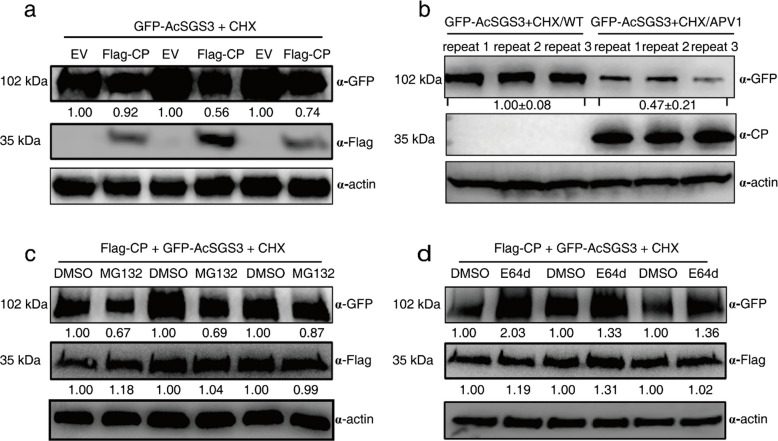 Figure 3
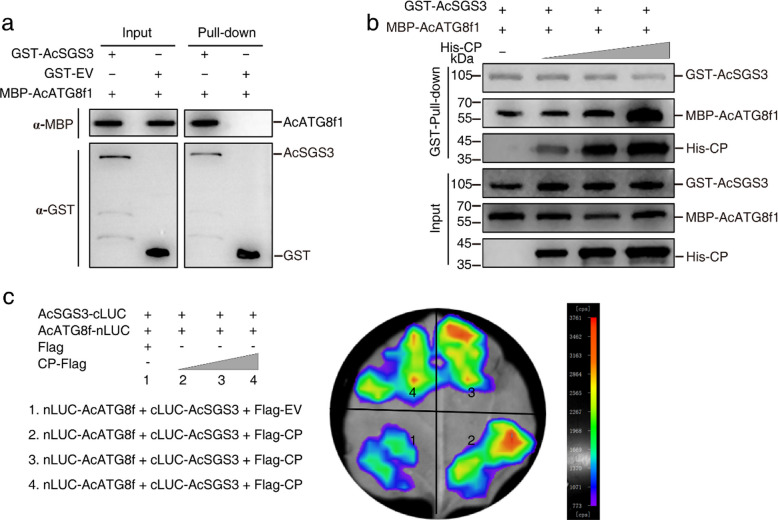 Figure 4
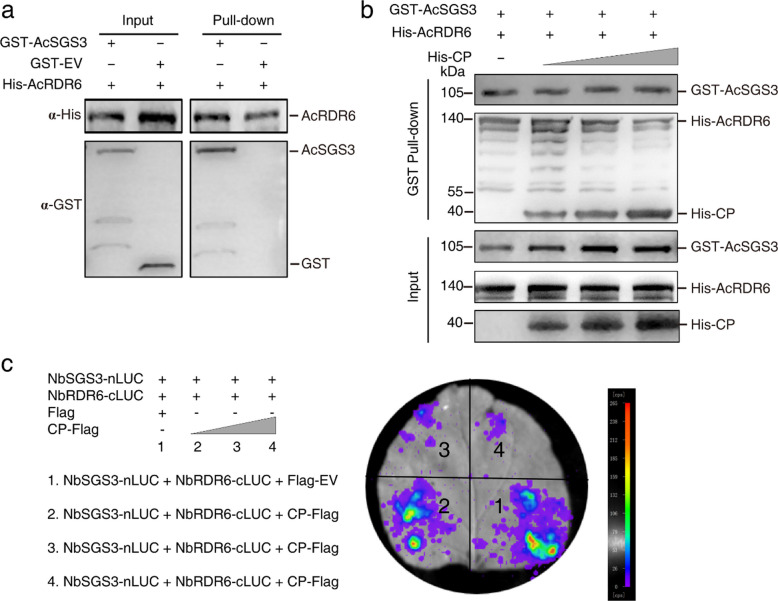 Figure 5
Peer Reviews
No public reviews on file for this paper yet. If you reviewed it on a platform where reviews are public (OpenReview, ICLR, NeurIPS, ICML), you can paste yours below so the community can read it here.
Videos
No videos yet. Explain this paper in a talk, walkthrough, or lecture? Add one.
Taxonomy
TopicsPlant Virus Research Studies · Plant and Fungal Interactions Research · Phytoplasmas and Hemiptera pathogens