Surgeon preferences and practice patterns in rectopexy: Results of an international survey
Eleftherios Gialamas, Isabelle Uhe, Pierre‐Alain Tokoto, Emilie Liot, Frédéric Ris, Steven D. Wexner, Jeremy Meyer, Guillaume Meurette, Abdulahad Al‐Ameri, Abdulahad Al‐Ameri, Adam Mylonakis, Ahmed Abdelsamad, Aakansha Giri Goswami, Al Marazgh Mohammad, Alberto Aiolfi

TL;DR
This study surveyed surgeons globally to understand variations in rectopexy techniques for rectal prolapse, finding significant differences influenced by personal and regional preferences.
Contribution
The paper provides the first international survey on rectopexy practices, highlighting variability and the need for updated guidelines.
Findings
Most surgeons use minimally invasive approaches, with laparoscopy being the most common.
There is significant regional variation in dissection techniques and mesh usage.
Only a small percentage perform rectopexy as a day-case procedure.
Abstract
Rectopexy is the preferred abdominal intervention for rectal prolapse. Despite similar procedural steps – rectal mobilisation, prolapse reduction, and fixation – techniques vary widely, and onsensus on the optimal approach is lacking. This study aimed to assess global surgeon preferences and practices in rectopexy. An international 28‐item online survey was distributed between November 2023 and March 2024 through professional networks and social media. Questions addressed surgeon demographics, perioperative strategies, and technical approaches to rectopexy. Responses were analysed descriptively and stratified by region and specialty. A total of 226 surgeons from 36 countries across four continents completed the survey. Most respondents (79.6%) administered preoperative intravenous antibiotics, and 80.5% used some form of mechanical bowel preparation. Minimally invasive approaches…
Genes, proteins, chemicals, diseases, species, mutations and cell lines named across the full text — each resolved to its canonical identifier and authoritative record.
Click any figure to enlarge with its caption.
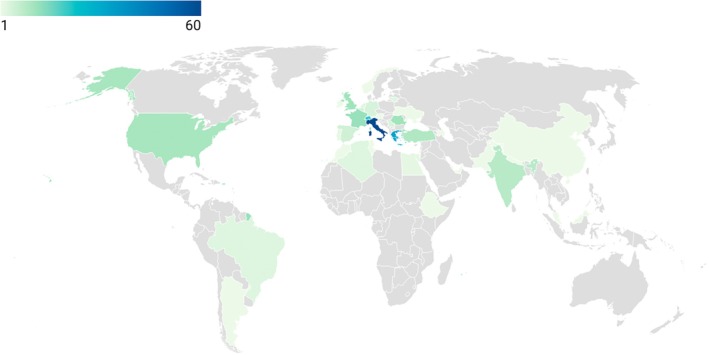 Figure 1
Peer Reviews
No public reviews on file for this paper yet. If you reviewed it on a platform where reviews are public (OpenReview, ICLR, NeurIPS, ICML), you can paste yours below so the community can read it here.
Videos
No videos yet. Explain this paper in a talk, walkthrough, or lecture? Add one.
Taxonomy
TopicsPelvic floor disorders treatments · Anorectal Disease Treatments and Outcomes · Stoma care and complications