Self-Assembly Control of Y-Series Non-fullerene Acceptors for Sustainable and Scalable Organic Photovoltaics
Dingqin Hu, Hua Tang, Jiehao Fu, Yaohui Li, Lei Liu, Peihao Huang, Jie Lv, Daming Zheng, Yakun He, Heng Liu, Baomin Xu, Zheng Hu, Xinhui Lu, Zeyun Xiao, Gang Li, Yang Michael Yang, Frédéric Laquai, Christoph J. Brabec, Duu-Jong Lee, Hsien-Yi Hsu

TL;DR
A new strategy using 3,5-dichloropyridine improves the efficiency and scalability of organic solar cells, making them more sustainable.
Contribution
A PDCC-assisted self-assembly method is introduced to enhance performance and scalability of organic photovoltaics.
Findings
PDCC improves molecular packing and reduces charge recombination in Y-series non-fullerene acceptors.
The method achieves 20.47% efficiency in small-area OSCs and 15.79% in large-area modules.
The strategy is broadly applicable and improves long-term stability across multiple material systems.
Abstract
The self-assembly behavior of Y-series non-fullerene acceptors and film formation dynamics are elucidated via in situ characterization, providing critical insights for sustainable and scalable organic solar cells (OSCs).A 3,5-dichloropyridine-assisted self-assembly strategy enables 20.47% efficiency for small-area OSCs and 15.79% for sustainable organic photovoltaic modules (19.3 cm2).This versatile self-assembly control approach is broadly applicable to various material systems, paving the way toward the commercialization of OSC. The self-assembly behavior of Y-series non-fullerene acceptors and film formation dynamics are elucidated via in situ characterization, providing critical insights for sustainable and scalable organic solar cells (OSCs). A 3,5-dichloropyridine-assisted self-assembly strategy enables 20.47% efficiency for small-area OSCs and 15.79% for sustainable organic…
Genes, proteins, chemicals, diseases, species, mutations and cell lines named across the full text — each resolved to its canonical identifier and authoritative record.
Click any figure to enlarge with its caption.
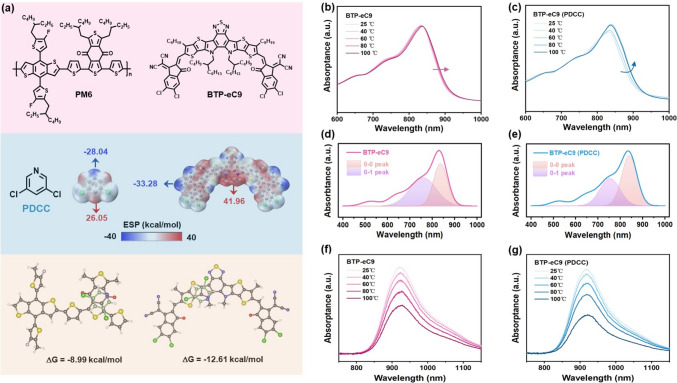 Figure 1
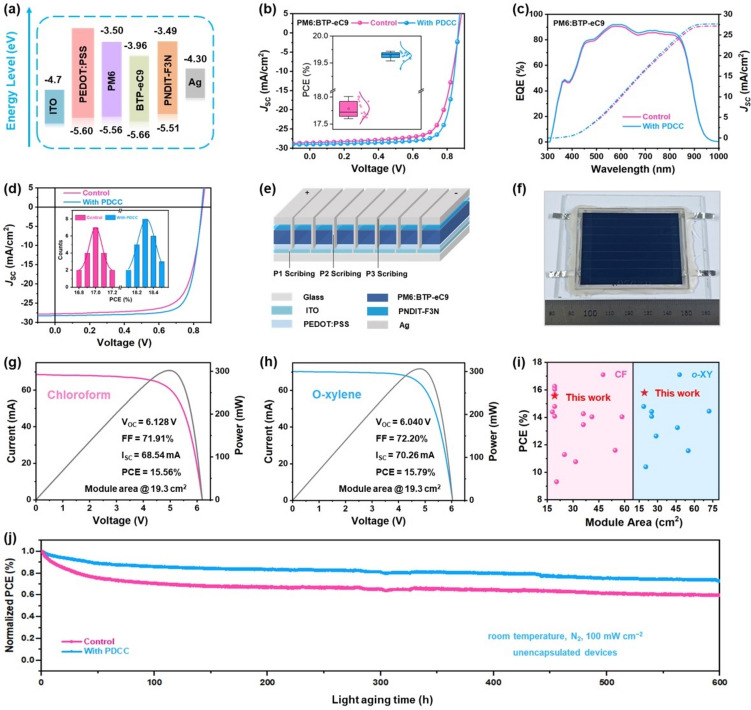 Figure 2
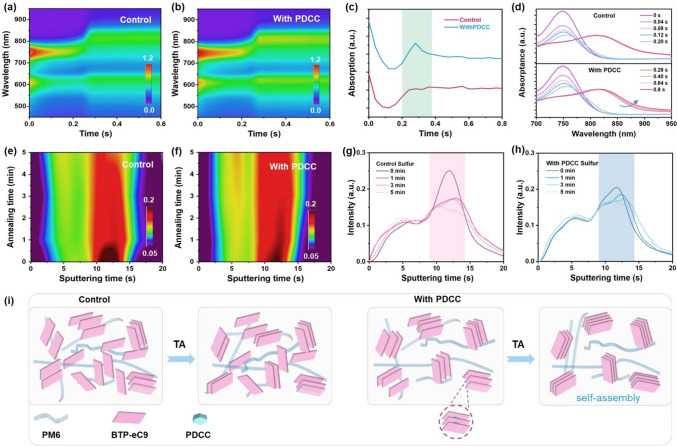 Figure 3
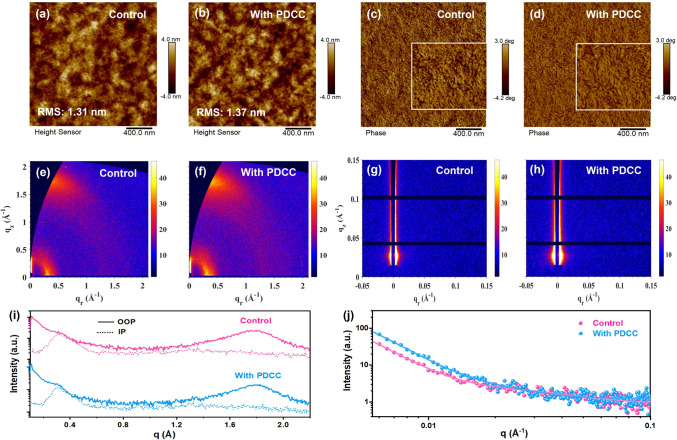 Figure 4
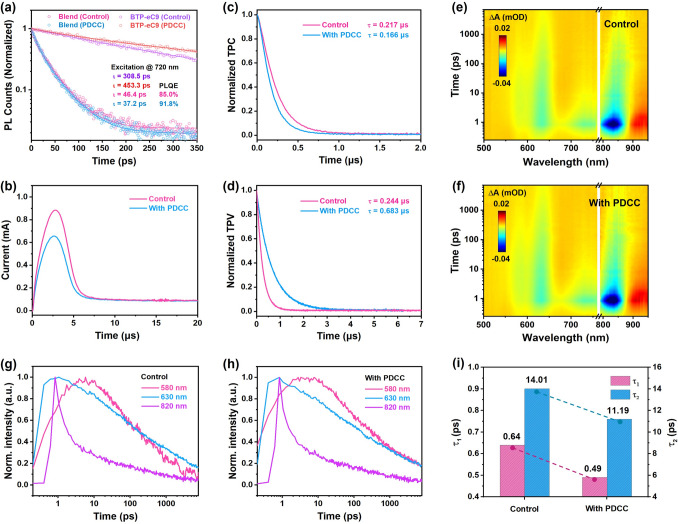 Figure 5
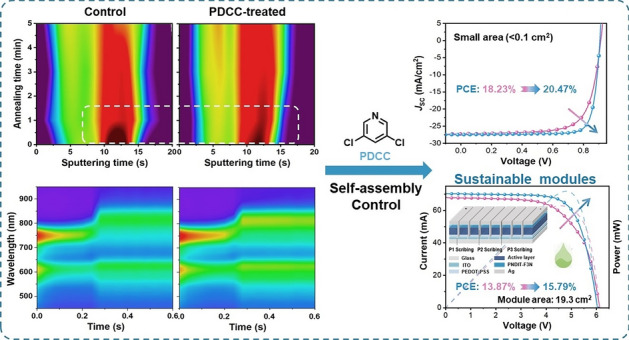 Figure 6
Peer Reviews
No public reviews on file for this paper yet. If you reviewed it on a platform where reviews are public (OpenReview, ICLR, NeurIPS, ICML), you can paste yours below so the community can read it here.
Videos
No videos yet. Explain this paper in a talk, walkthrough, or lecture? Add one.
Taxonomy
TopicsOrganic Electronics and Photovoltaics · Fullerene Chemistry and Applications · Chemical and Physical Properties of Materials