Novel biallelic CDK9 variants are associated with retinal dystrophy without CHARGE-like malformation syndrome
Sachiko Nishina, Kaoruko Torii, Shizuka Ishitani, Tomoyo Yoshida, Maki Fukami, Kenji Kurosawa, Kenjiro Kosaki, Hirotomo Saitsu, Tohru Ishitani, Yoshihiro Hotta

TL;DR
A new CDK9 gene variant is linked to retinal dystrophy without other CHARGE-like symptoms, showing how different gene mutations can lead to varied health outcomes.
Contribution
Identification of a novel CDK9 variant (p.P321S) associated with retinal dystrophy without CHARGE-like malformations.
Findings
A female patient with compound heterozygous CDK9 variants (p.A288T and p.P321S) showed retinal dystrophy without CHARGE-like features.
The p.P321S variant has intermediate kinase activity compared to p.A288T and wild-type CDK9.
Retinal dystrophy may occur independently of CHARGE-like malformations depending on CDK9 variant activity levels.
Abstract
Cyclin-dependent kinase 9 (CDK9) phosphorylates the C-terminal domain of RNA polymerase II (RNAPII) to regulate transcription. Previously, we reported that an 8-year-old boy with the biallelic CDK9 variants p.A288T and p.R303C exhibited a CHARGE-like malformation syndrome in which retinal dystrophy was a distinguishing feature. This dystrophy was caused by the decreased CDK9 kinase activity associated with these variant alleles [wild-type (WT) > A288T > R303C]. In this study, we describe a female patient who also bears biallelic CDK9 variants but displays retinal dystrophy without a CHARGE-like malformation syndrome. Trio-based whole-exome sequencing identified a new variant CDK9 allele, p.P321S, that occurred de novo in the patient. As a result, this female patient displayed compound heterozygous variants composed of the p.A288T CDK9 variant of maternal origin plus the novel p.P321S…
Genes, proteins, chemicals, diseases, species, mutations and cell lines named across the full text — each resolved to its canonical identifier and authoritative record.
Click any figure to enlarge with its caption.
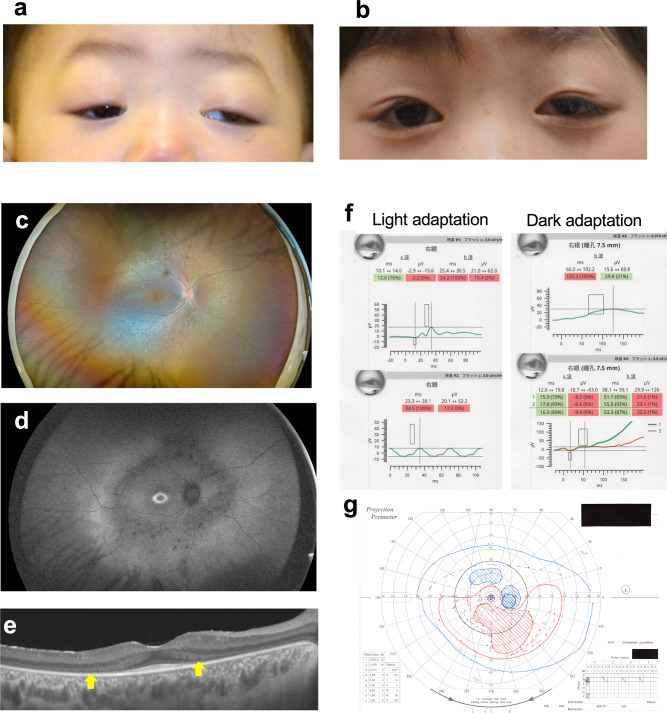 Figure 1
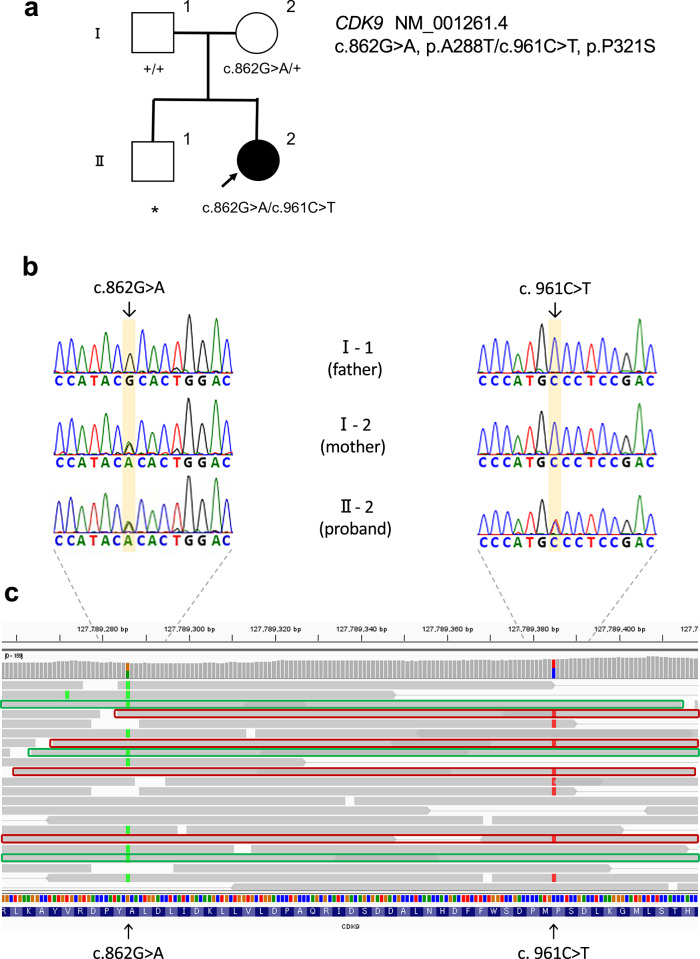 Figure 2
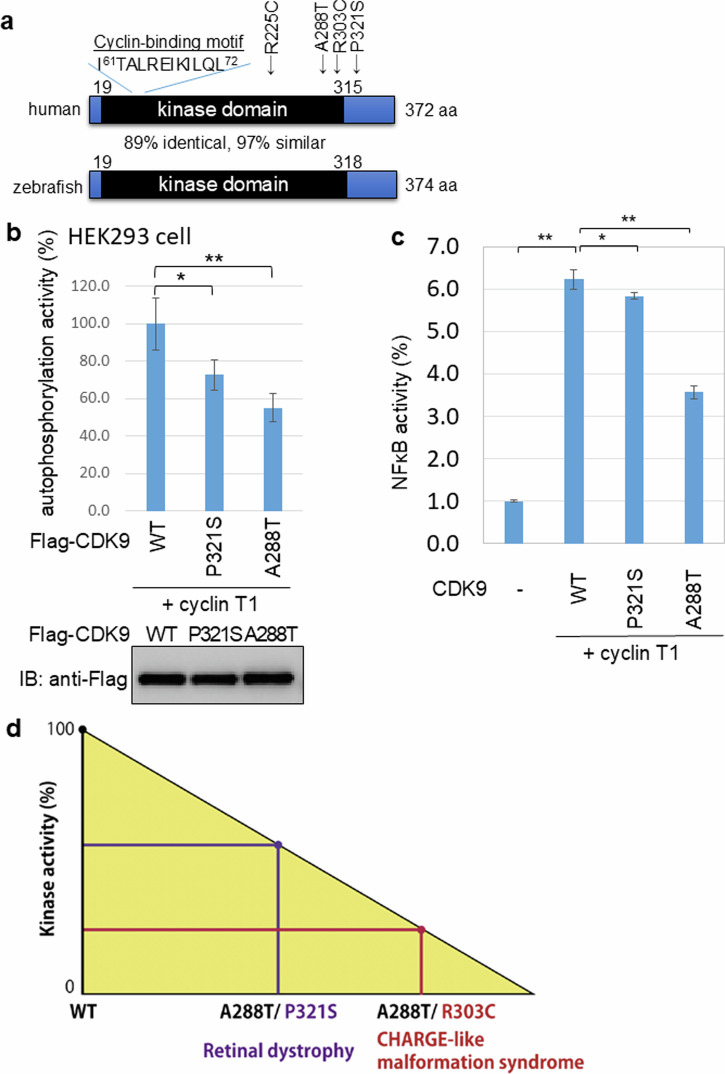 Figure 3
Peer Reviews
No public reviews on file for this paper yet. If you reviewed it on a platform where reviews are public (OpenReview, ICLR, NeurIPS, ICML), you can paste yours below so the community can read it here.
Videos
No videos yet. Explain this paper in a talk, walkthrough, or lecture? Add one.
Taxonomy
TopicsCongenital Ear and Nasal Anomalies · Genetics and Neurodevelopmental Disorders · Congenital heart defects research