Sinapine Modulates Glycogen and Lipid Synthesis via IRS1–PI3K–AKT–GSK3β–GS Pathway in Insulin‐Resistant Models
Tiancheng Xing, Yiling Bai, Weijie Wu, Ziqi Zhao, Hanyu Kong, Qianyi Zhang, Shuoqi Li, Yan Liu, Xiaohui Guo, Zengli Wang

TL;DR
Sinapine helps reduce insulin resistance by improving glycogen and lipid metabolism through a key signaling pathway in liver cells and diabetic mice.
Contribution
This study identifies the IRS1–PI3K–AKT–GSK3β–GS pathway as a novel target for sinapine in treating insulin resistance.
Findings
Sinapine improves glucose uptake and glycogen synthesis while reducing lipogenesis and ROS in HepG2 cells.
In T2DM mice, sinapine enhances insulin sensitivity and regulates lipid metabolism.
Molecular docking confirms strong binding affinity of sinapine to key proteins in the IRS1–PI3K–AKT–GSK3β–GS pathway.
Abstract
This study investigates the effects of sinapine on glycogen synthesis and lipid metabolism in insulin‐resistant HepG2 cell models and type 2 diabetes mellitus (T2DM) mice. Network pharmacology analysis integrated 288 potential sinapine targets and 920 insulin resistance‐related targets, yielding 72 overlapping genes. KEGG enrichment of these genes identified one significantly enriched insulin resistance pathway, with target mapping concentrated on the IRS1–PI3K–AKT–GSK3β–GS axis, suggesting a key role in promoting hepatic glycogen synthesis. Molecular docking identified these key targets on this signaling pathway, with sinapine showing strong binding affinity to its nuclear proteins (below −4.0 kcal/mol). In vitro, sinapine treatment improved glucose uptake and glycogen synthesis, while reducing lipogenesis, lipid accumulation, and reactive oxygen species (ROS) levels. RT‐qPCR and…
Genes, proteins, chemicals, diseases, species, mutations and cell lines named across the full text — each resolved to its canonical identifier and authoritative record.
Click any figure to enlarge with its caption.
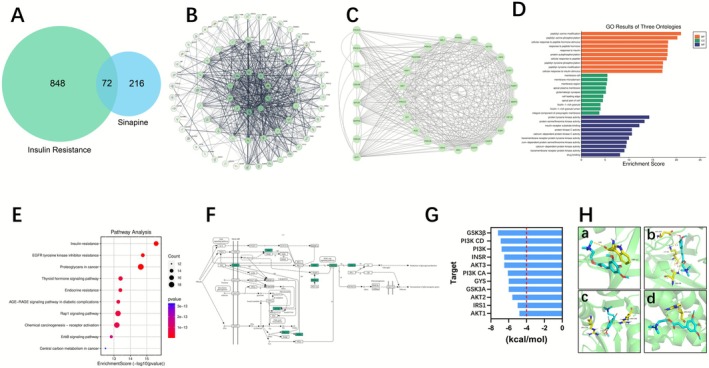 Figure 1
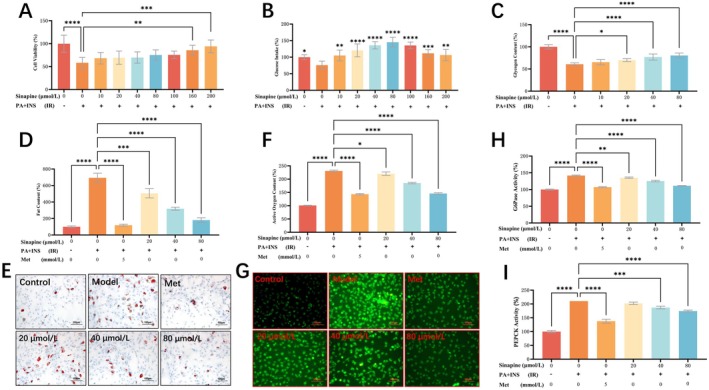 Figure 2
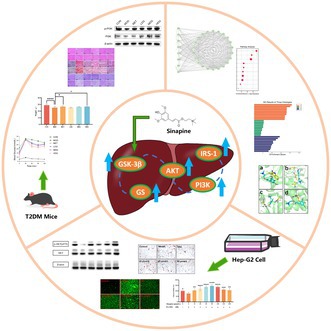 Figure 3
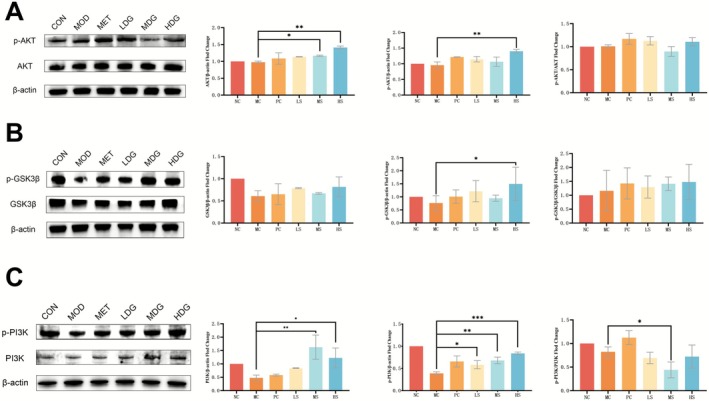 Figure 4
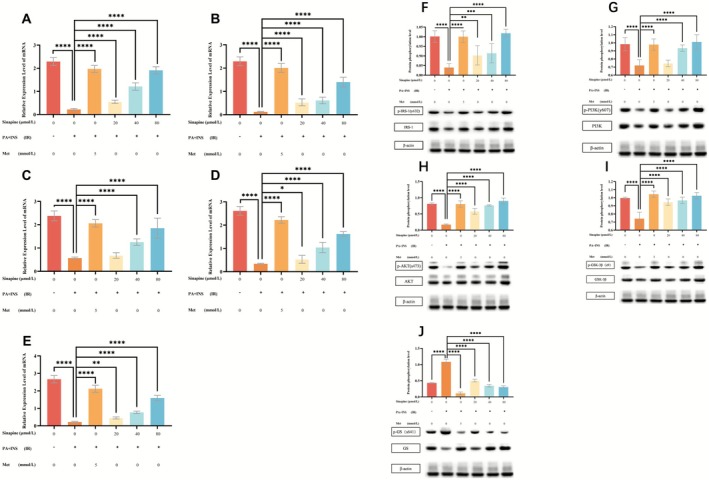 Figure 5
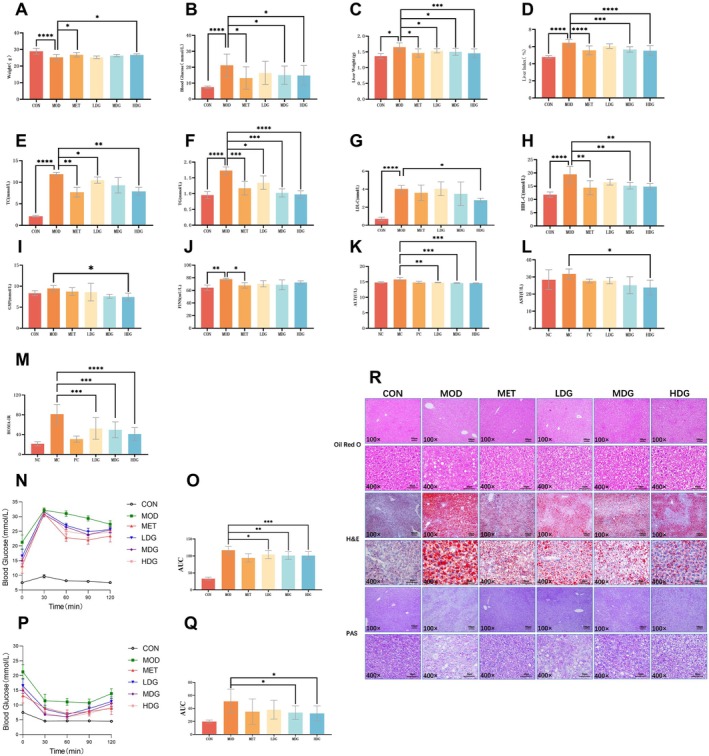 Figure 6
Peer Reviews
No public reviews on file for this paper yet. If you reviewed it on a platform where reviews are public (OpenReview, ICLR, NeurIPS, ICML), you can paste yours below so the community can read it here.
Videos
No videos yet. Explain this paper in a talk, walkthrough, or lecture? Add one.
Taxonomy
TopicsMetabolomics and Mass Spectrometry Studies · Berberine and alkaloids research · Cassava research and cyanide