Bottom‐Up Space Use With Top‐Down Temporal Risk Buffering in Arid Herbivore Communities
John Heydinger, Uakendisa Muzuma, Tammy Hoth‐Hanssen, Genevieve Finerty, Natalia Borrego, James Beasley

TL;DR
In arid regions, herbivores adjust their space use based on environmental factors and avoid predators by being active during the day, reducing overlap with nocturnal carnivores.
Contribution
The study introduces a hierarchical landscape of fear framework showing how bottom-up and top-down factors jointly shape herbivore behavior in unfenced arid systems.
Findings
Herbivores show low diel overlap with nocturnal predators due to temporal buffering of risk.
Bottom-up factors like dry-season progression and habitat structure strongly influence herbivore space use.
Spatial responses to predators are modulated by environmental context, highlighting spatiotemporal plasticity.
Abstract
The landscape of fear (LOF) framework predicts that prey adapt their behavior to mitigate predation risk, yet the framework's expression in resource‐limited, unfenced systems remains poorly understood. Across seven large herbivore species in an unfenced arid system, space use is governed by bottom‐up constraints while predator risk is buffered in time, producing consistent low diel overlap with nocturnal carnivores and trait‐dependent moderation of spatial responses. We used camera trap data from northwest Namibia to examine how five herbivore species (gemsbok Oryx gazella , southern giraffe Giraffa giraffa , greater kudu Tragelaphus strepsiceros , Hartmann's mountain zebra Equus zebra , springbok Antidorcas marsupialis ) and two megaherbivores (black rhinoceros Diceros bicornis , African bush elephant Loxodonta africana ) navigate bottom‐up environmental constraints and top‐down…
Genes, proteins, chemicals, diseases, species, mutations and cell lines named across the full text — each resolved to its canonical identifier and authoritative record.
Click any figure to enlarge with its caption.
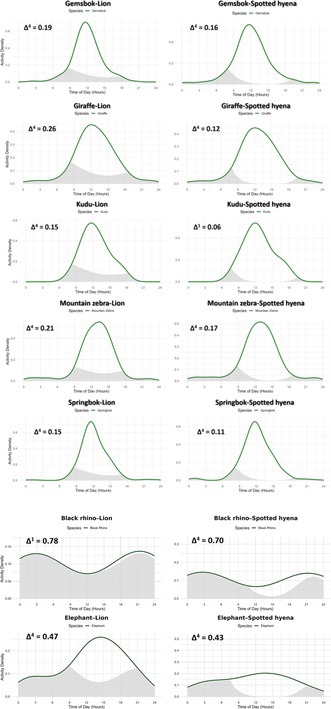 Figure 1
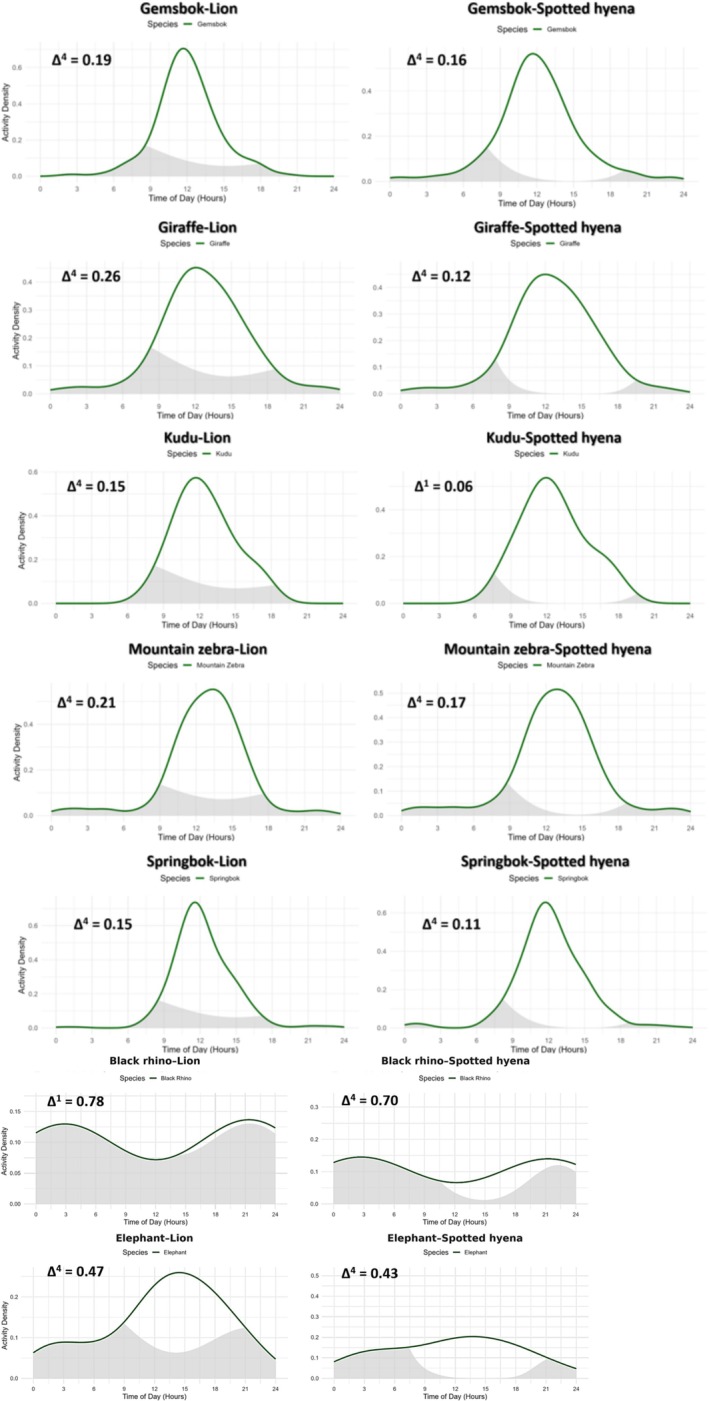 Figure 2
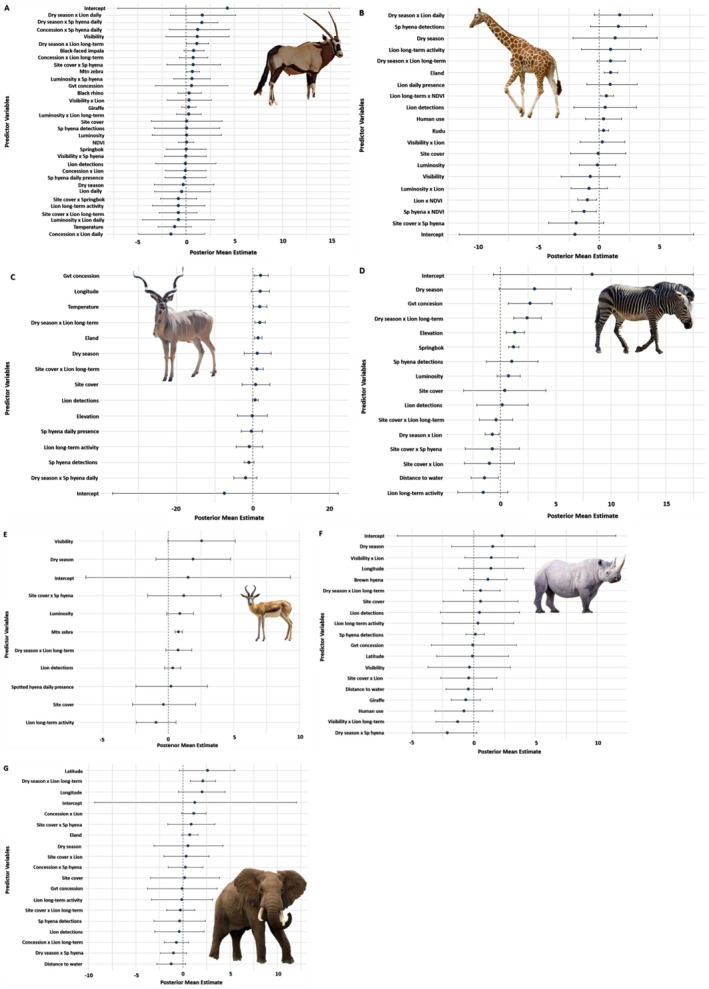 Figure 3
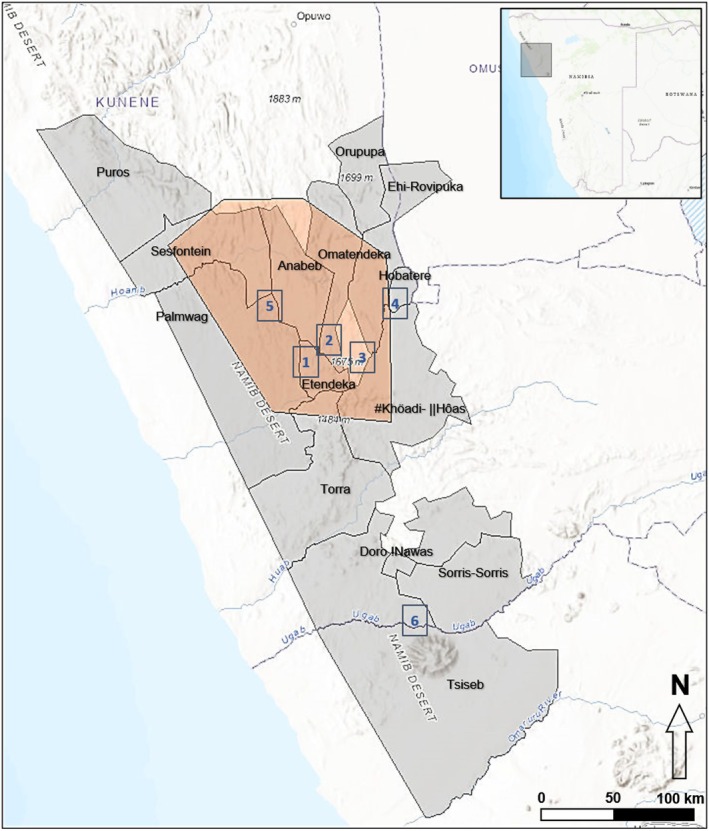 Figure 4
Peer Reviews
No public reviews on file for this paper yet. If you reviewed it on a platform where reviews are public (OpenReview, ICLR, NeurIPS, ICML), you can paste yours below so the community can read it here.
Videos
No videos yet. Explain this paper in a talk, walkthrough, or lecture? Add one.
Taxonomy
TopicsWildlife Ecology and Conservation · Animal Ecology and Behavior Studies · Avian ecology and behavior