Progressive, Sequential Non-arteritic Anterior Ischemic Optic Neuropathy in the Context of Metabolic Syndrome and a Crowded Disc: A Case Highlighting Synergistic Vascular Risk
Amirah Mohammad Razali, Muhammad Khairul Adha Fuaad, Muhammad Mohd Isa

TL;DR
A 44-year-old woman with metabolic syndrome and a crowded optic disc developed progressive vision loss in both eyes due to a rare eye condition.
Contribution
This case highlights the synergistic vascular risk factors contributing to sequential bilateral NAION despite optimized risk factor management.
Findings
The patient developed progressive NAION in one eye followed by sequential involvement of the other eye.
Despite optimization of metabolic and sleep apnea risk factors, the condition progressed.
The case suggests a complex interplay between metabolic syndrome, crowded optic disc, and vascular risk.
Abstract
Non-arteritic anterior ischaemic optic neuropathy (NAION) is an ischaemic disorder involving the anterior portion of the optic nerve. It typically presents with acute, painless vision loss upon awakening, accompanied by optic disc oedema and an inferior altitudinal visual field defect. We report a 44-year-old woman with multiple metabolic risk factors, obstructive sleep apnoea, and an anatomically crowded optic disc, who developed progressive NAION followed by sequential involvement of the fellow eye, despite optimization of her risk factors.
Genes, proteins, chemicals, diseases, species, mutations and cell lines named across the full text — each resolved to its canonical identifier and authoritative record.
Click any figure to enlarge with its caption.
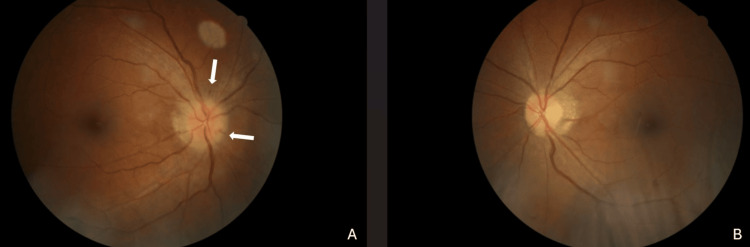 Figure 1
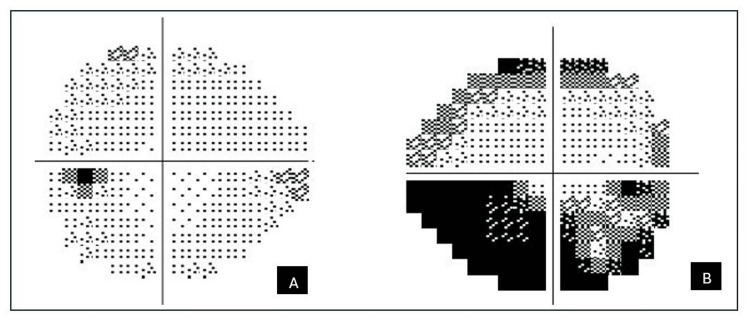 Figure 2
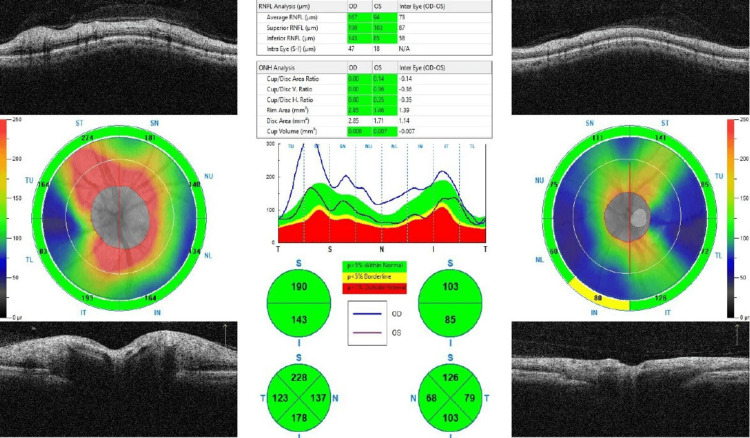 Figure 3
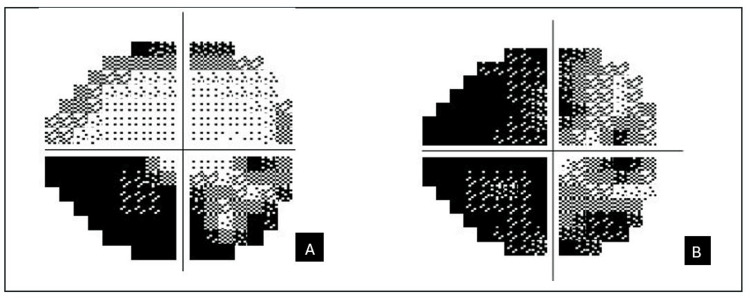 Figure 4
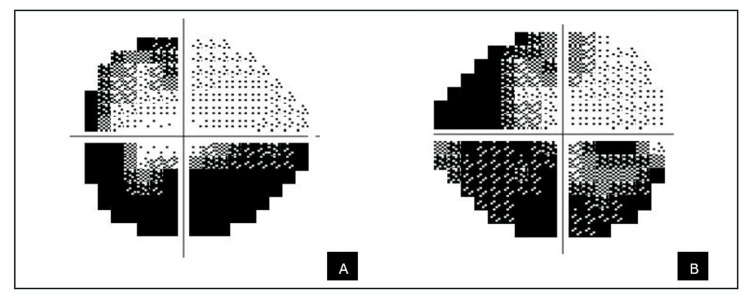 Figure 5
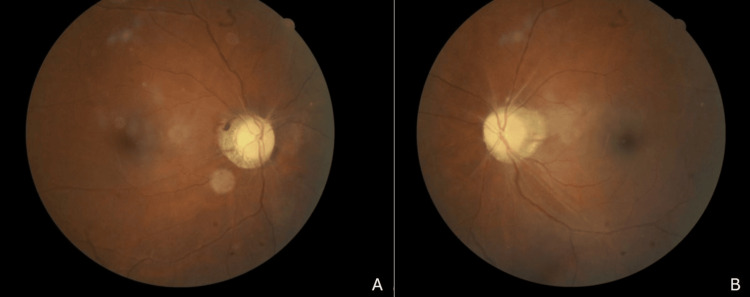 Figure 6
Peer Reviews
No public reviews on file for this paper yet. If you reviewed it on a platform where reviews are public (OpenReview, ICLR, NeurIPS, ICML), you can paste yours below so the community can read it here.
Videos
No videos yet. Explain this paper in a talk, walkthrough, or lecture? Add one.
Taxonomy
TopicsIntraoperative Neuromonitoring and Anesthetic Effects · Retinal and Optic Conditions · Neurological Complications and Syndromes