CT-Mapped Fusion Patterns After 360° Transforaminal Lumbar Interbody Fusion (TLIF) for Degenerative Spondylolisthesis: High Facet and Interbody Fusion Rates With Limited Clinical Correlates
Carla García-Ramos, Diego-Alberto Nuñez-Arreola, Diana-Laura Hernandez Moctezuma, Alejandro Antonio Reyes-Sanchez, Armando Alpizar-Aguirre, Baron Zarate-Kalfopulos, Irving O Estevez-Garcia, Ernesto Roldan-Valadez

TL;DR
This study found that transforaminal lumbar interbody fusion (TLIF) leads to high fusion rates in specific spinal areas, but these rates do not significantly affect patient disability outcomes after one year.
Contribution
The study provides new insights into the anatomical fusion patterns and their limited clinical impact after 360° TLIF for degenerative spondylolisthesis.
Findings
High interbody and facet joint fusion rates were observed after 360° TLIF.
Fusion location and number did not correlate with improvements in disability scores.
Complications were uncommon, and female patients showed higher fusion success in some cases.
Abstract
Introduction: Degenerative spondylolisthesis is a common cause of low back pain and disability. We evaluated fusion rates across predefined lumbar regions and their association with clinical outcomes after transforaminal lumbar interbody fusion (TLIF). We aimed to compare CT-confirmed fusion across predefined anatomical zones and to assess baseline-to-12-month changes in Oswestry Disability Index (ODI) and Roland-Morris Disability Questionnaire (RMDQ). Methods: We retrospectively analyzed 88 patients who underwent 360° TLIF at the Mexican National Rehabilitation Institute (January 2017-May 2022). Fusion at seven anatomical zones was assessed on a 12-month follow-up CT. Patient-reported outcomes at 12 months included the ODI and the RMDQ. Results: Operations most commonly involved L4-L5 (38; 43.1%), followed by L4-L5+L5-S1 (31; 35.3%), L3-L4+L4-L5 (12; 13.7%), L5-S1 (5; 5.9%), and…
Genes, proteins, chemicals, diseases, species, mutations and cell lines named across the full text — each resolved to its canonical identifier and authoritative record.
Click any figure to enlarge with its caption.
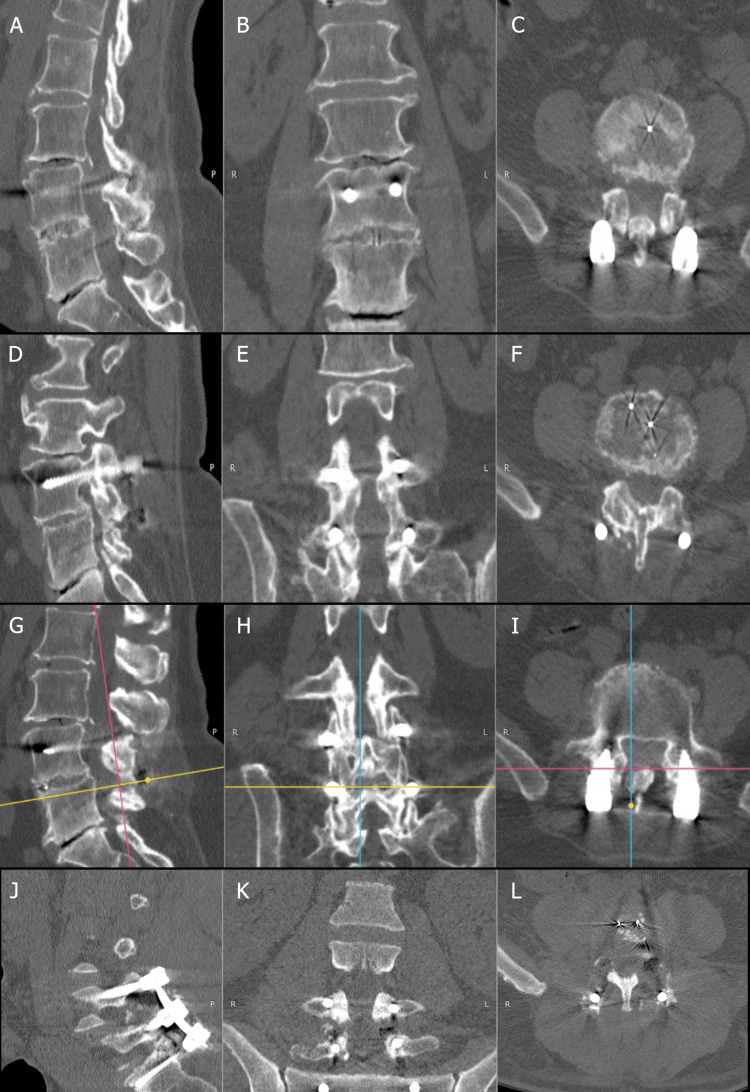 Figure 1
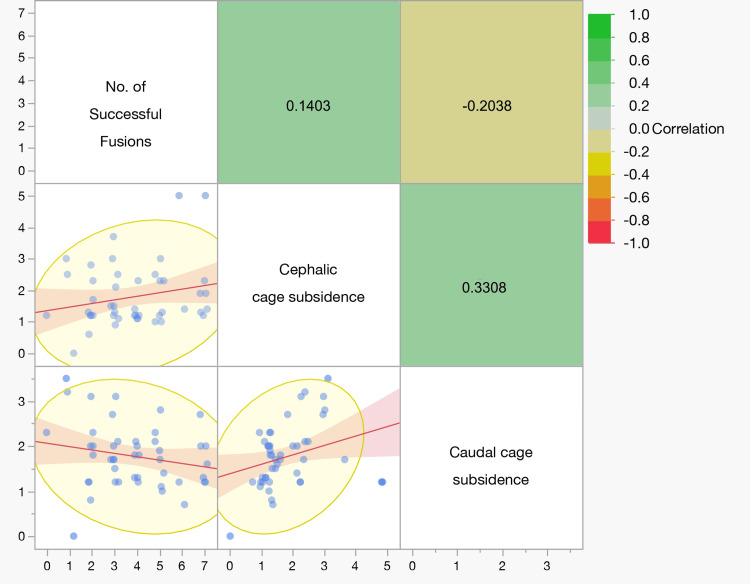 Figure 2
Peer Reviews
No public reviews on file for this paper yet. If you reviewed it on a platform where reviews are public (OpenReview, ICLR, NeurIPS, ICML), you can paste yours below so the community can read it here.
Videos
No videos yet. Explain this paper in a talk, walkthrough, or lecture? Add one.
Taxonomy
TopicsSpine and Intervertebral Disc Pathology · Cervical and Thoracic Myelopathy · Spinal Fractures and Fixation Techniques