A non-coding ABO regulatory variant associatedwith VWF levels, thrombosis risk, and COVID-19 severity is topologically linked to ADAMTS13 in endothelial cells
Douglas Victorino Esposito, Hellen Ferreira de Souza Sobrinho, Marcelo Rocha Marques

TL;DR
This study finds that non-coding ABO gene variants are linked to blood clot risk, VWF levels, and severe COVID-19 by regulating ADAMTS13 in blood vessel cells.
Contribution
The study identifies a non-coding ABO variant that regulates ADAMTS13 through chromatin interactions, linking it to thrombosis and COVID-19 severity.
Findings
Non-coding ABO variants are spatially linked to ADAMTS13 in endothelial cells.
CRISPRa activation of a non-coding ABO variant increases ADAMTS13 transcription.
The rs505922-C allele reduces transcriptional activity in endothelial cells.
Abstract
Venous thromboembolism (VTE) is a major cause of mortality, influenced by genetic and environmental factors. von Willebrand factor (VWF) mediates hemostasis by promoting platelet adhesion, and its plasma levels are associated with thrombotic risk. Although many non-coding variants in ABO are associated with VWF levels, VTE risk, and COVID-19 severity, the mechanisms underlying these associations remain unclear. In this study, we identified the ABO locus as the genomic region with the highest concentration of variants associated with VWF levels. Chromatin conformation analyses in endothelial cells revealed non-coding ABO variants (rs657152, rs9411377, rs660340, and rs505922) associated with VWF levels, VTE risk, and COVID-19 severity, located in spatial proximity to ADAMTS13. ADAMTS13 is a key regulator of VWF activity, and both ADAMTS13 and VWF play crucial roles in coagulation and…
Genes, proteins, chemicals, diseases, species, mutations and cell lines named across the full text — each resolved to its canonical identifier and authoritative record.
Click any figure to enlarge with its caption.
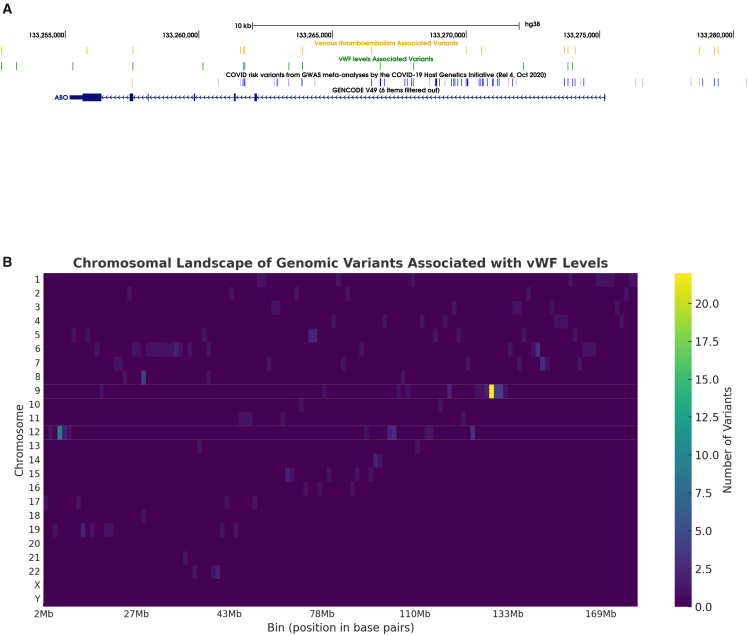 Figure 1
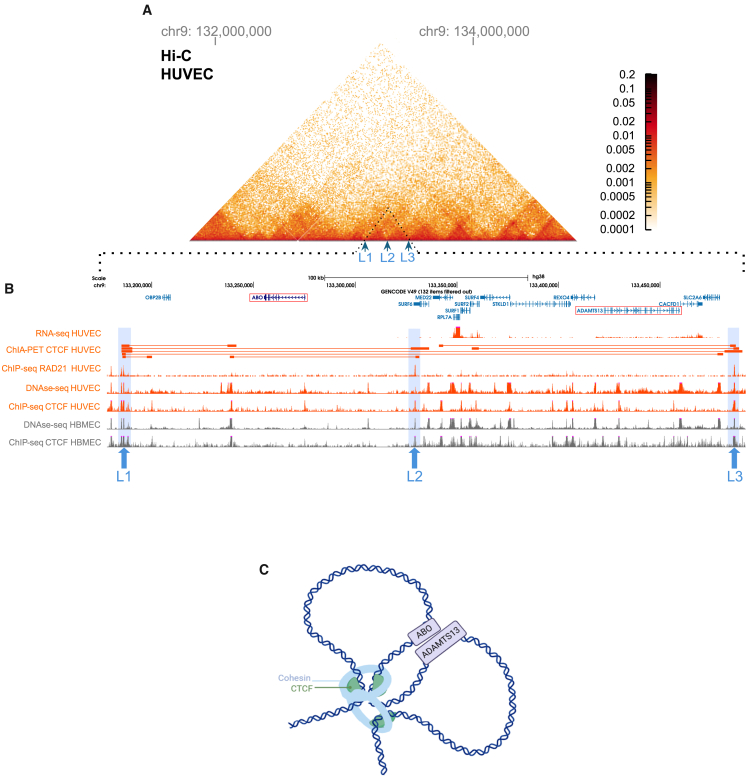 Figure 2
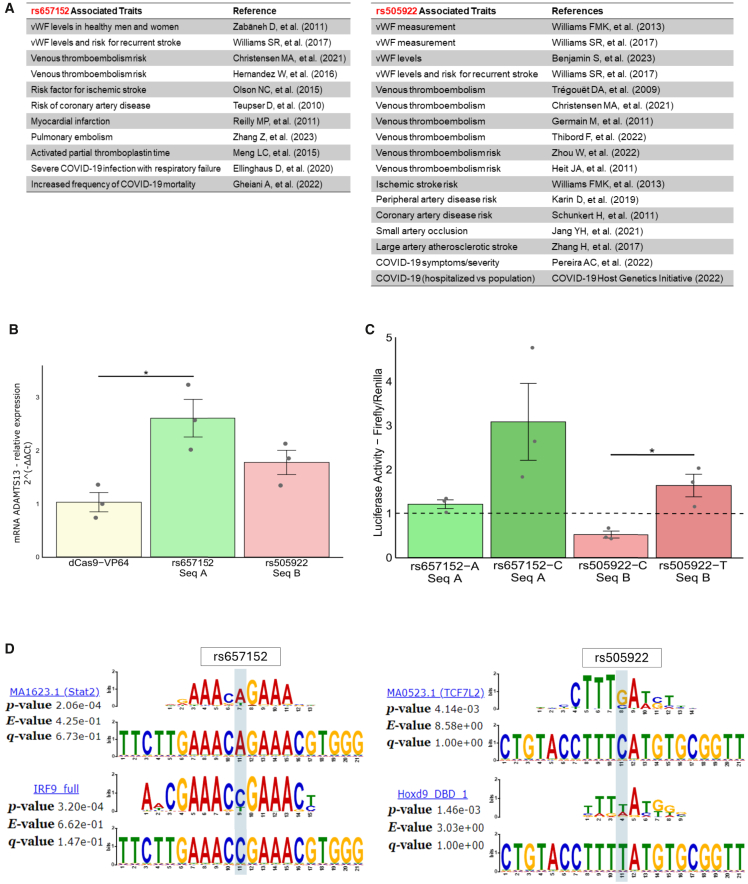 Figure 3
Peer Reviews
No public reviews on file for this paper yet. If you reviewed it on a platform where reviews are public (OpenReview, ICLR, NeurIPS, ICML), you can paste yours below so the community can read it here.
Videos
No videos yet. Explain this paper in a talk, walkthrough, or lecture? Add one.
Taxonomy
TopicsComplement system in diseases · Platelet Disorders and Treatments · Blood groups and transfusion