Validation of Quantitative Magnetic Resonance Cholangiopancreatography Metrics in Prediction of Transplant-free Survival in Primary Sclerosing Cholangitis
Tim E. Middelburg, Bregje Mol, Carlos Ferreira, Tom Davis, Karin Horsthuis, Ynte S. de Boer, Adriaan J. van der Meer, Annemarie C. de Vries, Roy S. Dwarkasing, Johannes A. Bogaards, Aart J. Nederveen, Jaap Stoker, Cyriel Y. Ponsioen

TL;DR
This study shows that quantitative MRCP metrics can predict long-term outcomes in patients with primary sclerosing cholangitis.
Contribution
The study validates quantitative MRCP metrics as a reliable predictor of transplant-free survival in PSC.
Findings
Quantitative MRCP metrics like number of strictures and duct size proportions are prognostic for transplant-free survival.
A risk classifier using these metrics showed strong risk stratification with a threefold higher hazard for high-risk patients.
The model had a C-statistic of 0.72, indicating moderate to good predictive accuracy.
Abstract
Qualitative magnetic resonance cholangiopancreatography (MRCP) scoring models in primary sclerosing cholangitis (PSC) are hampered by interobserver variability and evidence for quantitative MRCP has so far been limited by cohort sizes, follow-up time and lack of validation. This study aimed to validate the prognostic value of quantitative MRCP metrics in PSC in a large multicentre cohort. Retrospective, cross-sectional, clinical and quantified MRCP data by MRCP+ were collected from a non-transplant and transplant centre and randomised (1:1 ratio) into a derivation and validation set. Transplant-free survival, a composite of liver transplantation and PSC-related mortality (excluding colorectal carcinoma), was the primary endpoint. Least absolute shrinkage and selection operator analysis with manual guidance was used to compose a risk classifier. Prognostic performance and risk…
Genes, proteins, chemicals, diseases, species, mutations and cell lines named across the full text — each resolved to its canonical identifier and authoritative record.
Click any figure to enlarge with its caption.
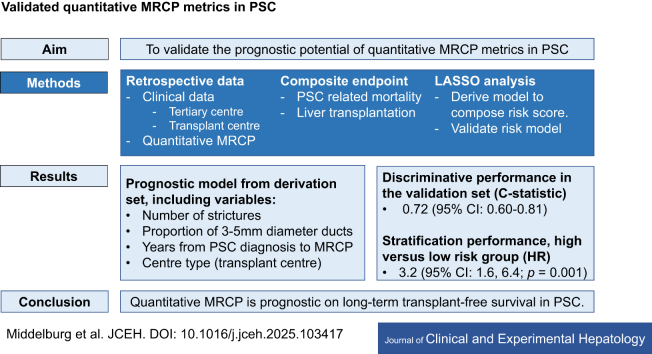 Figure 1
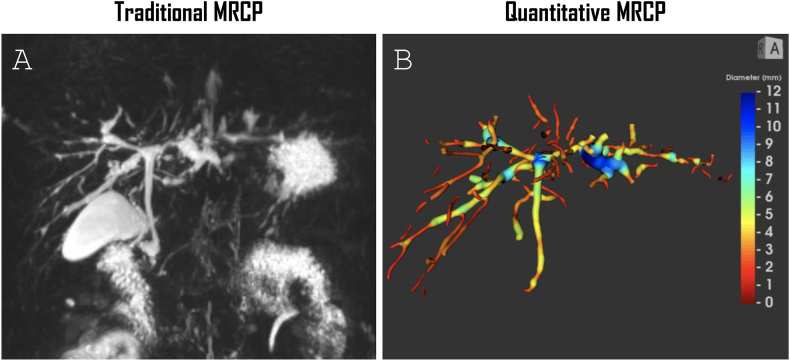 Figure 2
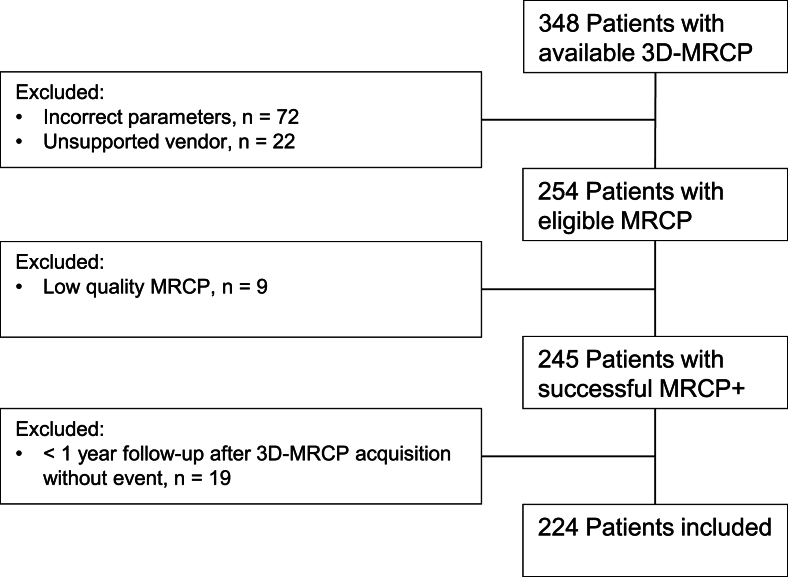 Figure 3
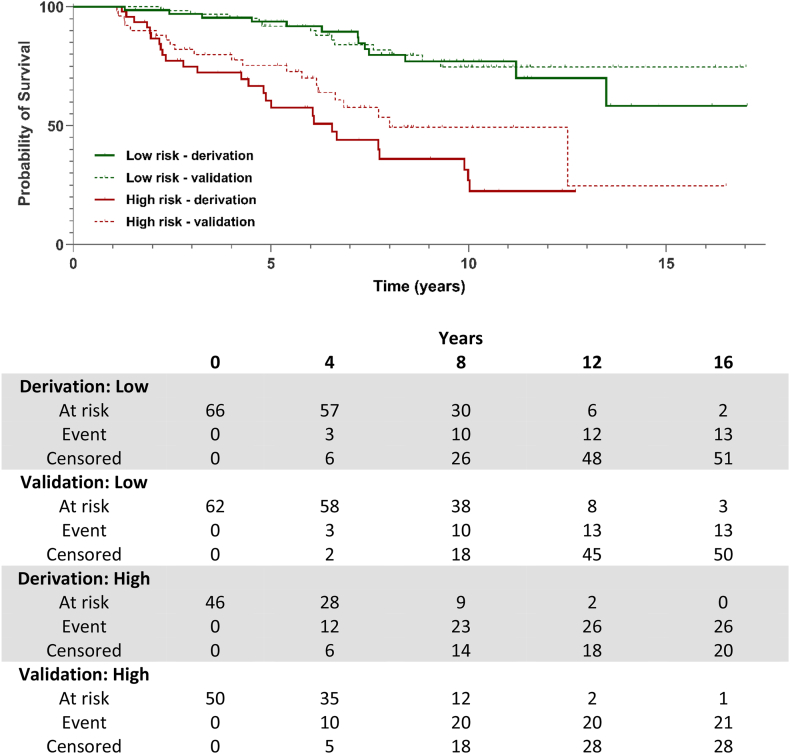 Figure 4
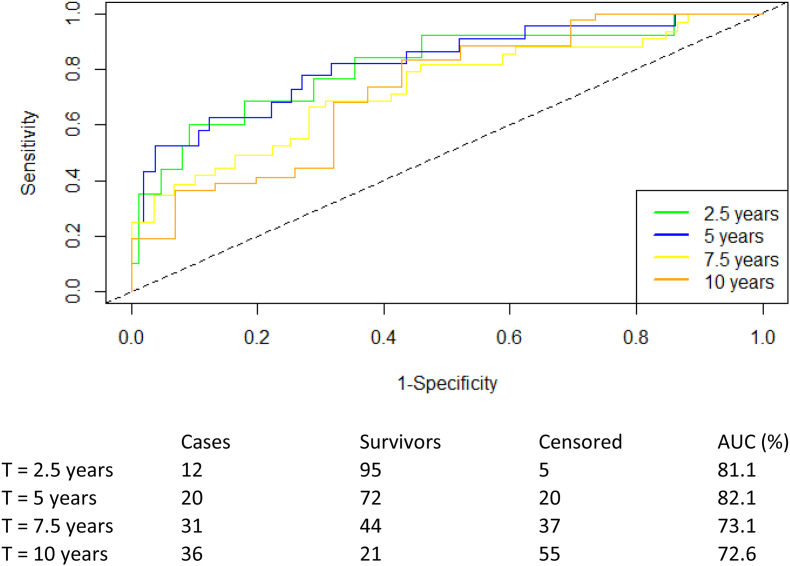 Figure 5
Peer Reviews
No public reviews on file for this paper yet. If you reviewed it on a platform where reviews are public (OpenReview, ICLR, NeurIPS, ICML), you can paste yours below so the community can read it here.
Videos
No videos yet. Explain this paper in a talk, walkthrough, or lecture? Add one.
Taxonomy
TopicsGallbladder and Bile Duct Disorders · Liver Diseases and Immunity · Pediatric Hepatobiliary Diseases and Treatments