Role of Rate of Force Development in Mediating the Relationship Between Task-Specific Fear and Chronic Low Back Pain Among Japanese Caregivers: A Pilot Cross-Sectional Mediation Study
Teppei Abiko, Shin Murata, Hayato Shigetoh, Norihisa Matsumoto, Yamaguchi Hideaki, Michie Ohyama, Eiji Sakata, Wayne Hing

TL;DR
This study explores how fear of movement in caregivers relates to chronic low back pain through reduced explosive strength during sit-to-stand tasks.
Contribution
The study identifies rate of force development as a potential biomarker linking task-specific fear to chronic low back pain in caregivers.
Findings
Early-phase RFD during stand-to-sit correlated negatively with task-specific fear and CLBP intensity.
Mediation analysis showed a significant indirect effect of fear on CLBP through RFD.
Higher fear was associated with suppressed RFD, suggesting a force-control deficit linked to chronic pain.
Abstract
Background Chronic low back pain (CLBP) is prevalent among caregivers; however, the mechanisms linking psychological factors like fear of movement to pain are unclear. This study investigated whether the rate of force development (RFD), a measure of explosive strength, mediates the relationship between task-specific fear and CLBP intensity in this high-risk population. Methods Thirty-two Japanese care workers (13 CLBP, 19 healthy) performed sit-to-stand and stand-to-sit tasks on a force plate after rating their task-specific fear. Vertical ground reaction force was used to calculate early-phase RFD (0-100 ms) during stand-to-sit, the prespecified mediator. CLBP was defined as pain persisting for >3 months. Associations were analyzed using Spearman's correlation and a 1,000-sample bootstrap mediation model. Results Early-phase RFD (0-100 ms) during stand-to-sit correlated negatively…
Genes, proteins, chemicals, diseases, species, mutations and cell lines named across the full text — each resolved to its canonical identifier and authoritative record.
Click any figure to enlarge with its caption.
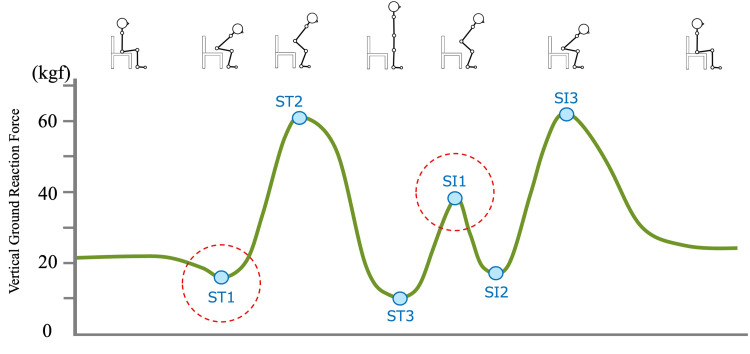 Figure 1
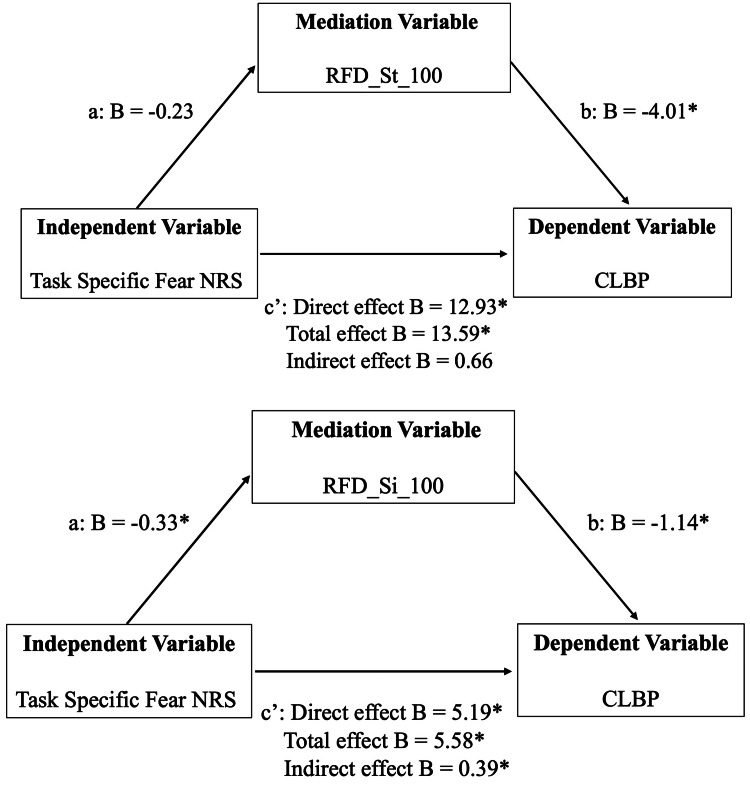 Figure 2
Peer Reviews
No public reviews on file for this paper yet. If you reviewed it on a platform where reviews are public (OpenReview, ICLR, NeurIPS, ICML), you can paste yours below so the community can read it here.
Videos
No videos yet. Explain this paper in a talk, walkthrough, or lecture? Add one.
Taxonomy
TopicsMusculoskeletal pain and rehabilitation · Pain Mechanisms and Treatments · Ergonomics and Musculoskeletal Disorders