Tailoring human joint-on-a-chip: from biological principles, materials, to disease modeling
Xuejiao Wang, Louis Jun Ye Ong, Marcel Karperien, Chunyi Wen

TL;DR
This review discusses the development of joint-on-a-chip models to study joint diseases and personalize medicine using microfluidics and tissue engineering.
Contribution
The paper provides a comprehensive guide for engineers, biologists, and clinicians on designing biomimetic joint-on-a-chip platforms.
Findings
Advanced materials and microfabrication techniques enable high-fidelity joint-on-a-chip models.
Future success depends on cell co-culture, automated control, and real-time monitoring.
JoC platforms can model disease-specific interactions through simplified tissue systems.
Abstract
Joint-on-a-chip (JoC) is a miniaturized in vitro model based on microfluidics and tissue engineering, aiming to provide revelational platform to study joint physiology and pathology for personalized medicine. Engineering biomimetic JoC necessitates recreating the physiological architecture and biomechanical environment, while incorporating systemic risk factors involved in pathogenesis. In this review, we aim to provide an overview manual to bridge the gap between engineers, biologists, and clinicians. We start with joint biology to the basic characteristics of JoC and summarize the important designing factors. We categorize materials used in chip fabrication and highlight how recent advances in material science, integrated with established microfabrication techniques have enabled the development of advanced chips. Existing joint-on-a-chip platforms enable targeted investigation and…
Genes, proteins, chemicals, diseases, species, mutations and cell lines named across the full text — each resolved to its canonical identifier and authoritative record.
Click any figure to enlarge with its caption.
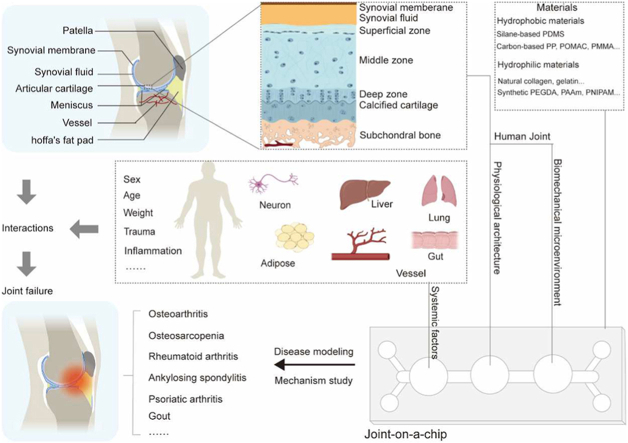 Figure 1
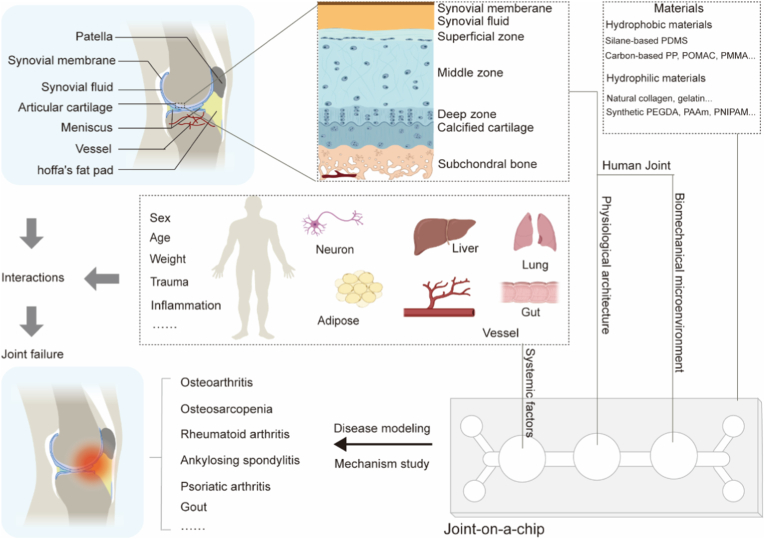 Figure 2
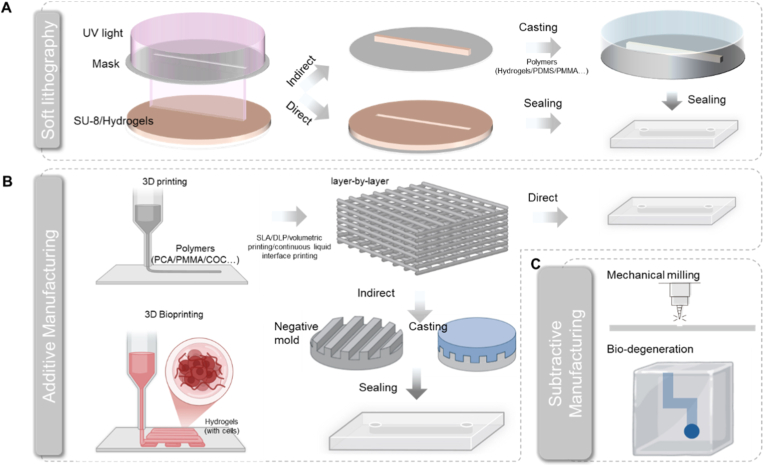 Figure 3
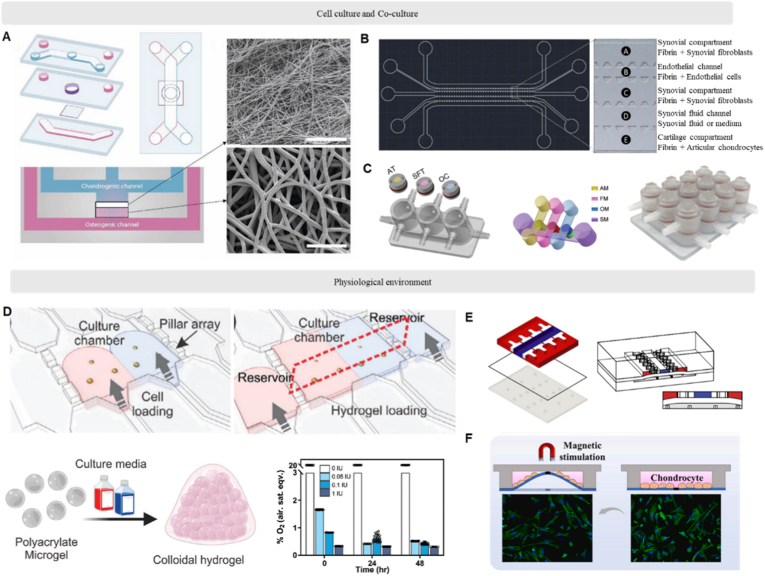 Figure 4
 Figure 5
 Figure 6
Peer Reviews
No public reviews on file for this paper yet. If you reviewed it on a platform where reviews are public (OpenReview, ICLR, NeurIPS, ICML), you can paste yours below so the community can read it here.
Videos
No videos yet. Explain this paper in a talk, walkthrough, or lecture? Add one.
Taxonomy
Topics3D Printing in Biomedical Research · Microfluidic and Bio-sensing Technologies · Microfluidic and Capillary Electrophoresis Applications