DECIPHER-PRAD: an advanced fragmentomics-based cell-free DNA assay for prostate cancer early detection
Shun Zhang, Guanchen Zhu, Linfeng Xu, Qing Zhang, Xuefeng Qiu, Hua Bao, Min Wu, Xiaotian Zhao, Tao Ding, Fufeng Wang, Shuang Chang, Yang Shao, Junlong Zhuang, Hongqian Guo

TL;DR
A new non-invasive blood test using cell-free DNA patterns shows high accuracy for early prostate cancer detection, especially when combined with PSA levels.
Contribution
Developed a cfDNA fragmentomics-based assay with machine learning that improves prostate cancer screening accuracy and specificity.
Findings
The fragmentomics-based model achieved an AUC of 0.933 in the training cohort with high specificity.
The model maintained strong performance in the validation cohort with an AUC of 0.887.
Combining the model with PSA levels improved sensitivity at 98% specificity across cancer stages.
Abstract
Early detection of prostate cancer is limited by the poor specificity of prostate-specific antigen (PSA)-based screening. Cell-free DNA (cfDNA) fragmentomics offers a promising non-invasive approach to improve screening accuracy and risk stratification. In this study, we enrolled 106 prostate cancer patients and 114 high-risk non-cancer individuals to develop a cfDNA fragmentomics-based screening assay using plasma whole-genome sequencing. Two fragmentomic features—copy number variation and fragment size profile—were incorporated into machine learning models for training and evaluated in an independent validation cohort of 83 cancer patients and 76 non-cancer individuals. The fragmentomics-based model achieved an area under the curve (AUC) of 0.933 in the training cohort (66.0% sensitivity at 95.6% specificity; 51.9% sensitivity at 98.2% specificity) with good calibration (slope: 0.957;…
Genes, proteins, chemicals, diseases, species, mutations and cell lines named across the full text — each resolved to its canonical identifier and authoritative record.
Click any figure to enlarge with its caption.
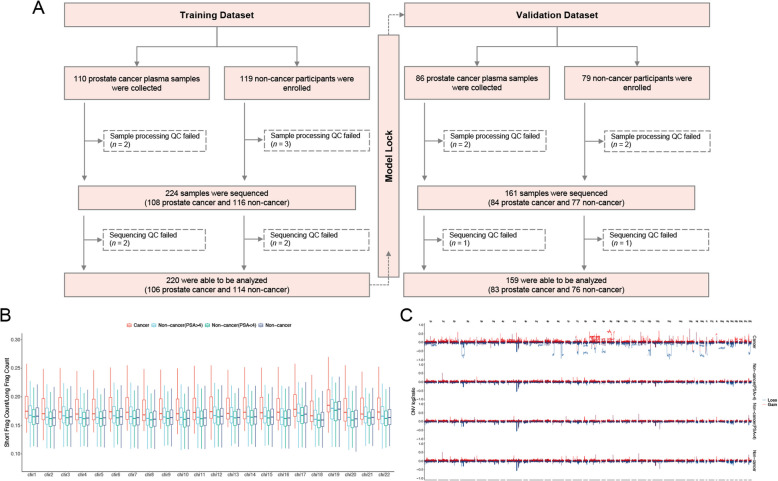 Figure 1
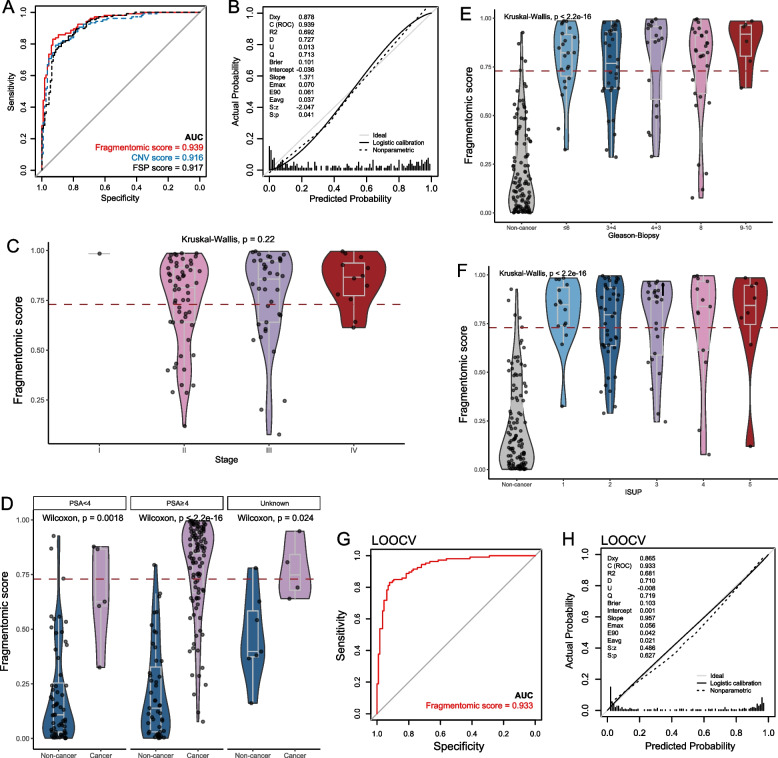 Figure 2
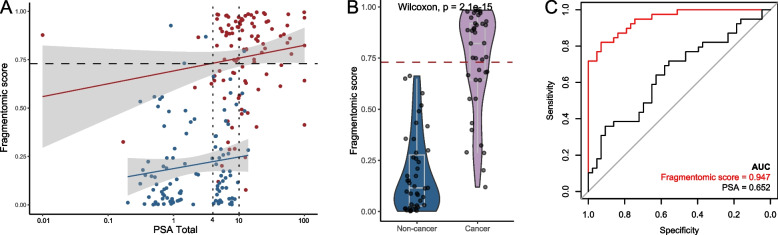 Figure 3
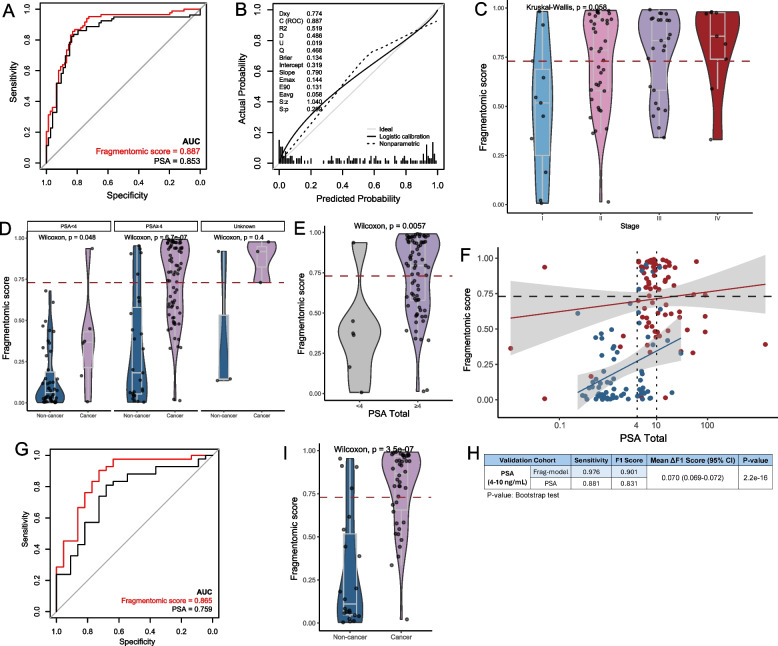 Figure 4
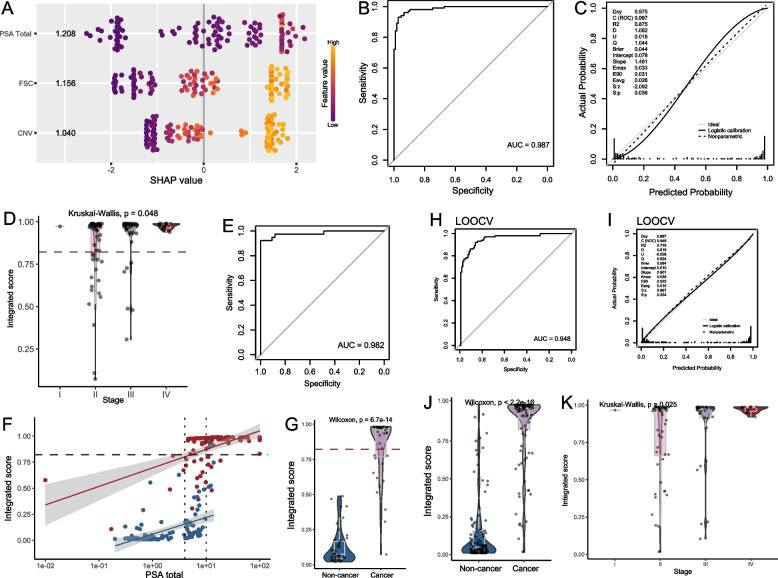 Figure 5
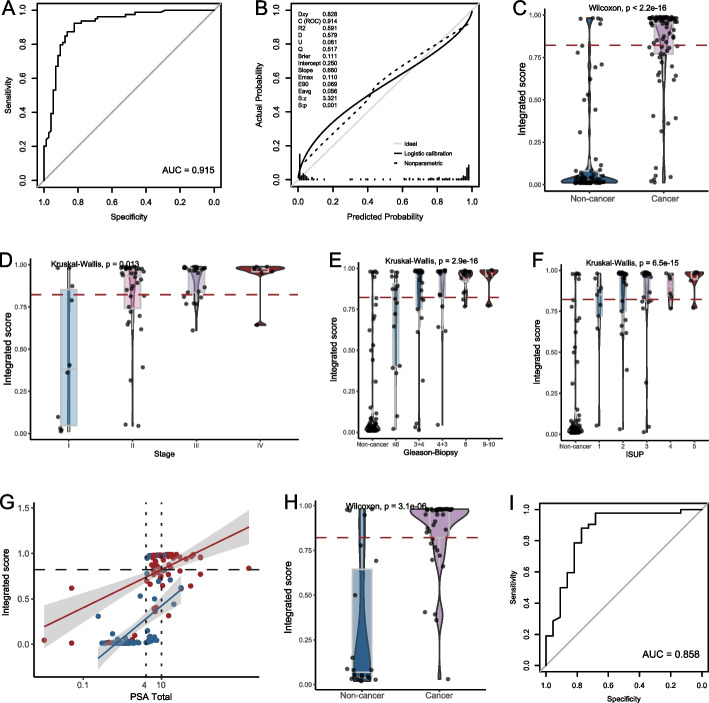 Figure 6
Peer Reviews
No public reviews on file for this paper yet. If you reviewed it on a platform where reviews are public (OpenReview, ICLR, NeurIPS, ICML), you can paste yours below so the community can read it here.
Videos
No videos yet. Explain this paper in a talk, walkthrough, or lecture? Add one.
Taxonomy
TopicsCancer Genomics and Diagnostics · Prostate Cancer Diagnosis and Treatment · Prostate Cancer Treatment and Research