AAV9 gene therapy optimization for SMARD1/CMT2S: safety and long-term efficacy comparison of two vectors in a SMARD1 preclinical model
Elisa Pagliari, Alessia Anastasia, Floriana Bellandi, Manuela Garbellini, Jessica Ongaro, Michela Taiana, Giacomo P. Comi, Linda Ottoboni, Julieth Andrea Sierra-Delgado, Shibi Likhite, Kathrin C. Meyer, Monica Nizzardo, Stefania P. Corti

TL;DR
This study compares two gene therapy vectors for treating a rare motor neuron disease in mice, finding one to be more effective and safer in the long term.
Contribution
The study introduces and compares two optimized AAV9 vectors for SMARD1/CMT2S gene therapy, identifying the P546-promoter construct as superior in safety and long-term efficacy.
Findings
Both AAV9 vectors improved survival, body weight, and motor function in SMARD1 mice.
The P546-promoter vector showed better long-term efficacy and a safer profile than the CBA vector.
Treatment reduced inflammation and preserved motor neurons and neuromuscular junctions.
Abstract
Mutations in the Immunoglobulin Mu DNA Binding Protein 2 (IGHMBP2) gene cause Spinal Muscular Atrophy with Respiratory Distress type 1 (SMARD1), a rare, infantile, and fatal motor neuron disease, as well as the milder Charcot-Marie-Tooth disease type 2S (CMT2S). Gene therapy has emerged as a promising approach to correcting IGHMBP2 loss in SMARD1 models, but critical challenges remain. In this study, we compared the efficacy of two novel, optimized adeno-associated virus 9 (AAV9)-IGHMBP2 vectors, utilizing either the Chicken β-Actin (CBA) or a truncated form of the methyl-CpG-binding protein 2 (MeCP2) promoter (P546), in the SMARD1 murine model via intracerebroventricular delivery. Treated mice survival, histopathological and molecular profile were analyzed. Corroborating previous findings, both constructs effectively rescued the pathological phenotype, significantly improving…
Genes, proteins, chemicals, diseases, species, mutations and cell lines named across the full text — each resolved to its canonical identifier and authoritative record.
Click any figure to enlarge with its caption.
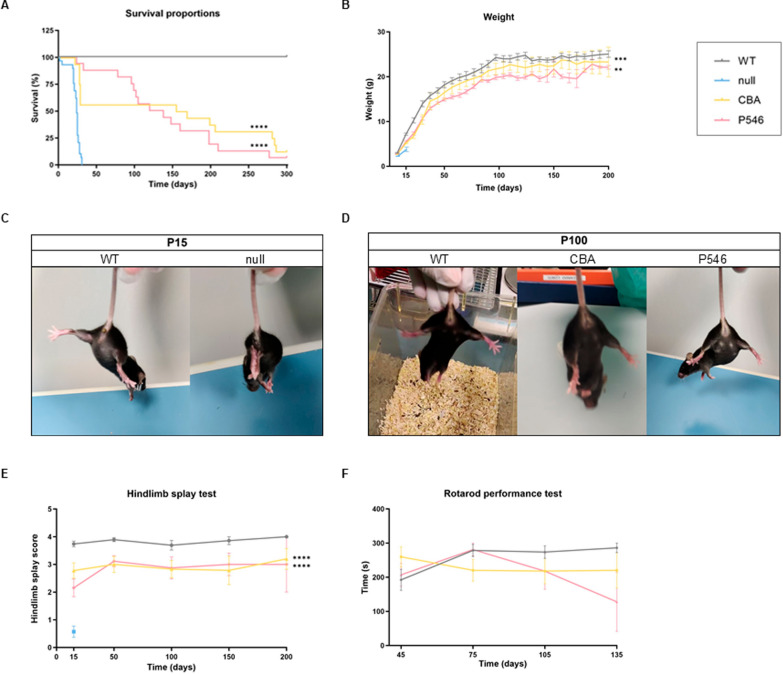 Figure 1
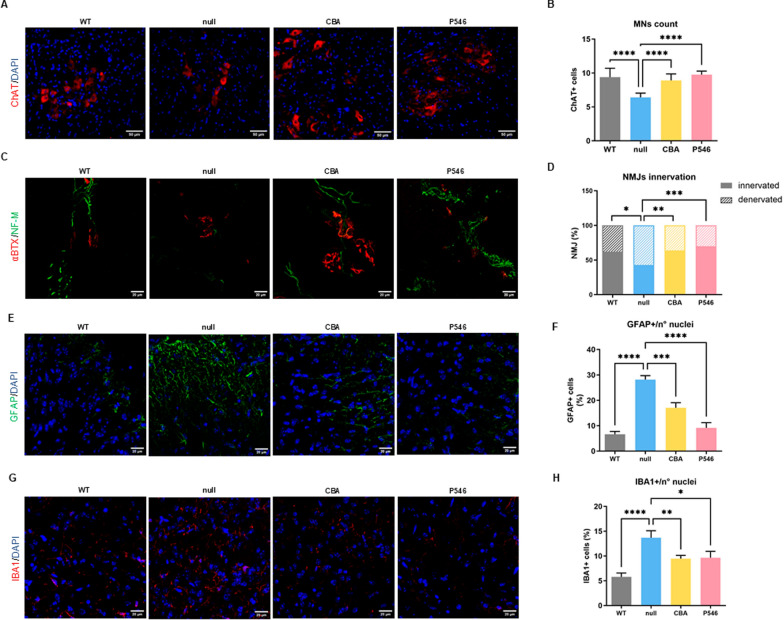 Figure 2
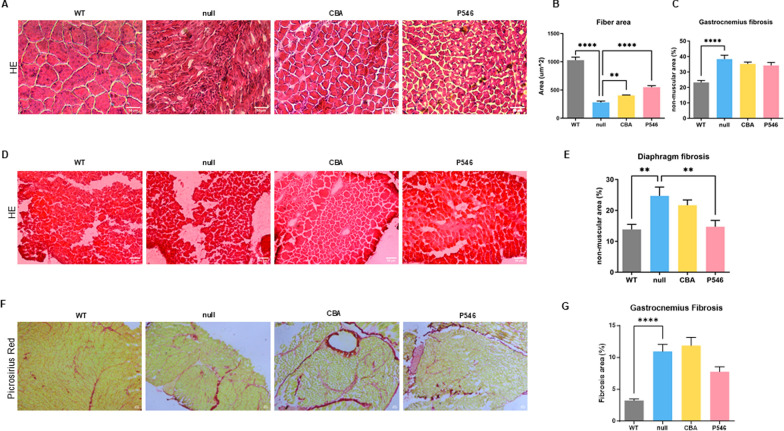 Figure 3
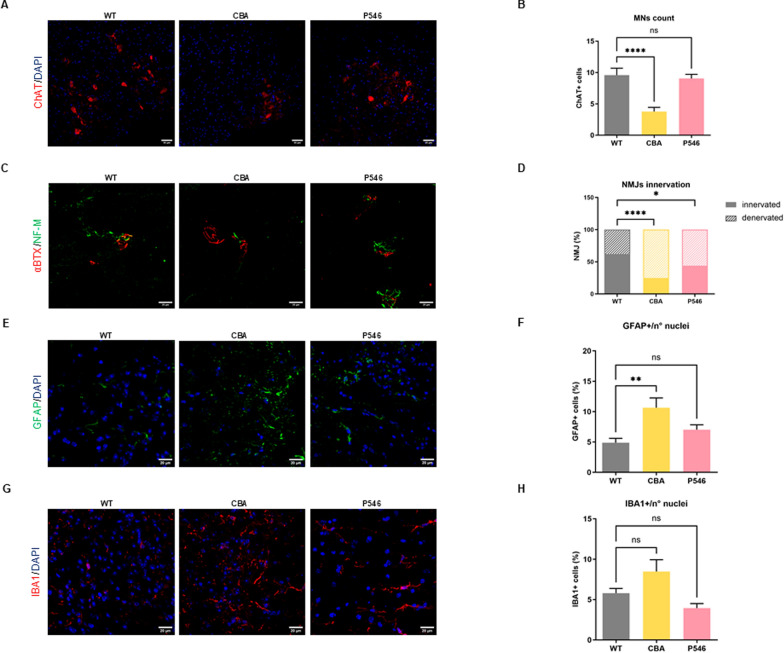 Figure 4
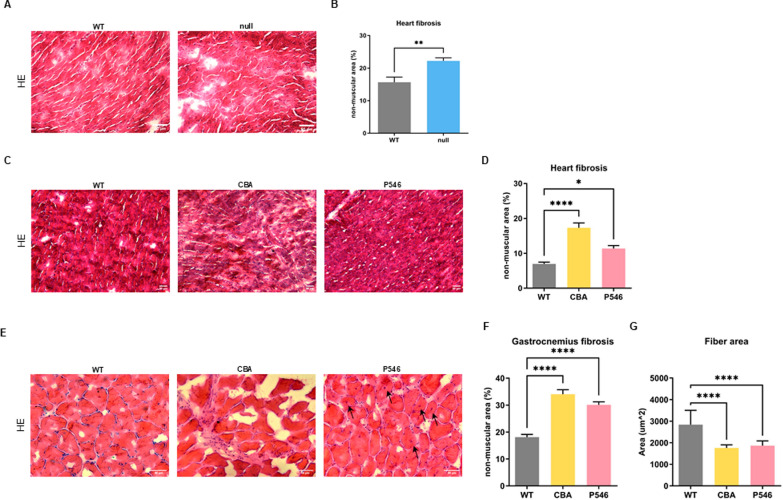 Figure 5
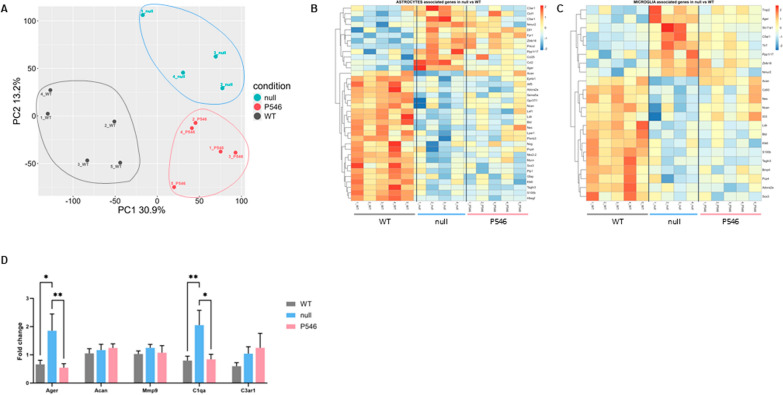 Figure 6
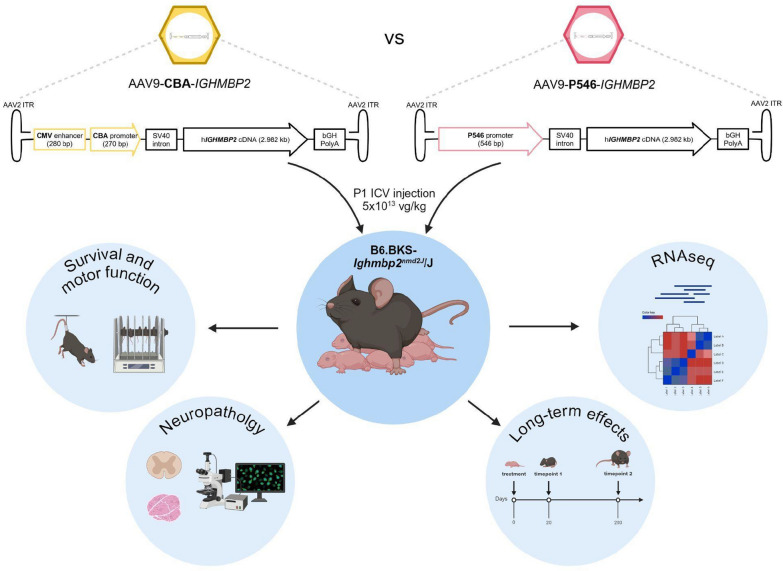 Figure 7
Peer Reviews
No public reviews on file for this paper yet. If you reviewed it on a platform where reviews are public (OpenReview, ICLR, NeurIPS, ICML), you can paste yours below so the community can read it here.
Videos
No videos yet. Explain this paper in a talk, walkthrough, or lecture? Add one.
Taxonomy
TopicsNeurogenetic and Muscular Disorders Research · Hereditary Neurological Disorders · Muscle Physiology and Disorders