Physeal Allograft Transfer for Physeal Bars: A Safety and Feasibility Study in a Domestic Swine Model
J. V. Korpershoek, C. Chen, C. V. Nagelli, K. L. Lydon, M. L. Floren, D. B. F. Saris, A. N. Larson, T. A. Milbrandt

TL;DR
This study explores the safety and feasibility of transferring donor growth plates in pigs to treat growth plate closure, finding high viability but poor integration.
Contribution
The study introduces physeal allograft transfer as a potential treatment for growth plate closure using a large animal model.
Findings
Physeal allografts showed 93% viability after preservation and no gross deformities in treated animals.
Transferred growth plates demonstrated poor integration and incomplete repair despite structural integrity.
Control groups also lacked physeal bar formation, limiting the model's reliability for future studies.
Abstract
Premature physeal closure occurs following trauma, cancer, or infection. Current treatments have poor success rates. With recent pediatric donor tissue availability, physeal allograft transfer (PAT) can now be considered. The purpose of this study was to study the safety and feasibility of PAT in a large animal model. The aim of this study is to gather foundational data to inform future studies into the efficacy of PAT. Physeal defects were created in the distal femur of nine female domestic swine and treated with PAT from two male donor pigs, cementation, or bone autograft. Viability was assessed. After 3 months, physes were visualized using CT and MRI. Integration, tissue composition, donor DNA presence, and microscopic appearance were evaluated. Physeal allografts demonstrated 93% viability after procurement and preservation. All animals reached the 3‐months study endpoint without…
Genes, proteins, chemicals, diseases, species, mutations and cell lines named across the full text — each resolved to its canonical identifier and authoritative record.
Click any figure to enlarge with its caption.
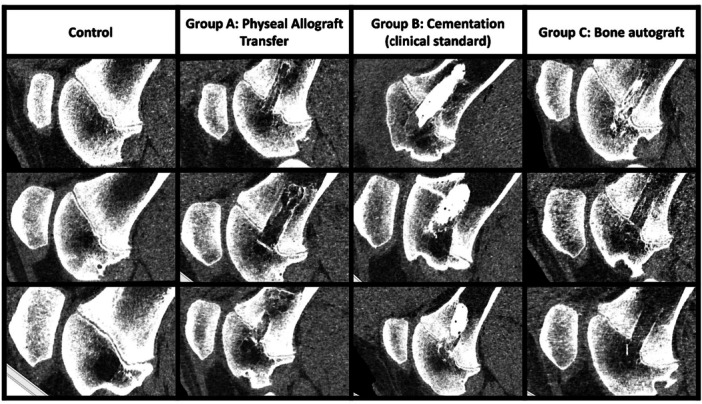 Figure 1
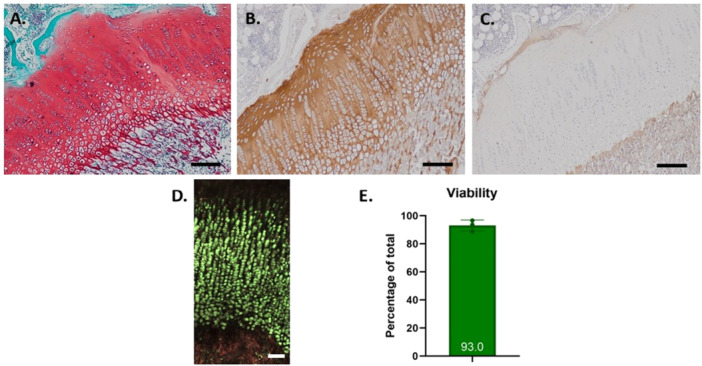 Figure 2
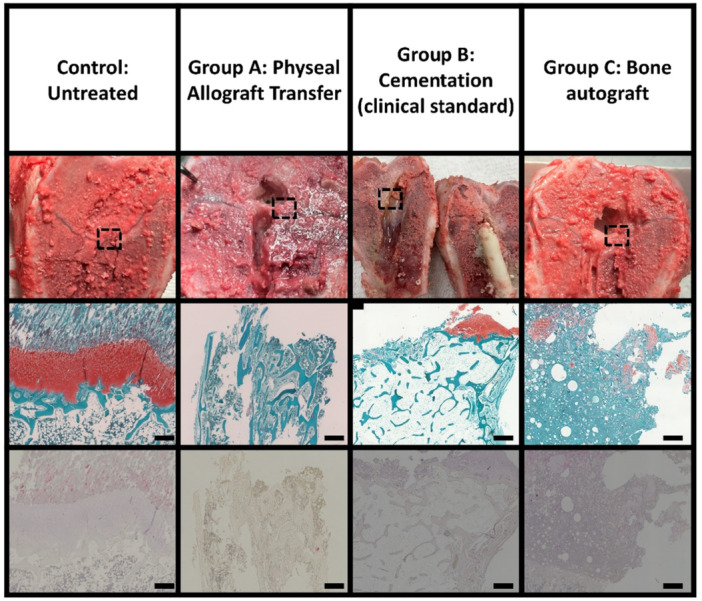 Figure 3
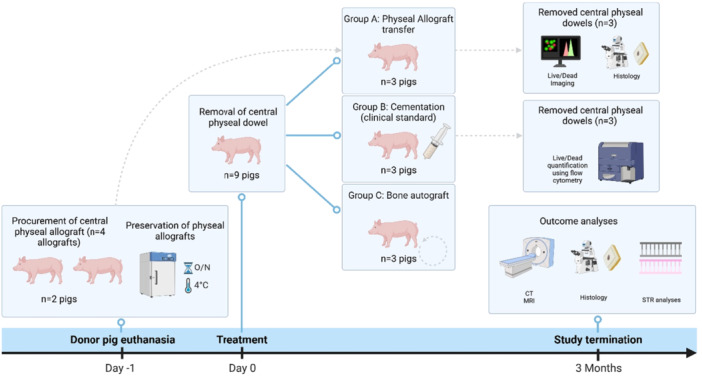 Figure 4
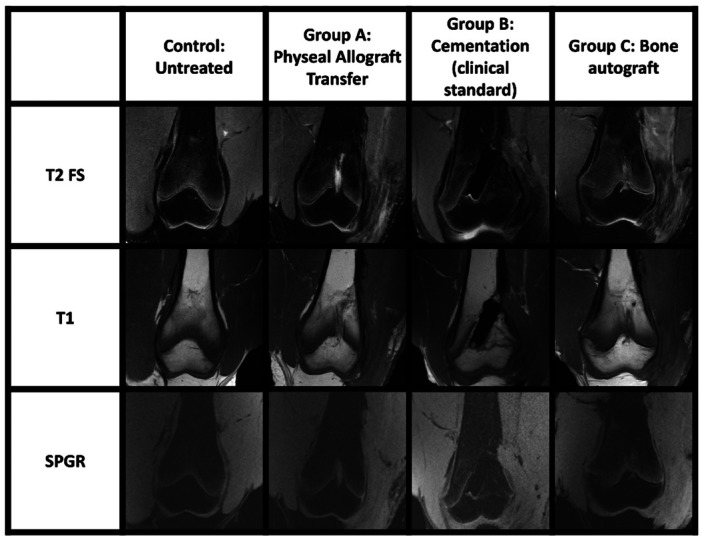 Figure 5
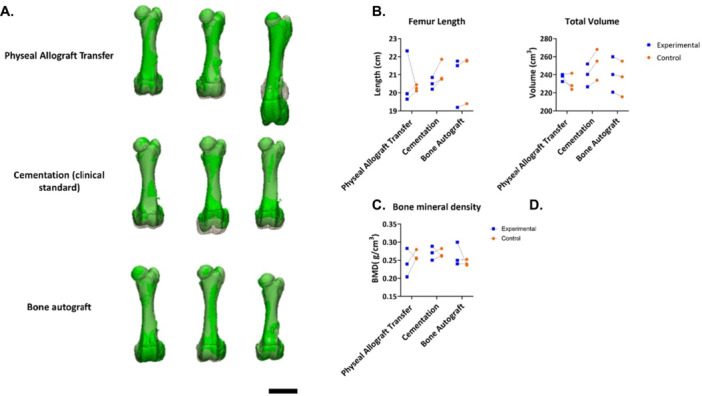 Figure 6
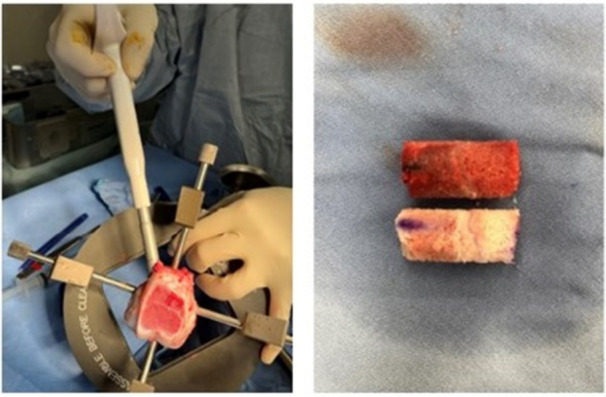 Figure 7
Peer Reviews
No public reviews on file for this paper yet. If you reviewed it on a platform where reviews are public (OpenReview, ICLR, NeurIPS, ICML), you can paste yours below so the community can read it here.
Videos
No videos yet. Explain this paper in a talk, walkthrough, or lecture? Add one.
Taxonomy
TopicsBone fractures and treatments · Reconstructive Surgery and Microvascular Techniques · Surgical Sutures and Adhesives