Variant in a Taste Receptor Locus Tied to Changes in the Use of Insomnia Medication
Gudmundur Einarsson, Hannes K. Arnason, Rosa S. Gisladottir, Gyda Bjornsdottir, Thorgeir E. Thorgeirsson, Astros Skuladottir, G. Bragi Walters, Saedis Saevarsdottir, Magnus K. Magnusson, Gisli H. Halldorsson, Audunn S. Snaebjarnarson, Hafsteinn Einarsson, Gardar Sveinbjornsson

TL;DR
A genetic variant in a taste receptor gene is linked to switching between insomnia medications, especially in women, suggesting potential for personalized treatment.
Contribution
Identified a common genetic variant associated with medication switching behavior due to taste-related side effects in insomnia drugs.
Findings
The rs6488335-G variant in the TAS2R bitter taste receptor gene is associated with switching from zopiclone to zolpidem.
The effect is stronger in women compared to men.
The association is independent of bitter taste perception of quinine.
Abstract
Zopiclone and zolpidem are widely prescribed hypnotic medications for insomnia, sharing similar efficacy but differing in side-effect profiles, particularly concerning taste disturbances. Identifying genetic predictors of intolerance to these medications could inform personalized treatment strategies. We conducted a genome-wide association study to identify genetic variants associated with switching between zopiclone and zolpidem in 57,669 Icelanders, using electronic prescription data from Iceland (2003–2020), and 6590 British individuals from the UK Biobank (1990–2017). We included individuals who had received at least 3 prescriptions of either drug. We also investigated data on bitter taste perception using quinine taste test data from 2238 Icelandic individuals. A common sequence variant, rs6488335-G, within the TAS2R∗ bitter taste receptor gene locus on chromosome 12, was…
Genes, proteins, chemicals, diseases, species, mutations and cell lines named across the full text — each resolved to its canonical identifier and authoritative record.
Click any figure to enlarge with its caption.
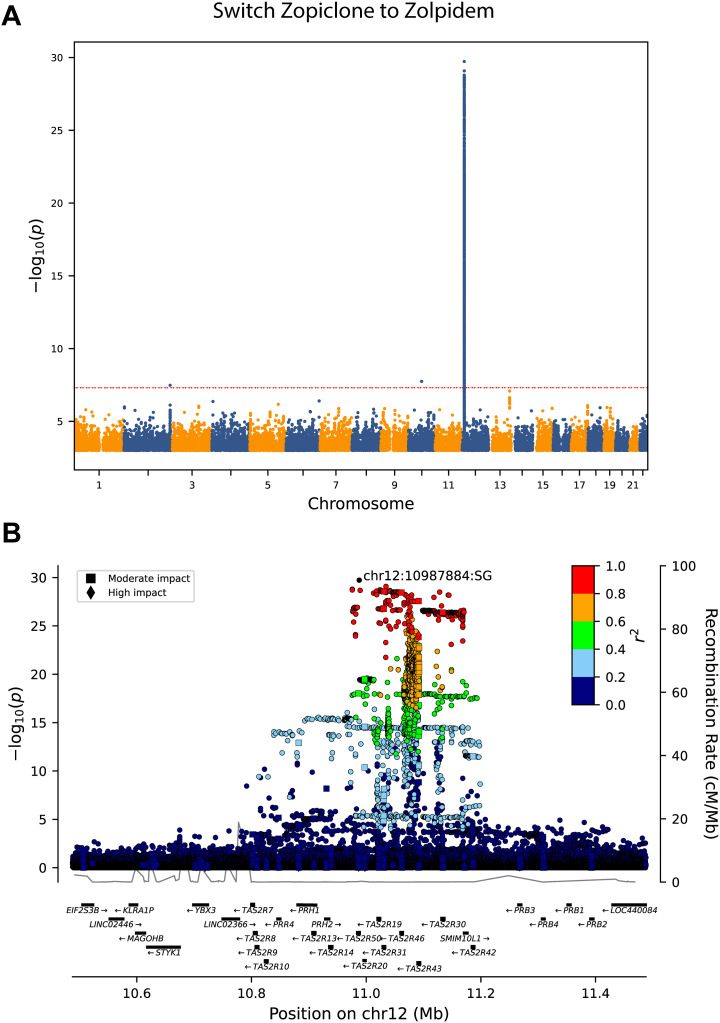 Figure 1
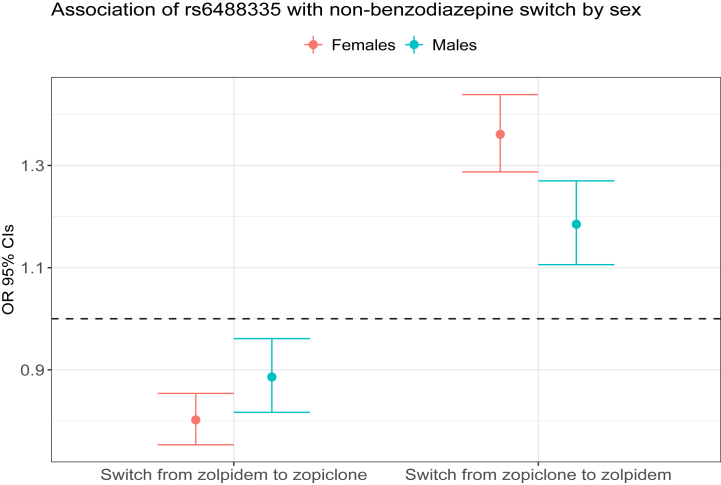 Figure 2
Peer Reviews
No public reviews on file for this paper yet. If you reviewed it on a platform where reviews are public (OpenReview, ICLR, NeurIPS, ICML), you can paste yours below so the community can read it here.
Videos
No videos yet. Explain this paper in a talk, walkthrough, or lecture? Add one.
Taxonomy
TopicsBiochemical Analysis and Sensing Techniques · Genetic Associations and Epidemiology · Olfactory and Sensory Function Studies