Glycosidic scaffold bearing multiple galloyl moieties from pomegranate disrupts transthyretin amyloids
Asuka Kagami, Nami Hashimoto, Ryoko Sasaki, Yutaro Fukushima, Hari Prasad Devkota, Shoya Tanaka, Mikiyo Wada, Kunitoshi Yamanaka, Shiori Yamakawa, Shogo Misumi, Takeshi Yokoyama, Mineyuki Mizuguchi, Takashi Sato, Teruya Nakamura, Shunsuke Kotani, Mary Ann Suico, Hirofumi Kai

TL;DR
A compound from pomegranate can break down harmful protein clumps linked to a type of amyloidosis, potentially offering a new treatment.
Contribution
PGG, a pomegranate-derived compound, disrupts TTR amyloid fibrils and shows therapeutic potential for TTR amyloidosis.
Findings
PGG disrupts both V30M and wild-type TTR amyloid fibrils.
PGG extends lifespan and reduces aggregation in a C. elegans TTR model.
PGG selectively targets TTR amyloids without affecting amyloid-β fibrils.
Abstract
Transthyretin (TTR) amyloidosis involves TTR misfolding and aggregation, causing systemic organ dysfunction. Current therapies stabilize TTR tetramers or reduce TTR production but are less effective against existing amyloid deposits. Here, we identified 1,2,3,4,6-penta-O-galloyl-β-D-glucose (PGG), derived from pomegranate (Punica granatum L.) leaf-and-branch extracts (PGL), as a disruptor of preformed TTR amyloid fibrils. PGG disaggregated fibrils formed by V30M and wild-type (WT) TTR, which are linked to hereditary Transthyretin Amyloidosis (ATTR) (ATTRv) and ATTRwt, respectively. Structure-activity relationship studies showed galloyl moieties are essential. In Caenorhabditis elegans-expressing human TTR81-127, PGG reduced TTR aggregation and extended both lifespan and healthspan. PGG selectively targeted TTR amyloids without affecting amyloid-β fibrils, indicating specificity. PGG…
Genes, proteins, chemicals, diseases, species, mutations and cell lines named across the full text — each resolved to its canonical identifier and authoritative record.
Click any figure to enlarge with its caption.
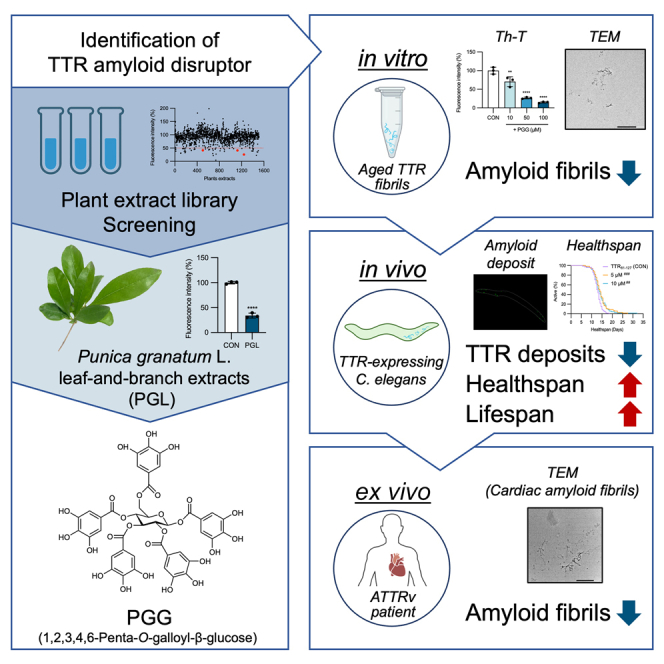 Figure 1
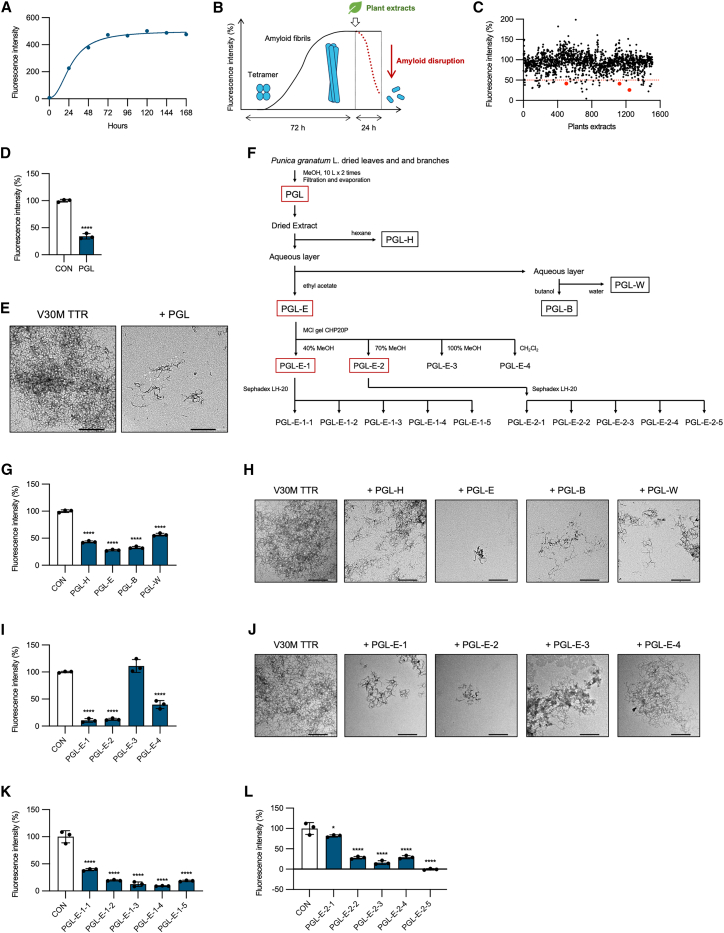 Figure 2
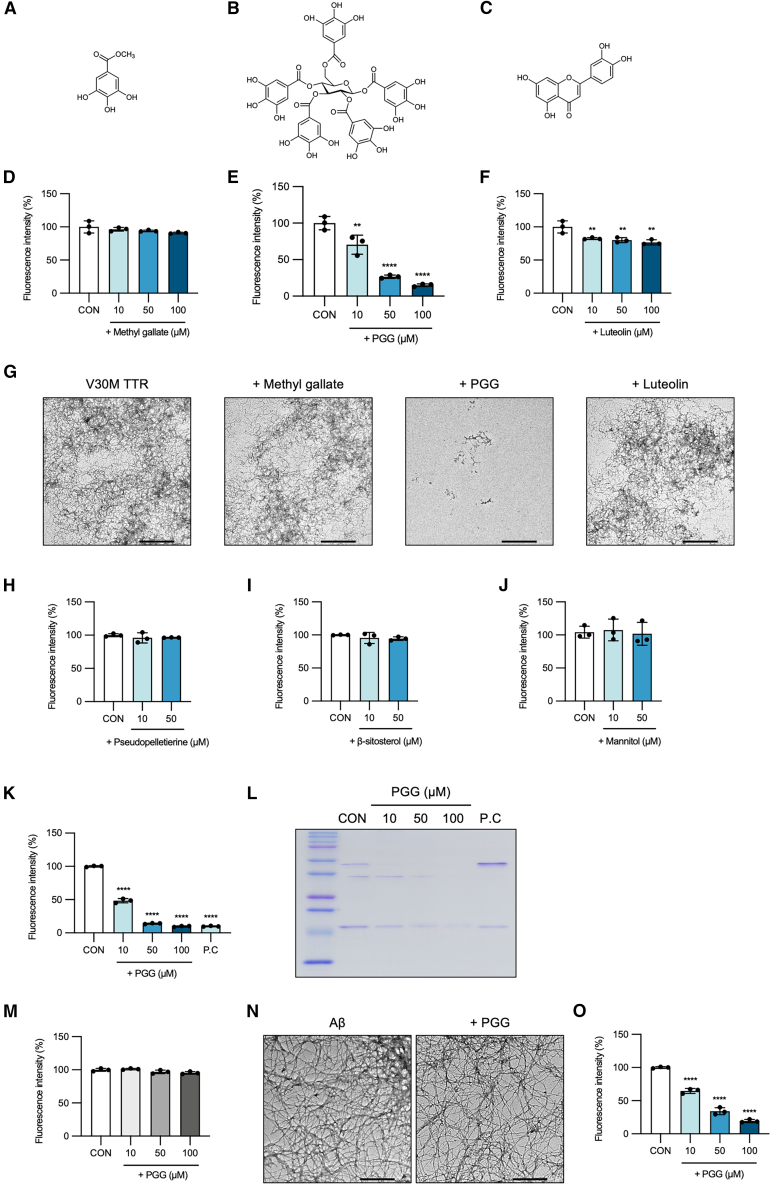 Figure 3
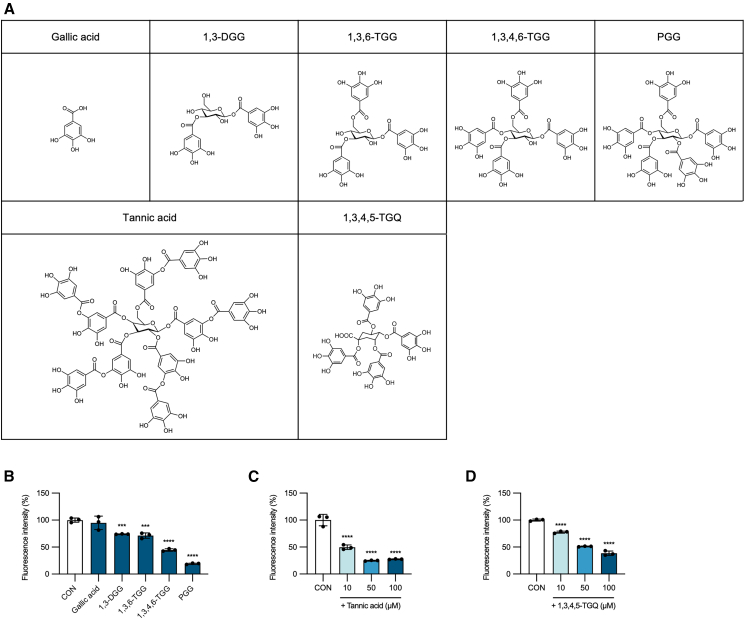 Figure 4
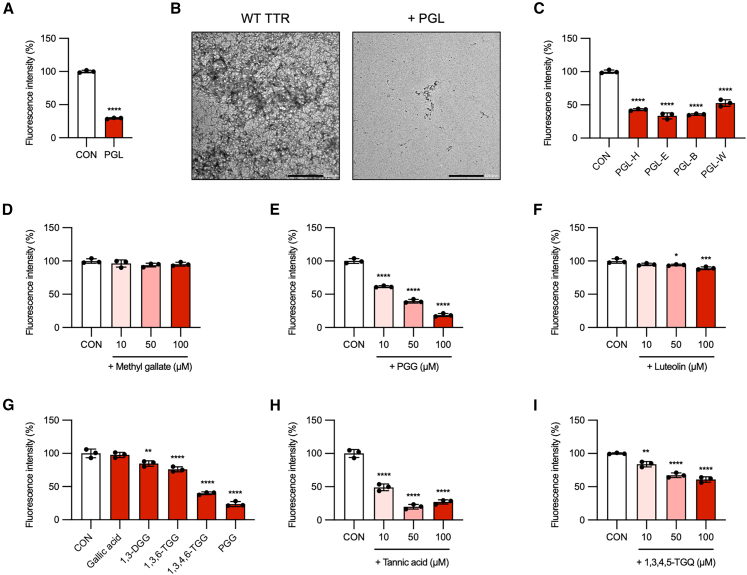 Figure 5
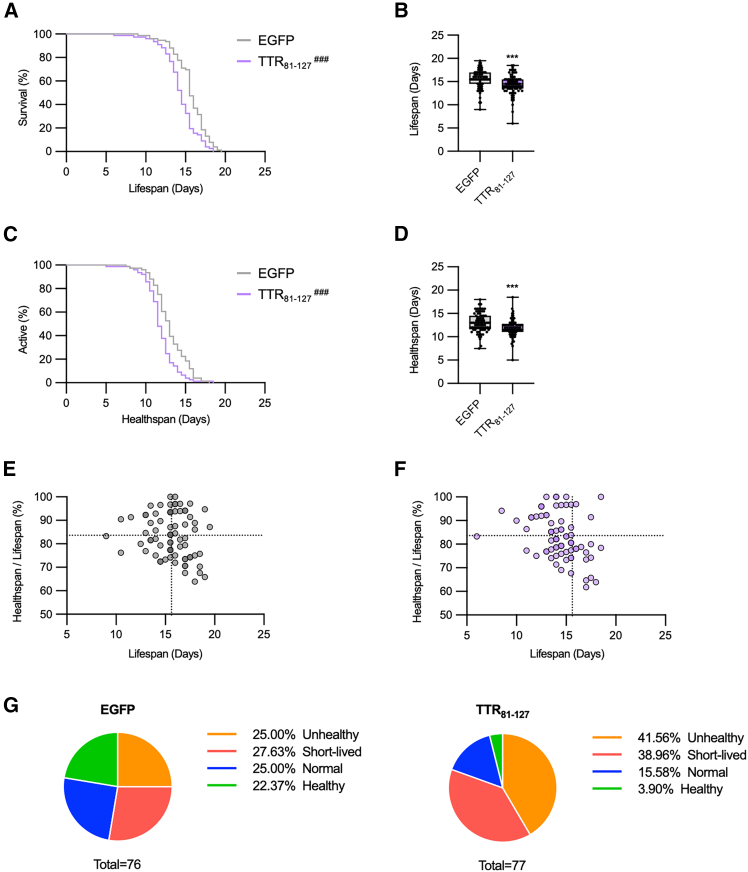 Figure 6
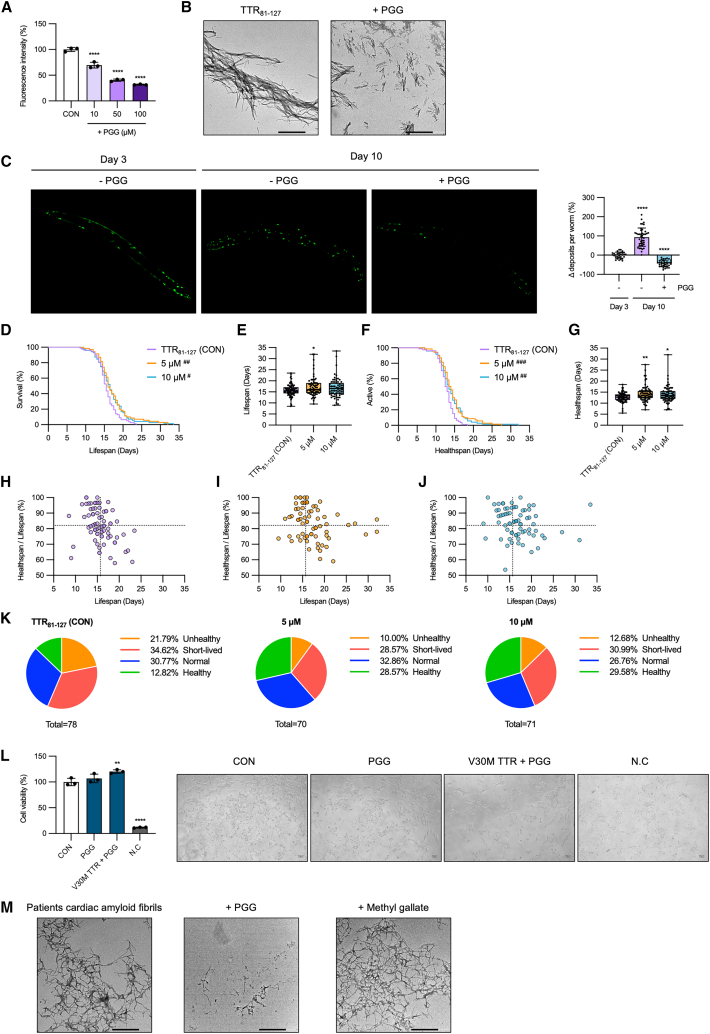 Figure 7
Peer Reviews
No public reviews on file for this paper yet. If you reviewed it on a platform where reviews are public (OpenReview, ICLR, NeurIPS, ICML), you can paste yours below so the community can read it here.
Videos
No videos yet. Explain this paper in a talk, walkthrough, or lecture? Add one.
Taxonomy
TopicsAmyloidosis: Diagnosis, Treatment, Outcomes · Skin and Cellular Biology Research · Alzheimer's disease research and treatments