Blood-brain barrier water exchange in relation to amyloid, cognition and cerebrovascular burden
Beatriz E. Padrela, Sandra Tecelão, Bjørn-Eivind Kirsebom, Oliver Geier, Mario Tranfa, Federico Masserini, Markus H. Sneve, Maksim Slivka, Emilie Sogn Falch, Lene Pålhaugen, Amnah Mahroo, Klaus Eickel, David L. Thomas, Matthias Günther, Per Selnes, Atle Bjørnerud

TL;DR
This study shows that changes in blood-brain barrier water exchange happen early in cognitive decline and are linked to vascular issues, not amyloid buildup.
Contribution
Introduces BBB water exchange time as an early, non-invasive biomarker for cognitive decline and cerebrovascular burden.
Findings
Tex decreases in subjective cognitive decline and mild cognitive impairment before changes in cerebral blood flow.
Tex changes correlate with moderate white matter hyperintensities but not amyloid status.
Tex alterations precede traditional perfusion markers and reflect early vascular dysfunction.
Abstract
•BBB water exchange time (Tex) is reduced in early cognitive impairment.•Tex decreases with moderate white matter hyperintensities burden.•Tex changes precede hemodynamic changes in cognitive and cerebrovascular decline.•These Tex changes are independent of amyloid status after age and sex adjustment. BBB water exchange time (Tex) is reduced in early cognitive impairment. Tex decreases with moderate white matter hyperintensities burden. Tex changes precede hemodynamic changes in cognitive and cerebrovascular decline. These Tex changes are independent of amyloid status after age and sex adjustment. Blood-brain barrier (BBB) water exchange may serve as a sensitive early biomarker for Alzheimer’s disease and age-related cognitive decline. This study applied a non-invasive multi-echo arterial spin labeling (ASL) technique to measure BBB water exchange time (Tex), cerebral blood flow…
Genes, proteins, chemicals, diseases, species, mutations and cell lines named across the full text — each resolved to its canonical identifier and authoritative record.
Click any figure to enlarge with its caption.
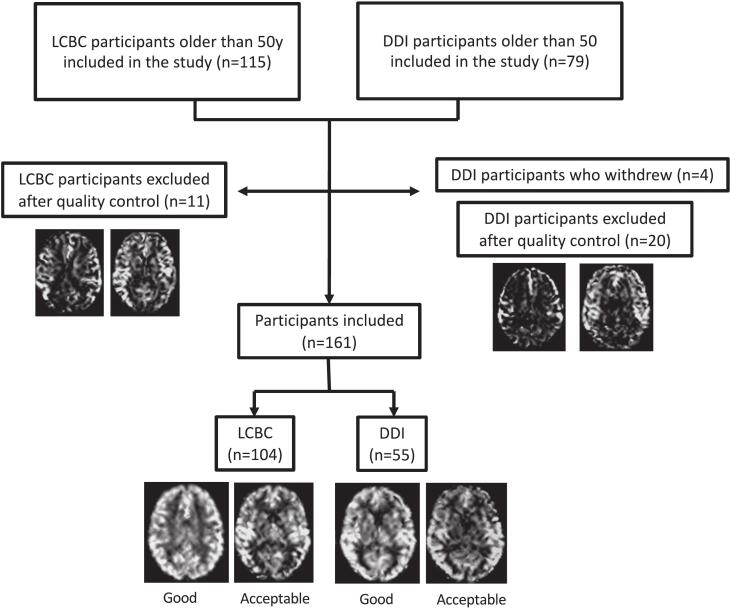 Figure 1
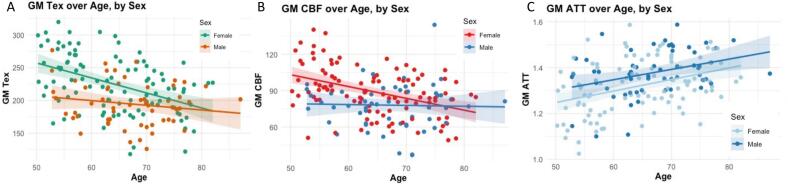 Figure 2
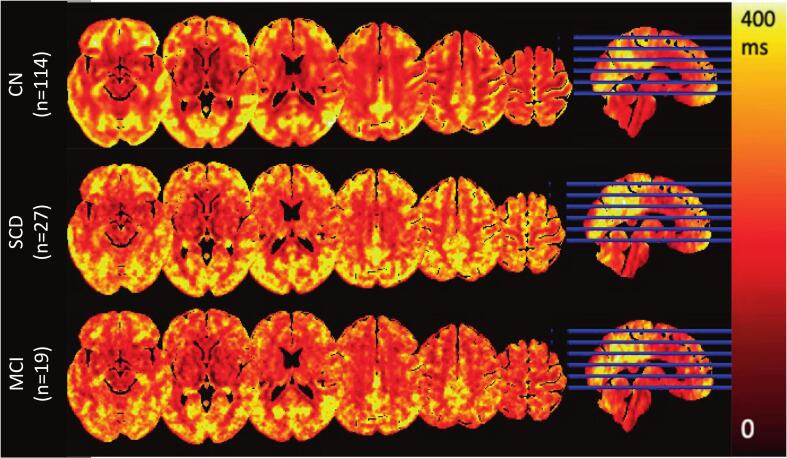 Figure 3
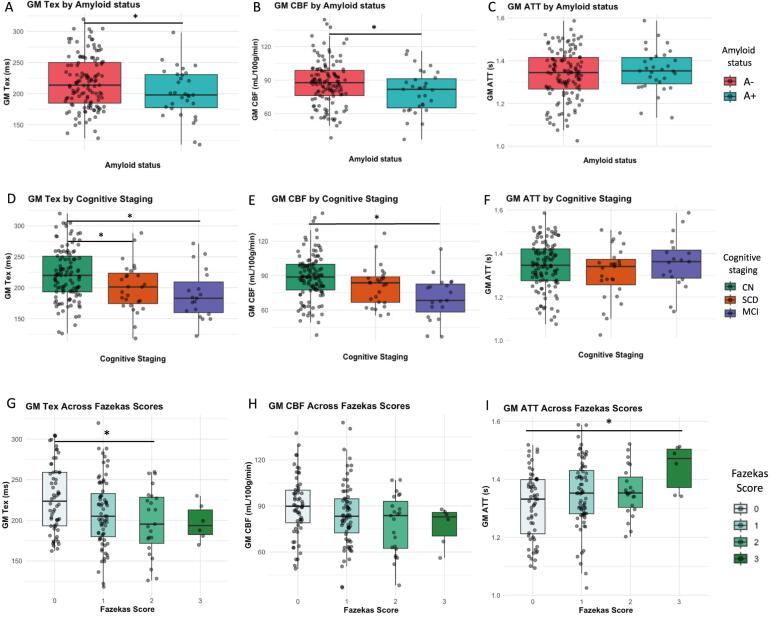 Figure 4
Peer Reviews
No public reviews on file for this paper yet. If you reviewed it on a platform where reviews are public (OpenReview, ICLR, NeurIPS, ICML), you can paste yours below so the community can read it here.
Videos
No videos yet. Explain this paper in a talk, walkthrough, or lecture? Add one.
Taxonomy
TopicsDementia and Cognitive Impairment Research · Advanced MRI Techniques and Applications · Functional Brain Connectivity Studies