Twice times two: Dual mechanism for double rhythmic meter in orangutans and the evolution of human song
Chiara De Gregorio, Adriano R. Lameira

TL;DR
Orangutans use two different methods to create rhythmic patterns in their calls, offering clues about the evolution of human music.
Contribution
Discovery of dual mechanisms for double-meter rhythm in non-singing great apes.
Findings
Orangutan long calls show isochrony and double-meter rhythmic patterns.
Double meter is achieved via tempo shifts and inhale-exhale voicing alternation.
Human song rhythm may derive from ancestral phonatory-respiratory cycles.
Abstract
Rhythmic pulse, the division of a beat into subordinate patterns, is the backbone of music. Across the world’s musical traditions, the division of the primary beat into two equal parts – “double meter” – represents a prototypical pulse, also found in singing nonhuman primates. The last great ape common ancestor was, however, a non-singing species. How rhythmic pulse evolved in human song and music is, thus, enigmatic. Here, we analyze wild male orangutan long calls, which are structurally isochronous (i.e., with a steady of 1:1 rhythm). Males divided the primary rhythm into 1:2 and 2:1 subordinate patterns and did so by two distinct mechanisms: tempo changes as used by other primates and voiced in-exhale alternations as still used today by some human song traditions. Findings confirm double-meter in a non-singing great ape and suggest the two-phase cycle of the phonatory-respiratory…
Genes, proteins, chemicals, diseases, species, mutations and cell lines named across the full text — each resolved to its canonical identifier and authoritative record.
Click any figure to enlarge with its caption.
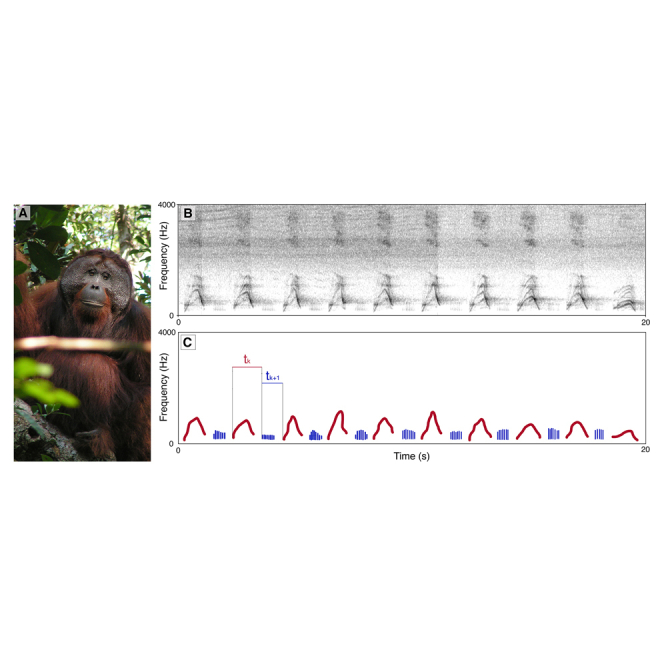 Figure 1
 Figure 2
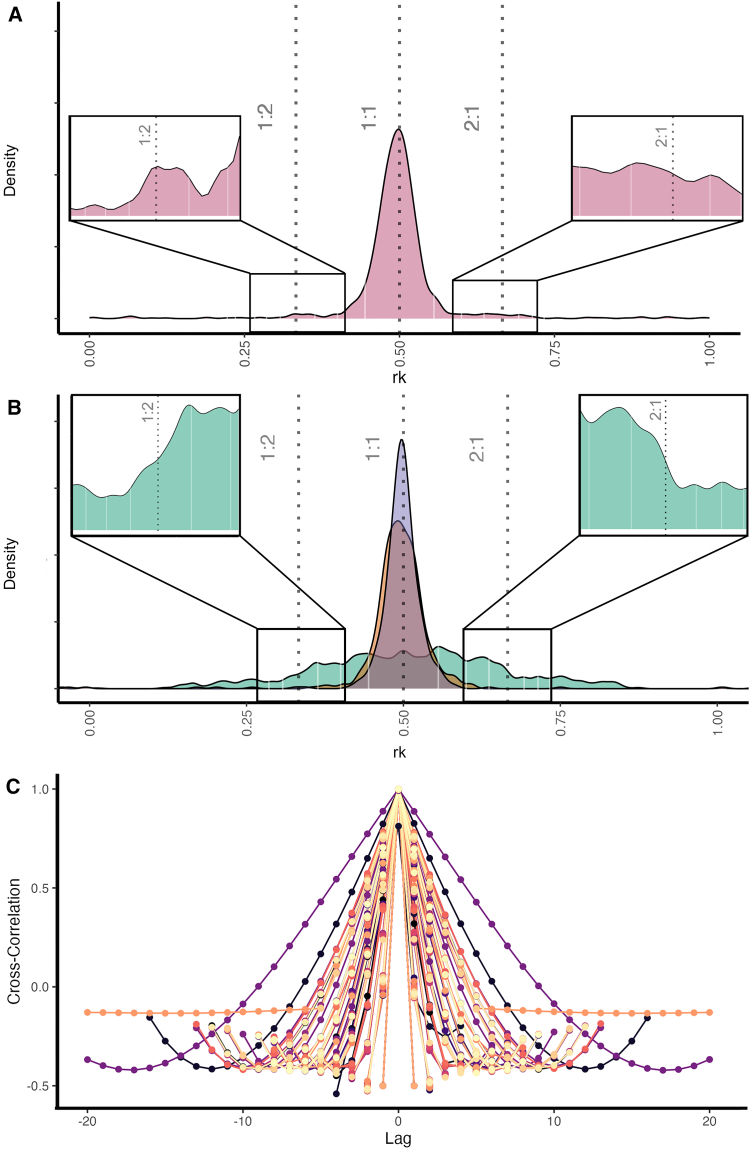 Figure 3
Peer Reviews
No public reviews on file for this paper yet. If you reviewed it on a platform where reviews are public (OpenReview, ICLR, NeurIPS, ICML), you can paste yours below so the community can read it here.
Videos
No videos yet. Explain this paper in a talk, walkthrough, or lecture? Add one.
Taxonomy
TopicsAnimal Vocal Communication and Behavior · Neuroscience and Music Perception · Phonetics and Phonology Research