Integrative high-throughput studies to develop novel targets and drugs for the treatment of advanced prostate cancer
Xuehui Li, Yanting Shen, Na Zhang, Dong Lu, Shuhua Ding, Fanchen Wu, Xiaowei Song, Xiangru Zhou, Shan Lin, Huan Xu, Zhong Wang, Fuwen Yuan

TL;DR
The paper presents new prostate cancer drug targets and agents that work outside the androgen receptor pathway, offering potential treatments for resistant cancers.
Contribution
The study introduces a novel integrative approach combining bioinformatics and pharmacology to identify AR-independent targets and drugs for advanced prostate cancer.
Findings
CDC20, DTL, and RRM2 were identified as potential tumor drivers in advanced prostate cancer.
These genes are regulated by the RB1/E2F1 axis and influence cell cycle progression.
New agents targeting these genes showed better anti-tumor effects than AR antagonists in vitro.
Abstract
Androgen deprivation therapies targeting the androgen receptor (AR) signaling pathway are the primary treatment strategy for prostate cancer. However, these therapies often lead to castration resistance. Developing novel agents targeting AR-independent oncogenes is critical to address this challenge, particularly for advanced castration-resistant prostate cancer. This study identified three potential tumor drivers of advanced prostate cancer, including CDC20, DTL, and RRM2, through integrative bioinformatic screening that considered gene dependency using CRISPRi/RNAi database, clinical relevance, and experimental validation with CRISPR-Cas13-mediated gene ablation. Further mechanistic studies revealed that CDC20, DTL, and RRM2 were transcriptionally regulated by the RB1/E2F1 axis, mediating cell cycle progression in prostate cancer. Additionally, we identified novel agents targeting…
Genes, proteins, chemicals, diseases, species, mutations and cell lines named across the full text — each resolved to its canonical identifier and authoritative record.
Click any figure to enlarge with its caption.
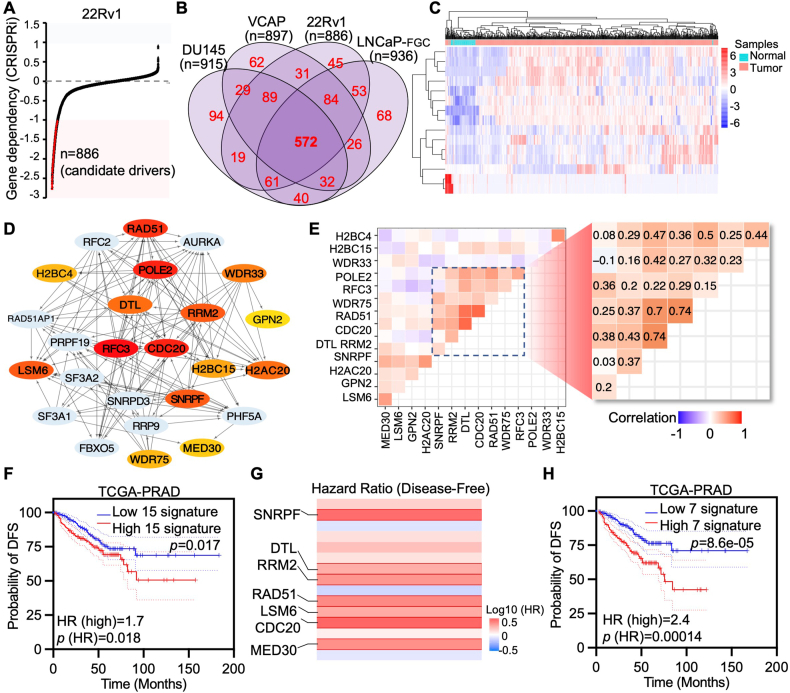 Figure 1
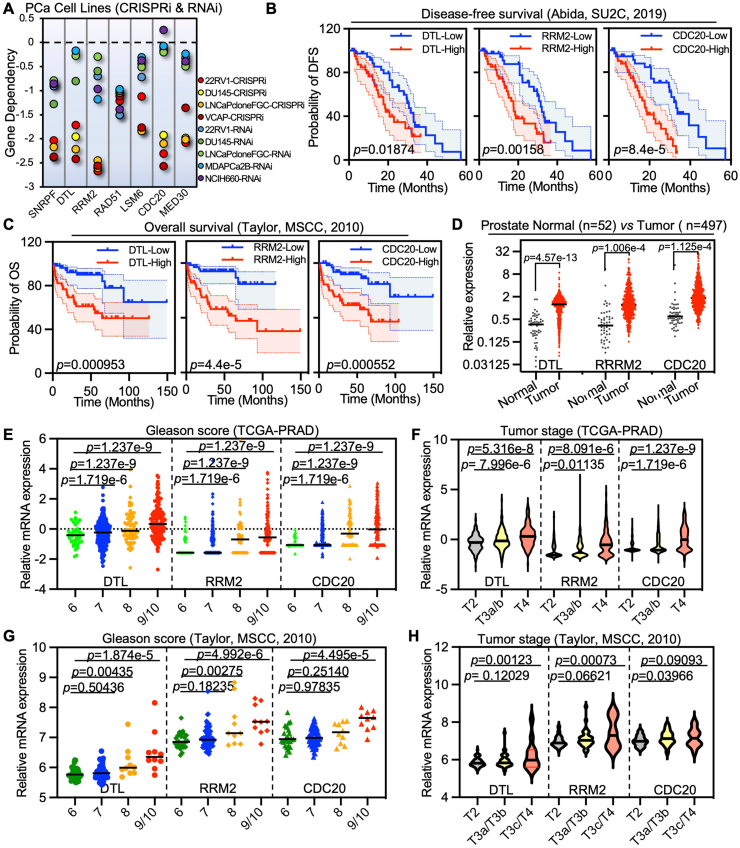 Figure 2
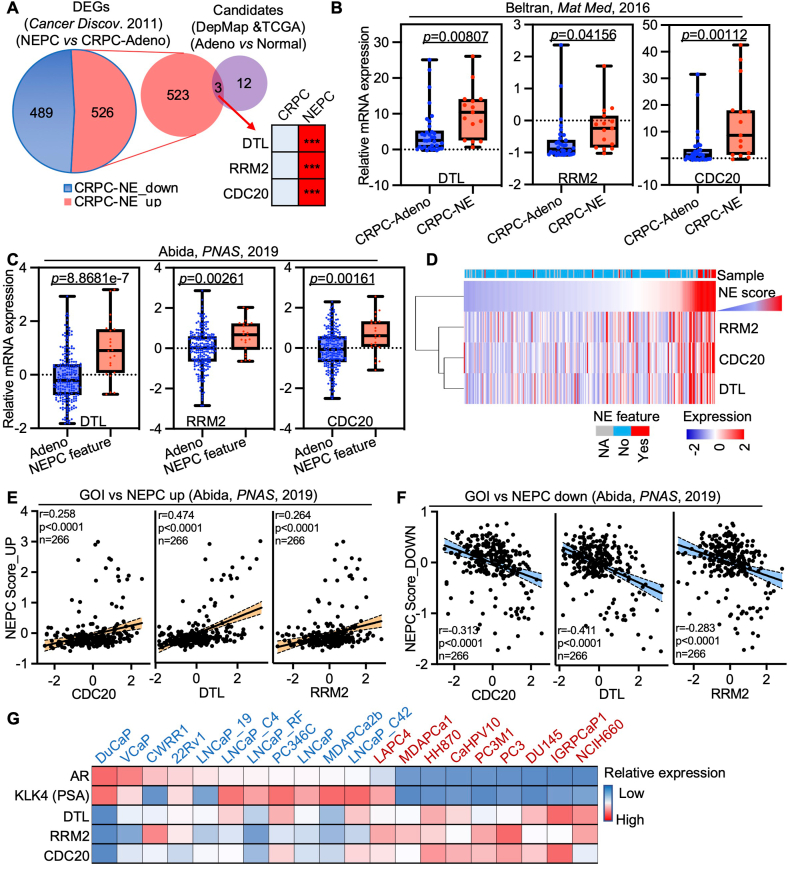 Figure 3
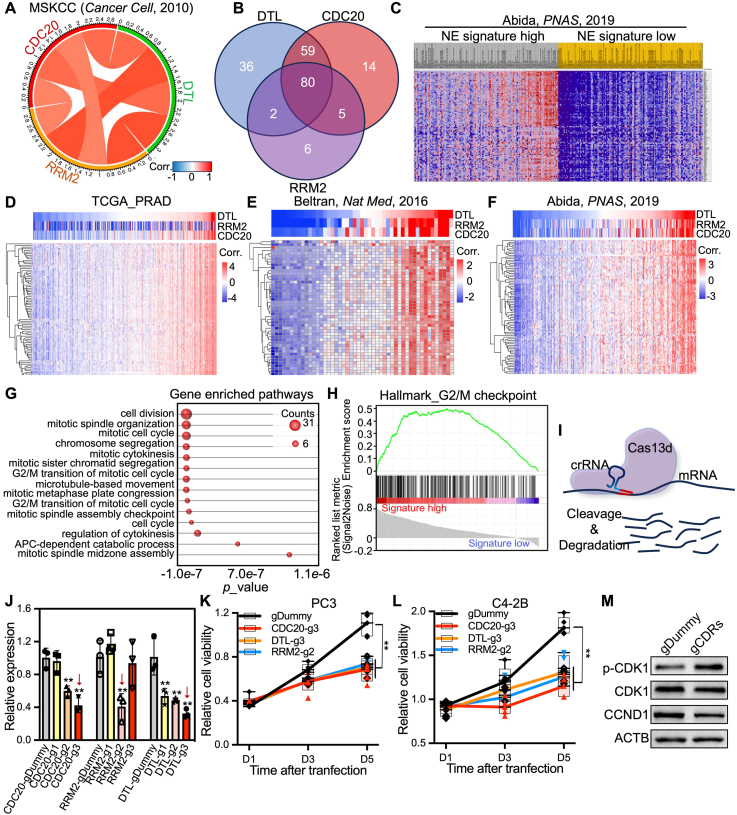 Figure 4
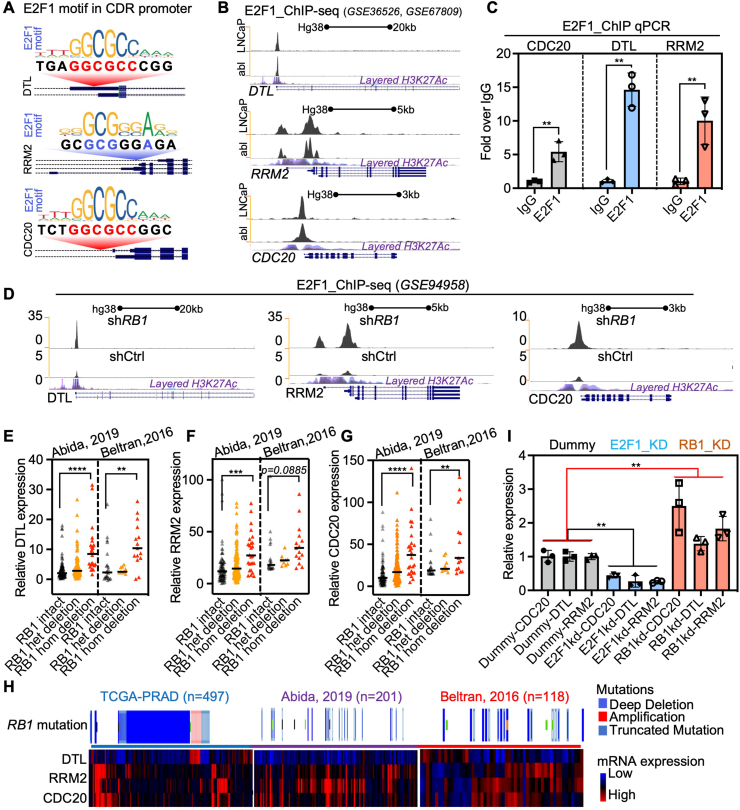 Figure 5
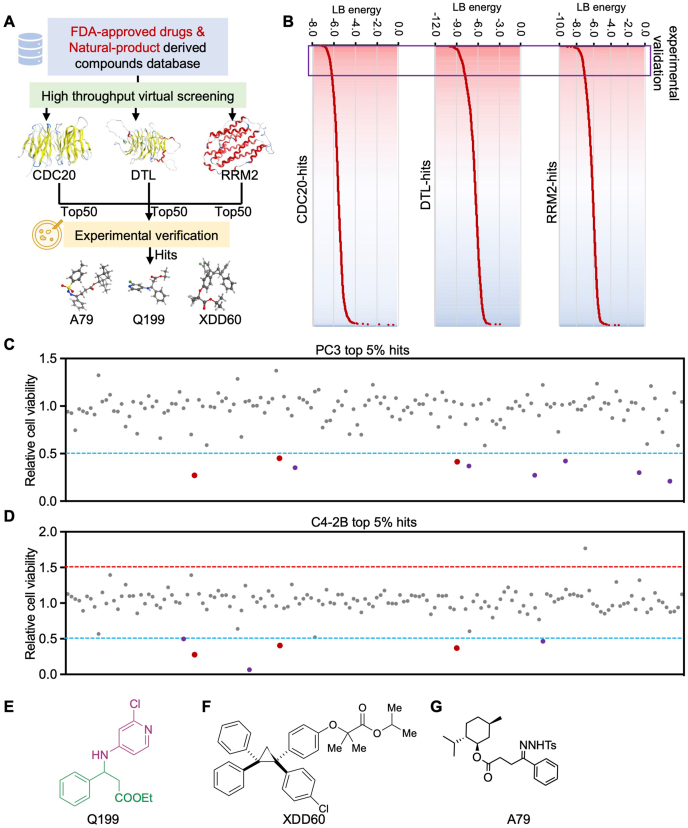 Figure 6
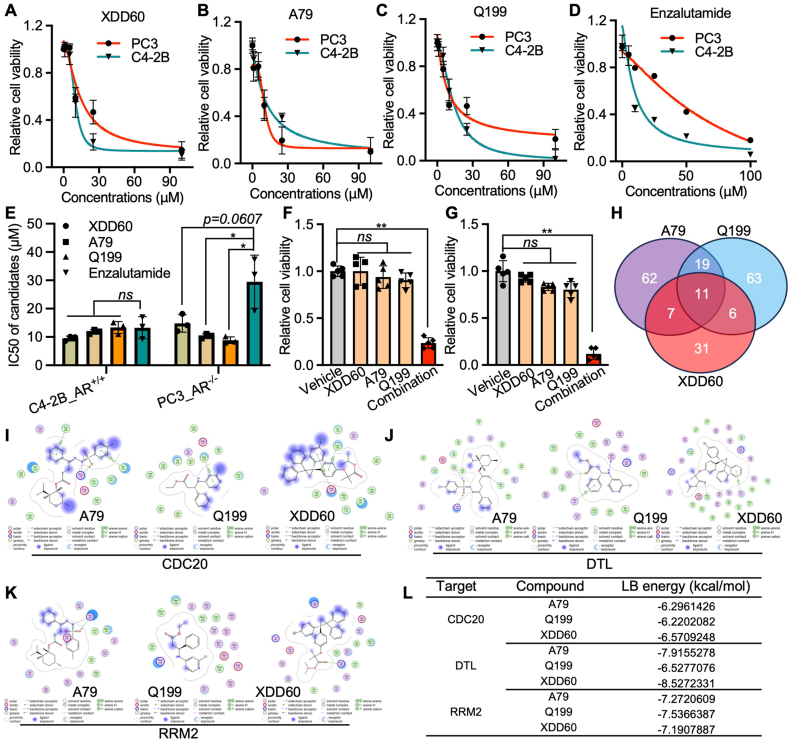 Figure 7
Peer Reviews
No public reviews on file for this paper yet. If you reviewed it on a platform where reviews are public (OpenReview, ICLR, NeurIPS, ICML), you can paste yours below so the community can read it here.
Videos
No videos yet. Explain this paper in a talk, walkthrough, or lecture? Add one.
Taxonomy
TopicsProstate Cancer Treatment and Research · Ubiquitin and proteasome pathways · Cancer-related Molecular Pathways