Seeding biosensor cell line that reproduces the Alzheimer tau fold
Taxiarchis Katsinelos, Sofia Lövestam, Chao Qi, Benjamin Ryskeldi-Falcon, Jennifer A. Macdonald, Gabriel Stephenson, Bernardino Ghetti, Ann McKee, Sjors H.W. Scheres, Michel Goedert

TL;DR
Researchers developed a new cell line that can detect and reproduce the tau protein structures found in Alzheimer's disease.
Contribution
A novel biosensor cell line was created that specifically detects and reproduces the Alzheimer's tau fold with high sensitivity.
Findings
The biosensor cells detected filaments from 3R + 4R tauopathies with high sensitivity.
Cryo-EM analysis revealed that cell-derived filaments had the Alzheimer's fold with a unique 'head-to-head' packing.
The biosensor showed specificity toward seeds from 3R + 4R tauopathies over 3R-only or 4R-only.
Abstract
The assembly of tau protein into amyloid filaments through templated seeding is believed to underlie the propagation of pathology in neurodegenerative diseases, such as Alzheimer’s disease (AD) and other tauopathies. A commonly used model system for studying this process is through the induction of tau filament formation in cultured cells following the addition of tau seeds isolated from the human brain. However, little is known about the structures of seeded filaments; some biosensor cell lines are unable to reproduce the tau filament structures from AD, because they overexpress tau fragments that do not cover the whole of the ordered filament core. Here, we describe a novel tau seeding biosensor model in human embryonic kidney 293T cells that overexpress residues K297–E391 of human 4R tau. The construct contains an N-terminal hemagglutinin tag, which allows the specific detection of…
Genes, proteins, chemicals, diseases, species, mutations and cell lines named across the full text — each resolved to its canonical identifier and authoritative record.
Click any figure to enlarge with its caption.
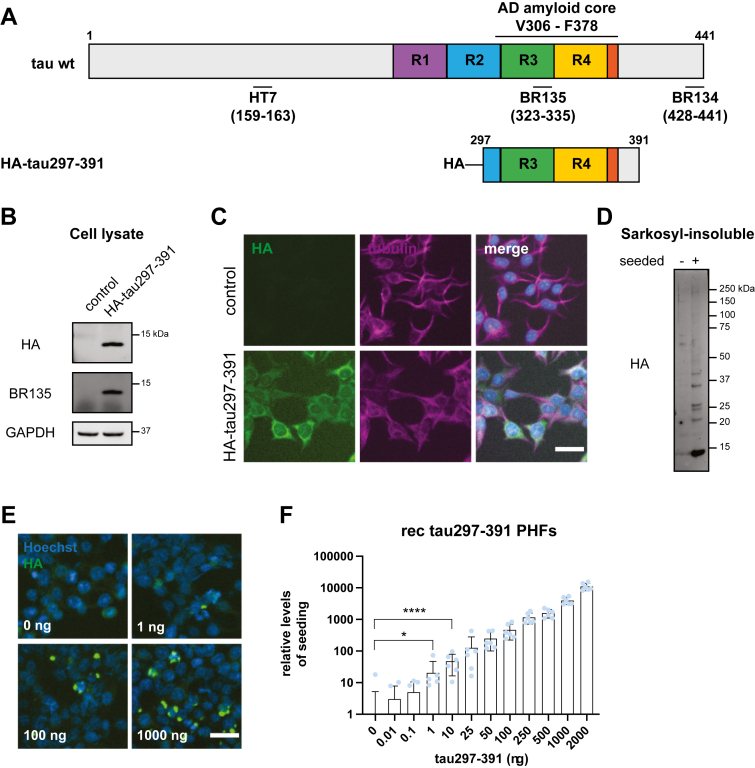 Figure 1
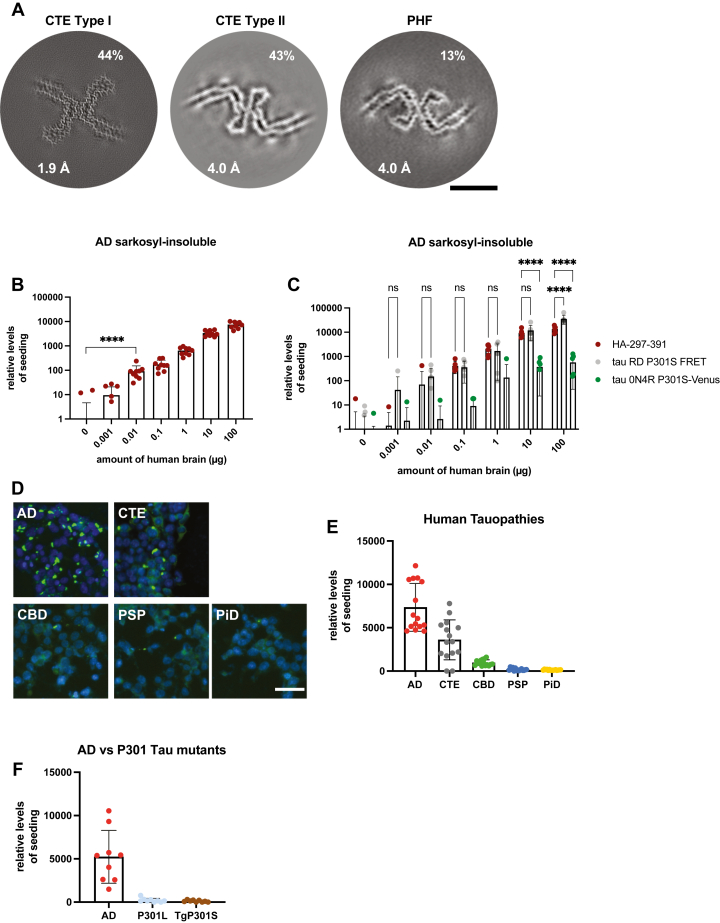 Figure 2
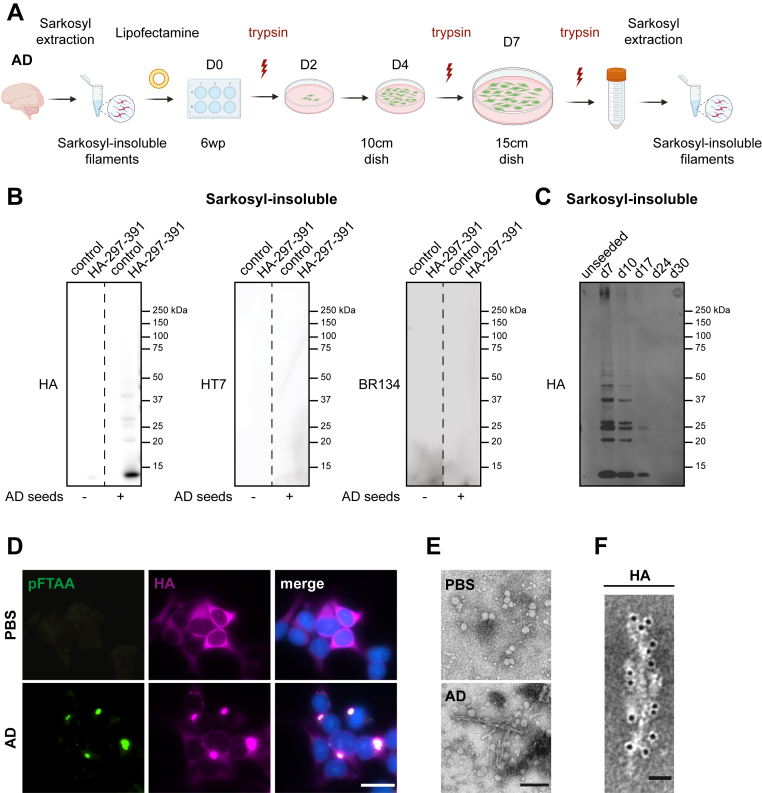 Figure 3
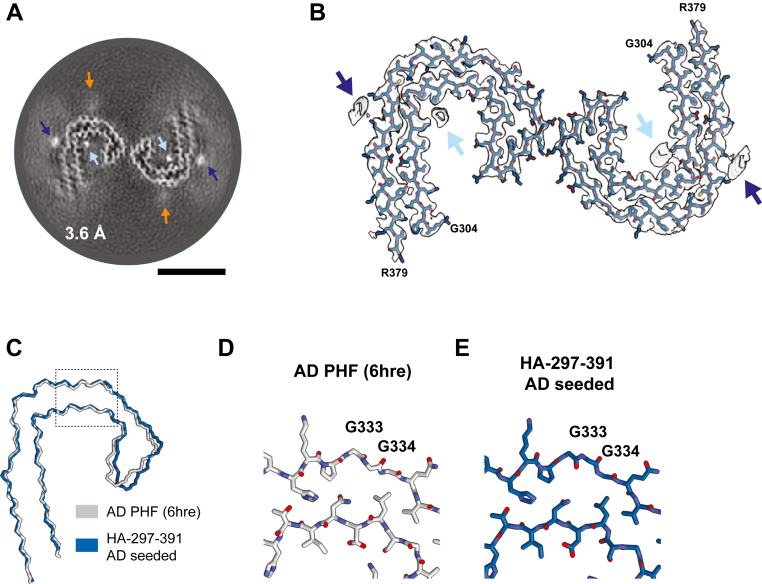 Figure 4
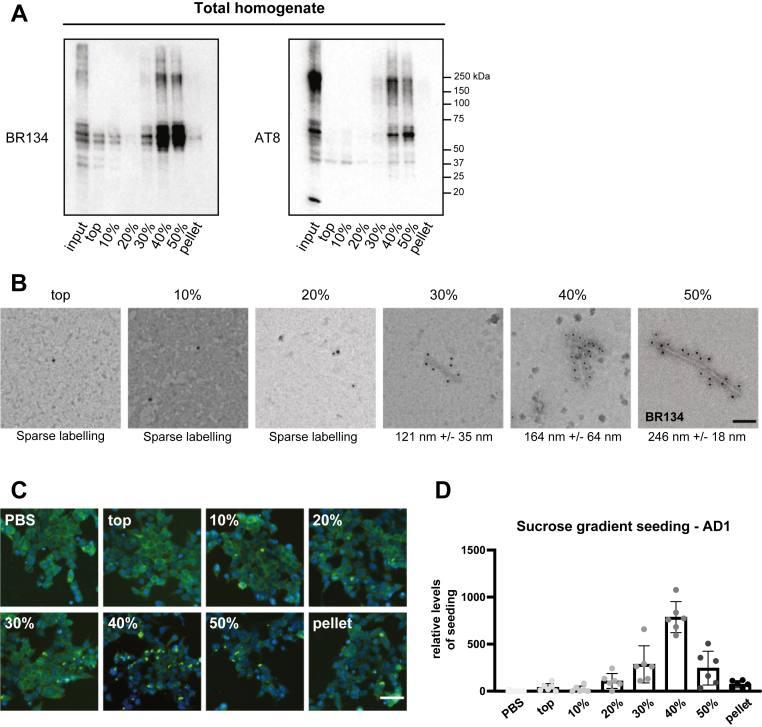 Figure 5
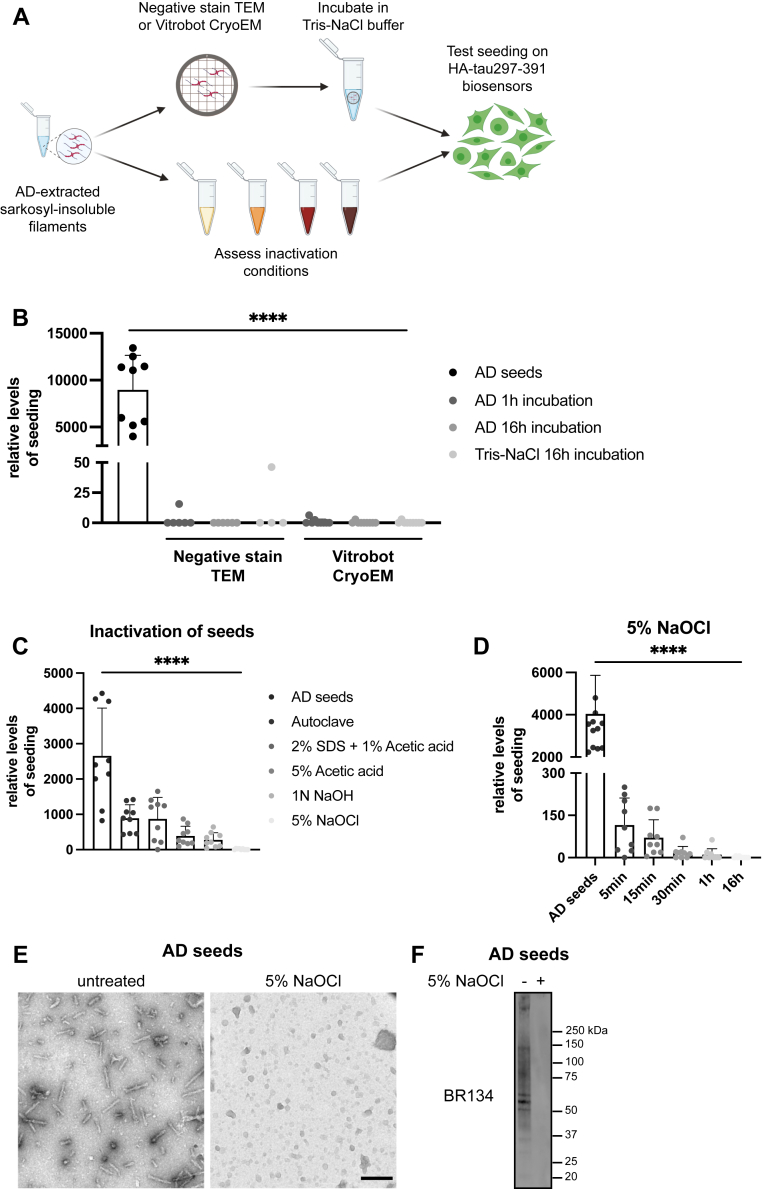 Figure 6
Peer Reviews
No public reviews on file for this paper yet. If you reviewed it on a platform where reviews are public (OpenReview, ICLR, NeurIPS, ICML), you can paste yours below so the community can read it here.
Videos
No videos yet. Explain this paper in a talk, walkthrough, or lecture? Add one.
Taxonomy
TopicsAlzheimer's disease research and treatments · Microtubule and mitosis dynamics · Cellular transport and secretion