Intersectional relationships between age, sex, ethnicity, nationality and experience of racism in the UK using different ethnicity categorisations: A comparative study using survey data
Joseph Lam, Aaron Koay, Mario Cortina-Borja, Robert Aldridge, Ruth Blackburn, Katie Harron

TL;DR
This study shows that using more detailed ethnic categories provides better insights into how racism and other factors intersect to affect health inequalities in the UK.
Contribution
The study demonstrates that granular ethnicity categories improve the accuracy of intersectional health inequity analysis compared to traditional broad categories.
Findings
65% of participants reported experiencing racism in their lifetime.
The 21-category model revealed significant variations in racism experiences within broad ethnic groups.
Coarse ethnic categories can mask meaningful differences and lead to misleading interaction effects.
Abstract
•Careful categorisation and theorising of what ethnicity means is crucial in estimating intersectional health inequalities.•There is a need for better understanding of how different approaches of measuring and analysing ethnicity impact the interpretation of intersectional social contexts.•We compared coarse (5-category) and granular (21-category) ethnicity in their ability to explain variation of experience of racism.•More granular ethnicity enables better description of intersectional disadvantages. This has important implications for study design and analytical approaches to evaluating ethnic health inequities. Careful categorisation and theorising of what ethnicity means is crucial in estimating intersectional health inequalities. There is a need for better understanding of how different approaches of measuring and analysing ethnicity impact the interpretation of intersectional…
Genes, proteins, chemicals, diseases, species, mutations and cell lines named across the full text — each resolved to its canonical identifier and authoritative record.
Click any figure to enlarge with its caption.
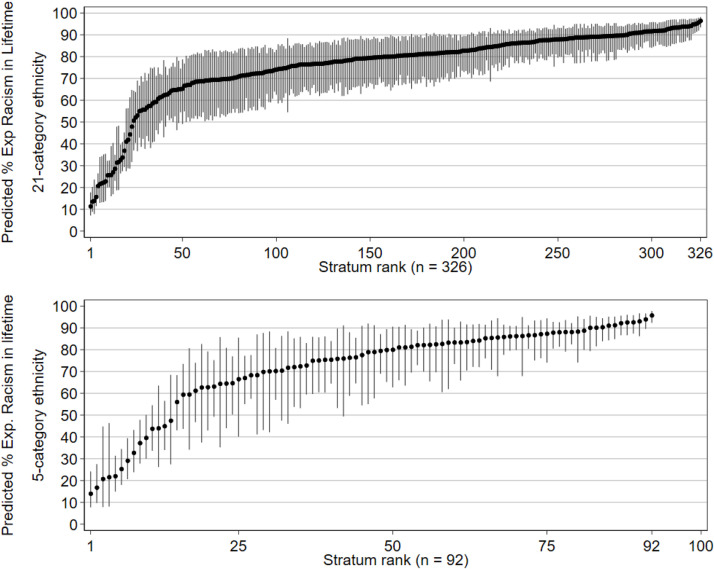 Figure 1
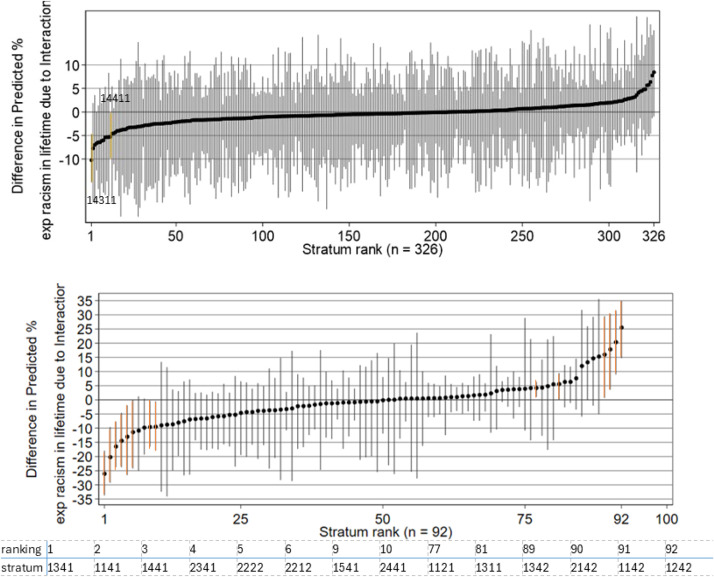 Figure 2
Peer Reviews
No public reviews on file for this paper yet. If you reviewed it on a platform where reviews are public (OpenReview, ICLR, NeurIPS, ICML), you can paste yours below so the community can read it here.
Videos
No videos yet. Explain this paper in a talk, walkthrough, or lecture? Add one.
Taxonomy
TopicsRacial and Ethnic Identity Research · Health disparities and outcomes · LGBTQ Health, Identity, and Policy