A Rare Case of Dual De Novo Mutations Presenting With Infantile Spasms, Congenital Contractures, and Axial Hypotonia
Hadi Fakih

TL;DR
A male infant with rare mutations in CACNA1E and FBN1 genes presented with spasms, deformities, and low muscle tone, highlighting the role of whole exome sequencing in diagnosing complex cases.
Contribution
The paper reports a rare case of dual de novo mutations in CACNA1E and FBN1 genes contributing to a complex neurodevelopmental disorder.
Findings
Whole exome sequencing identified two likely de novo mutations in CACNA1E and FBN1 genes.
The CACNA1E mutation is consistent with Developmental and Epileptic Encephalopathy-69 (DEE69).
The FBN1 mutation has implications for long-term cardiovascular health.
Abstract
This report presents the case of a male infant with a complex neonatal course marked by congenital hand and foot deformities, axial hypotonia, and subsequent development of treatment-resistant infantile spasms. Despite extensive initial investigations yielding normal results, including a normal brain magnetic resonance imaging (MRI), whole exome sequencing (WES) revealed two distinct, likely de novo, autosomal dominant mutations: a pathogenic variant in the CACNA1E gene, consistent with Developmental and Epileptic Encephalopathy-69 (DEE69), and a likely pathogenic variant in the FBN1 gene, an incidental finding with significant implications for long-term cardiovascular health. This case highlights the diagnostic power of WES in complex neurodevelopmental disorders and underscores the challenges in managing multifactorial presentations.
Genes, proteins, chemicals, diseases, species, mutations and cell lines named across the full text — each resolved to its canonical identifier and authoritative record.
Click any figure to enlarge with its caption.
 Figure 1
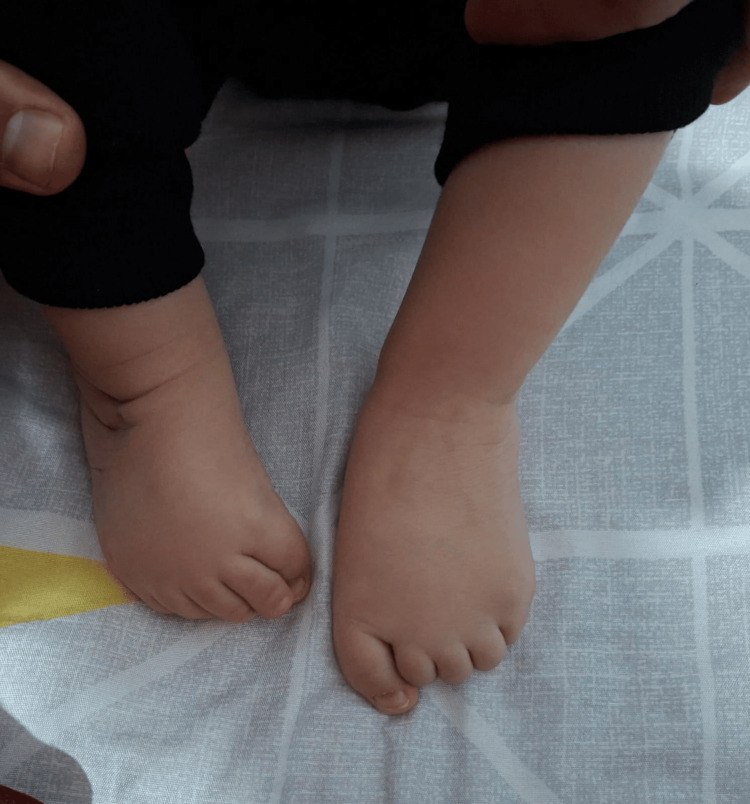 Figure 2
Peer Reviews
No public reviews on file for this paper yet. If you reviewed it on a platform where reviews are public (OpenReview, ICLR, NeurIPS, ICML), you can paste yours below so the community can read it here.
Videos
No videos yet. Explain this paper in a talk, walkthrough, or lecture? Add one.
Taxonomy
TopicsGenomics and Rare Diseases · Neurological diseases and metabolism · Connective tissue disorders research