Polygenic prediction of cardiorespiratory fitness in the Trøndelag health study (HUNT)
Karsten Øvretveit, Marie Klevjer, Ben M. Brumpton, Ulrik Wisløff, Kristian Hveem, Anja Bye

TL;DR
This study created a genetic score to predict cardiorespiratory fitness and found it can help identify people at lower risk of heart disease and early death.
Contribution
The study introduces the first polygenic score for cardiorespiratory fitness using gold-standard measurements and multiple independent cohorts.
Findings
The CRF polygenic score (CRFPGS) showed a 1.55 mL·kg−1·min−1 difference in fitness levels between the lowest and highest genetic risk groups.
High CRFPGS was linked to reduced risks of cardiovascular disease, heart attack, hypertension, and all-cause mortality.
In women, the CRFPGS was associated with lower risks of heart failure and hypertrophic cardiomyopathy.
Abstract
Cardiorespiratory fitness (CRF) has a strong genetic component and low CRF is a major risk factor for cardiovascular morbidity and mortality. The purpose of this study was to develop and validate a polygenic score (PGS) for CRF (CRFPGS) and assess its associations with cardiovascular disease (CVD) and all-cause mortality. We hypothesized that the CRFPGS would demonstrate similar cardioprotective benefits as the CRF phenotype. Effect estimates from a genome-wide association study on directly measured CRF in the Trøndelag Health Study (HUNT; n = 4525) were used in a Bayesian regression framework to develop multiple PGSs in an independent cohort from the UK Biobank (n = 65,165). The top performing score was applied in the HUNT target cohort, excluding the discovery sample (n = 82,109). The PGS-CRF association varied considerably as a function of model fit and phenotypic accuracy. There was…
Genes, proteins, chemicals, diseases, species, mutations and cell lines named across the full text — each resolved to its canonical identifier and authoritative record.
Click any figure to enlarge with its caption.
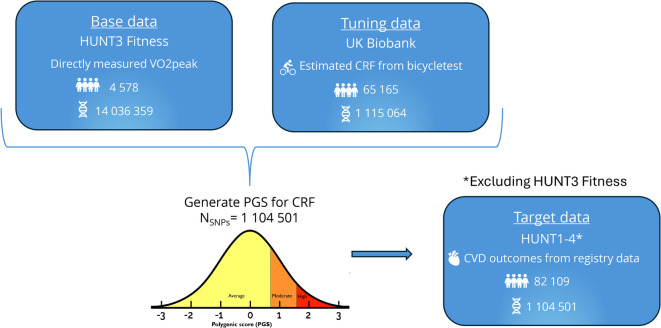 Figure 1
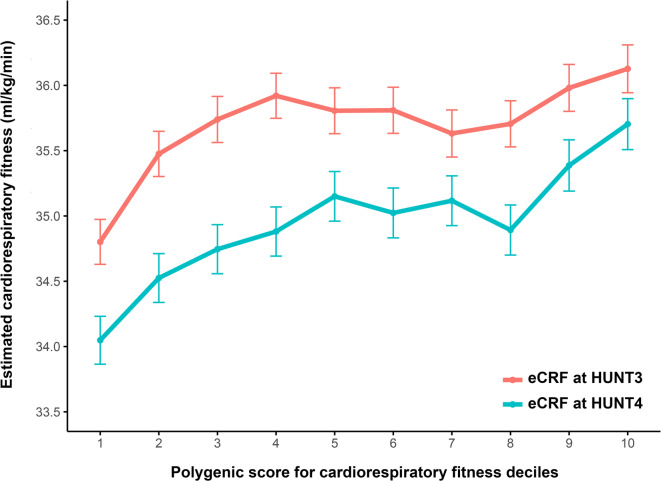 Figure 2
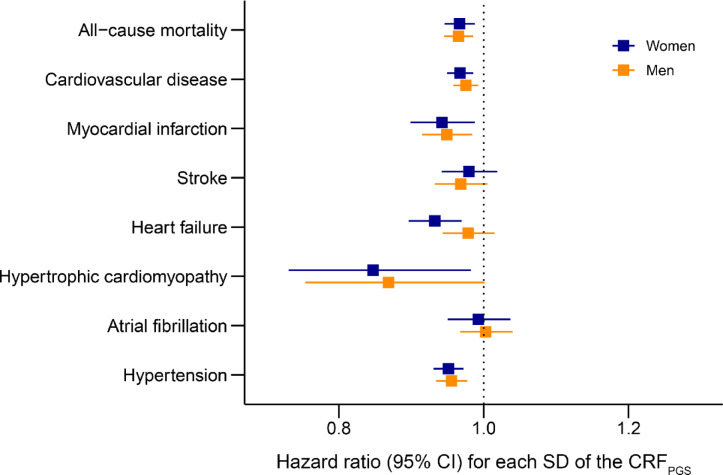 Figure 3
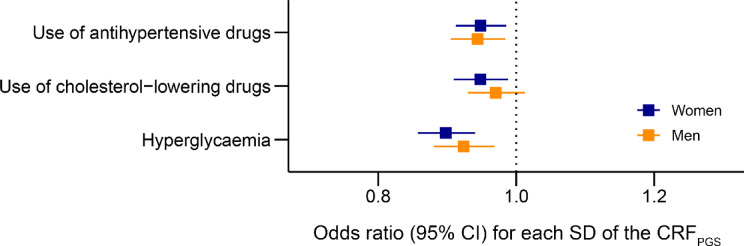 Figure 4
Peer Reviews
No public reviews on file for this paper yet. If you reviewed it on a platform where reviews are public (OpenReview, ICLR, NeurIPS, ICML), you can paste yours below so the community can read it here.
Videos
No videos yet. Explain this paper in a talk, walkthrough, or lecture? Add one.
Taxonomy
TopicsGenetic Associations and Epidemiology · Genetics and Physical Performance · Cardiovascular Function and Risk Factors