Neural dissociation of attention and working memory through inhibitory control
Yueyao Liu, Yingtao Fu, Enze Tang, Hang Wu, Junrong Han, Musi Xie, Yihui Zhang, Bo Peng, Jinhao Huang, Hanjun Liu, Hui Chen, Pengmin Qin

TL;DR
This study shows that attention and working memory are separate brain processes, with a specific brain region controlling which information is stored.
Contribution
The study provides causal evidence that attention and working memory encoding are dissociable processes mediated by inhibitory control in the supramarginal gyrus.
Findings
The supramarginal gyrus (SMG) is identified as a key region for dissociating attention from working memory encoding.
Neuromodulation experiments confirm that enhancing SMG activity strengthens inhibitory control over attentional representations.
Transcranial magnetic stimulation provides causal evidence supporting the dissociation with spatial precision.
Abstract
Attention and working memory (WM) have traditionally been considered closely linked processes with shared neural mechanisms. In information selection, attention is often conceptualized as a gatekeeper to WM, regulating which information is encoded and stored. Here, combining tasks specifically designed to separate attention from WM encoding with a multimodal approach, we provide converging neural and causal evidence that these processes are dissociable. Functional MRI identifies the supramarginal gyrus (SMG) as the key region enabling this dissociation, while dynamic causal modeling reveals the neural circuitry through which the SMG exerts inhibitory control over attentional representations, regulating their integration into WM. Furthermore, neuromodulation via transcranial direct current stimulation (tDCS) demonstrates that enhancing SMG activity strengthens this inhibitory control. A…
Genes, proteins, chemicals, diseases, species, mutations and cell lines named across the full text — each resolved to its canonical identifier and authoritative record.
Click any figure to enlarge with its caption.
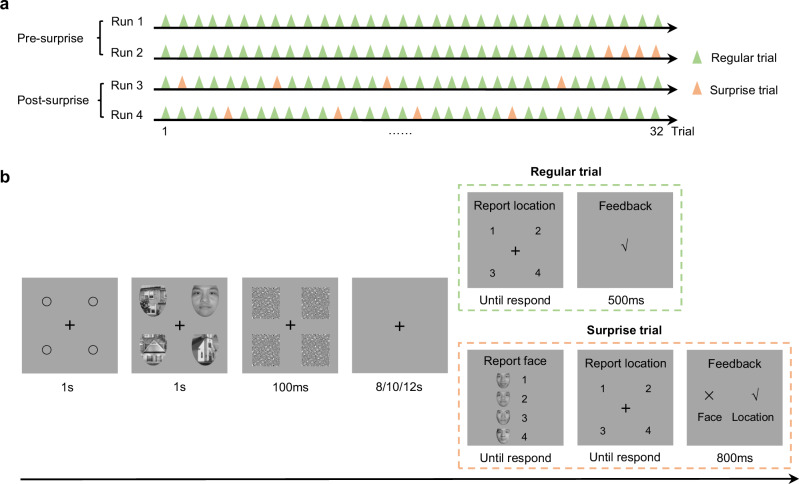 Figure 1
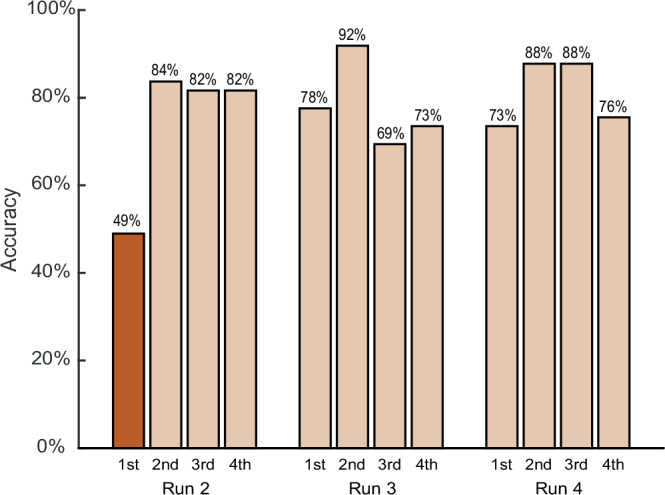 Figure 2
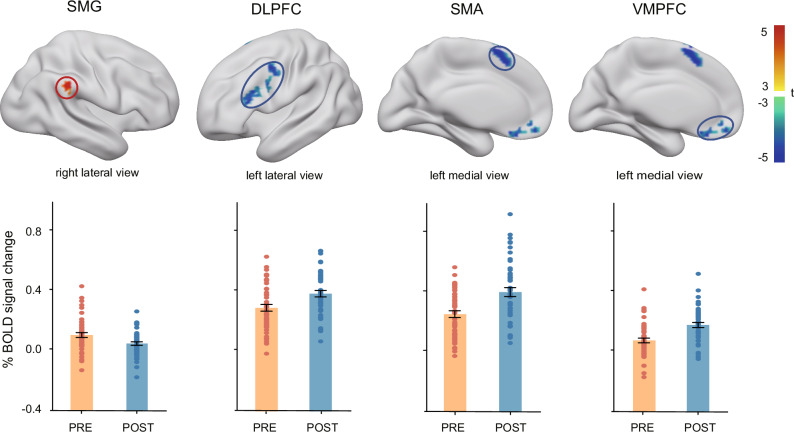 Figure 3
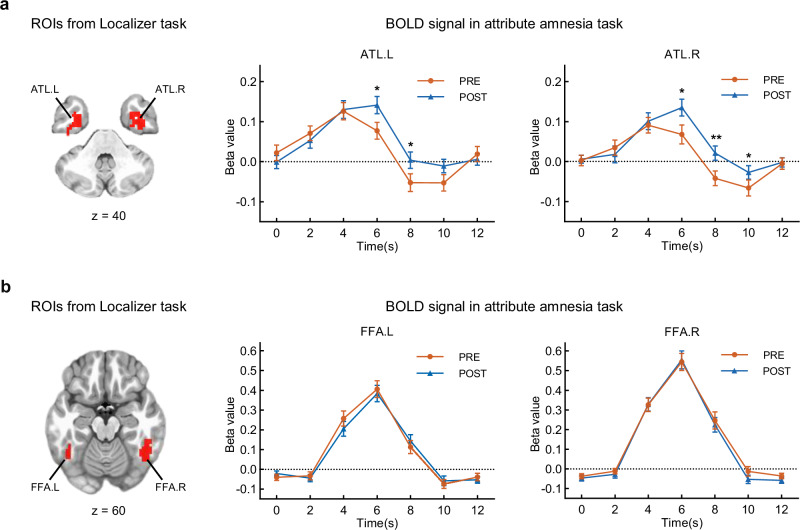 Figure 4
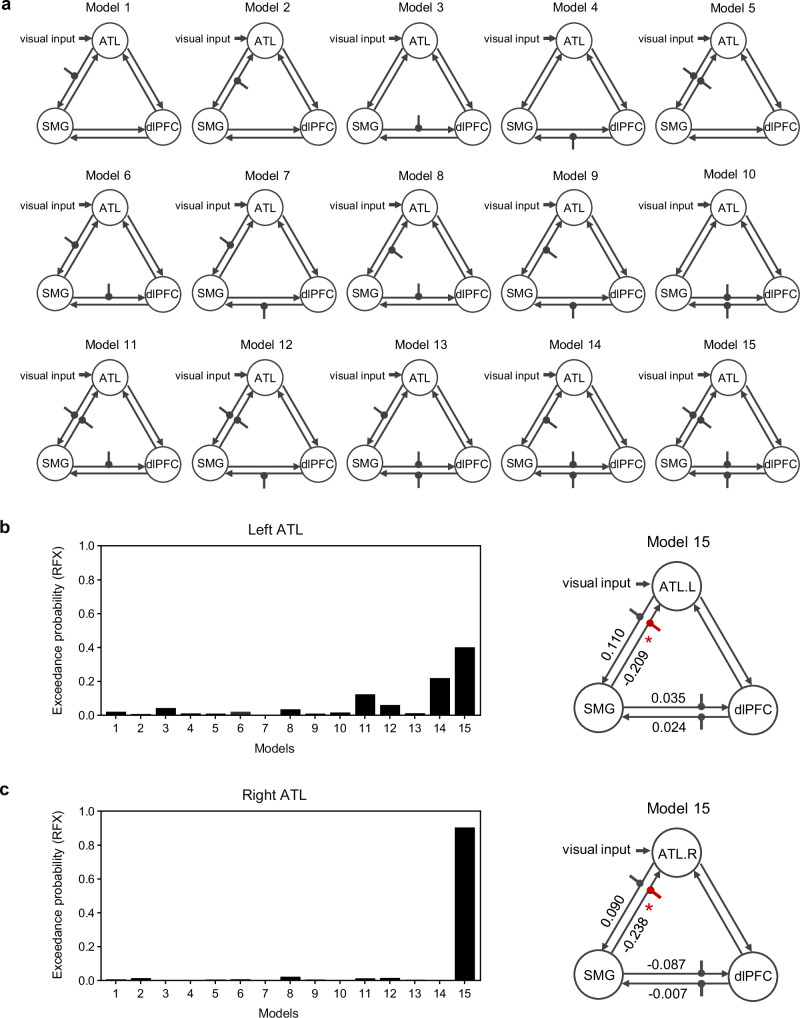 Figure 5
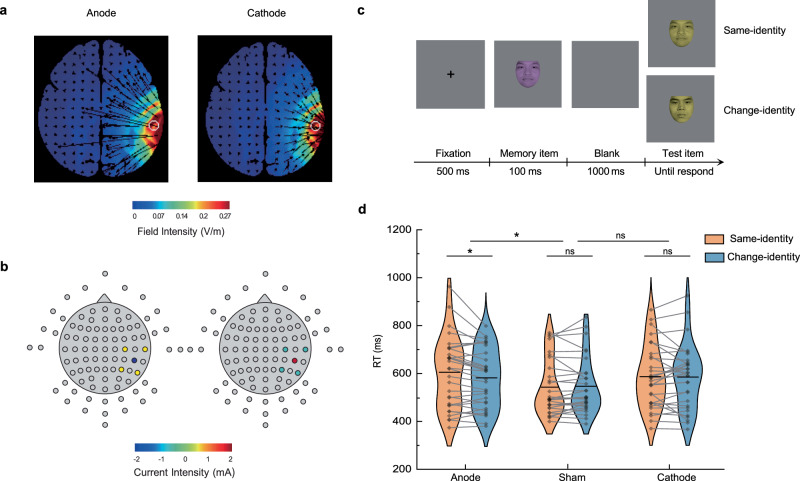 Figure 6
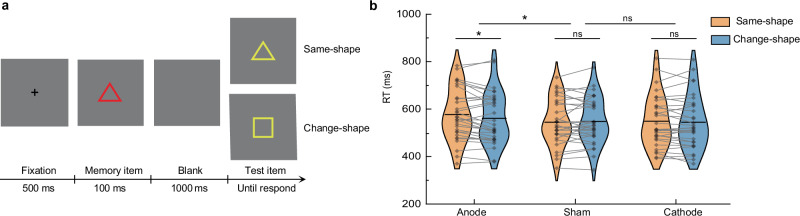 Figure 7
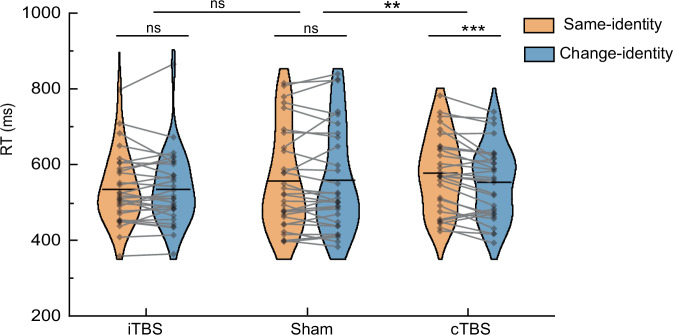 Figure 8
Peer Reviews
No public reviews on file for this paper yet. If you reviewed it on a platform where reviews are public (OpenReview, ICLR, NeurIPS, ICML), you can paste yours below so the community can read it here.
Videos
No videos yet. Explain this paper in a talk, walkthrough, or lecture? Add one.
Taxonomy
TopicsNeural and Behavioral Psychology Studies · Transcranial Magnetic Stimulation Studies · Neural dynamics and brain function