Sex, early life adversity, and negative self-evaluation shape the association between negative life events and depressive symptoms in adolescence
Kate Ryan Kuhlman, Elizabeth E. Antici, Haley Dveirin, Mai-Lan M. Tran, Natalie A. Hall, Paul Delacruz, Julienne E. Bower

TL;DR
This study shows that sex and early life adversity influence how negative life events relate to depressive symptoms in adolescents.
Contribution
The study reveals sex-specific and ELA-dependent associations between negative events and depressive symptoms in adolescents.
Findings
Higher between-person negative events correlate with increased depressive symptoms, especially dysphoric mood and somatic complaints.
Females with more negative events show greater increases in negative self-evaluation symptoms compared to males.
Adolescents with high early life adversity experience more depressive symptoms and worsening symptoms over time with more negative events.
Abstract
Adolescent depression is an increasing public health concern. Recent experiences of negative events are associated with an increase in depressive symptoms and onset of major depression, but how factors such as sex and early life adversity (ELA) influence this association remains unclear. Data included 388 observations comprised of self-reported negative events and depressive symptoms measured every 4 months across a 12-month period by 97 adolescents oversampled for ELA and aged 11–17 (46.4% female). Higher between-person averages in negative events were associated with greater total depressive symptoms, specifically dysphoric mood and somatic complaints. Within-person variability in negative events was not associated with total depressive symptoms or any symptom subscales. Females with higher between-person negative events reported larger increases in negative self-evaluation symptoms…
Genes, proteins, chemicals, diseases, species, mutations and cell lines named across the full text — each resolved to its canonical identifier and authoritative record.
Click any figure to enlarge with its caption.
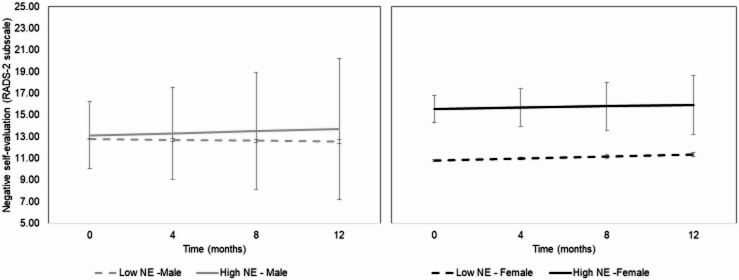 Figure 1
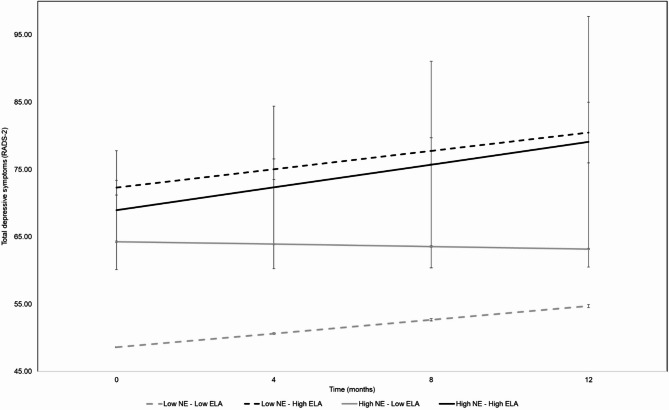 Figure 2
Peer Reviews
No public reviews on file for this paper yet. If you reviewed it on a platform where reviews are public (OpenReview, ICLR, NeurIPS, ICML), you can paste yours below so the community can read it here.
Videos
No videos yet. Explain this paper in a talk, walkthrough, or lecture? Add one.
Taxonomy
TopicsChild and Adolescent Psychosocial and Emotional Development · Anxiety, Depression, Psychometrics, Treatment, Cognitive Processes · Mental Health Research Topics