Divergent oncogenic signaling and immune microenvironment changes in low-grade serous ovarian cancer patients undergoing intraperitoneal chemotherapy
Isaac Bishara, Patrick A. Cosgrove, Sumana Majumdar, Colt A. Egelston, Oscar Colunga Flores, Brad Nakamura, Nora Ruel, Paul H. Frankel, Susan E. Yost, Sue Chang, Alexander Jung, Mihaela Cristea, Mustafa Raoof, Andrea H. Bild, Aritro Nath, Thanh H. Dellinger

TL;DR
This study explores how tumors in low-grade serous ovarian cancer patients change during chemotherapy, revealing differences in signaling and immune responses between patients who respond and those who don't.
Contribution
The study provides novel insights into tumor adaptation mechanisms and immune microenvironment changes during intraperitoneal chemotherapy in low-grade serous ovarian cancer.
Findings
Non-responder tumors showed upregulation of proliferation pathways and KRAS signaling, correlating with resistance.
Responder tumors exhibited downregulation of stress pathways but activated alternative survival mechanisms like PI3K and Wnt/β-catenin.
Responder tumors showed dynamic shifts in metabolic and immune-related subpopulations, while non-responders had greater immunosuppression.
Abstract
Low-grade serous ovarian carcinoma (LGSOC) is a rare, treatment-resistant subtype of ovarian cancer characterized by peritoneal spread. Pressurized Intraperitoneal Aerosol Chemotherapy (PIPAC) delivers chemotherapy directly into the abdomen during serial laparoscopic surgeries, enabling repeated sampling of tumors for longitudinal analysis. Using single-nuclei RNA sequencing on 15 tumor samples across PIPAC cycles in two patients (a responder and a non-responder), we tracked molecular and cellular changes over time. Non-responder tumors showed upregulation of proliferation pathways (E2F, MYC, G2/M), KRAS signaling, epithelial-mesenchymal transition, and unfolded protein response, correlating with resistance. Responder tumors exhibited downregulation of proliferation and stress pathways but activated alternative survival mechanisms (PI3K, Wnt/β-catenin, Notch). Archetype analysis…
Genes, proteins, chemicals, diseases, species, mutations and cell lines named across the full text — each resolved to its canonical identifier and authoritative record.
Click any figure to enlarge with its caption.
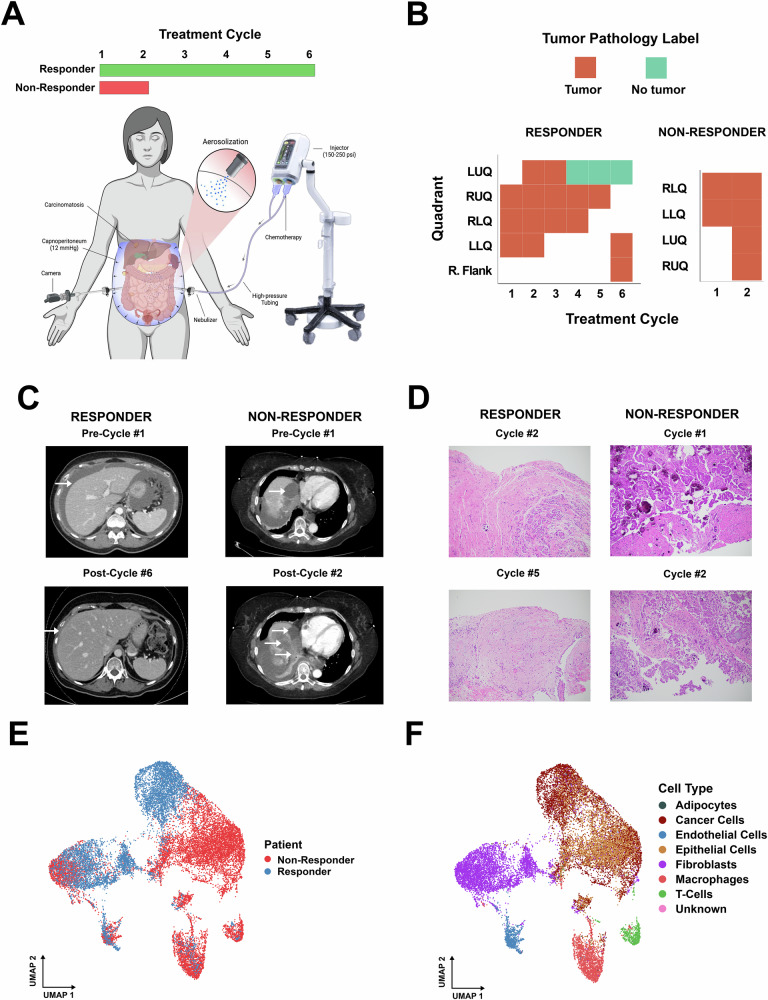 Figure 1
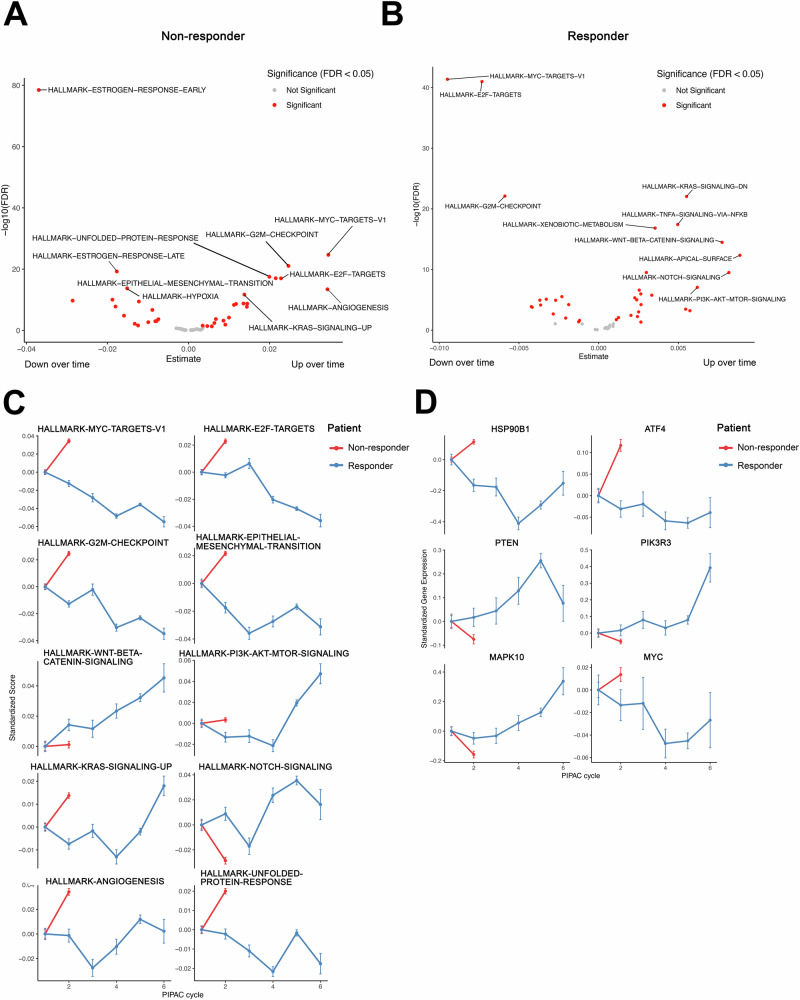 Figure 2
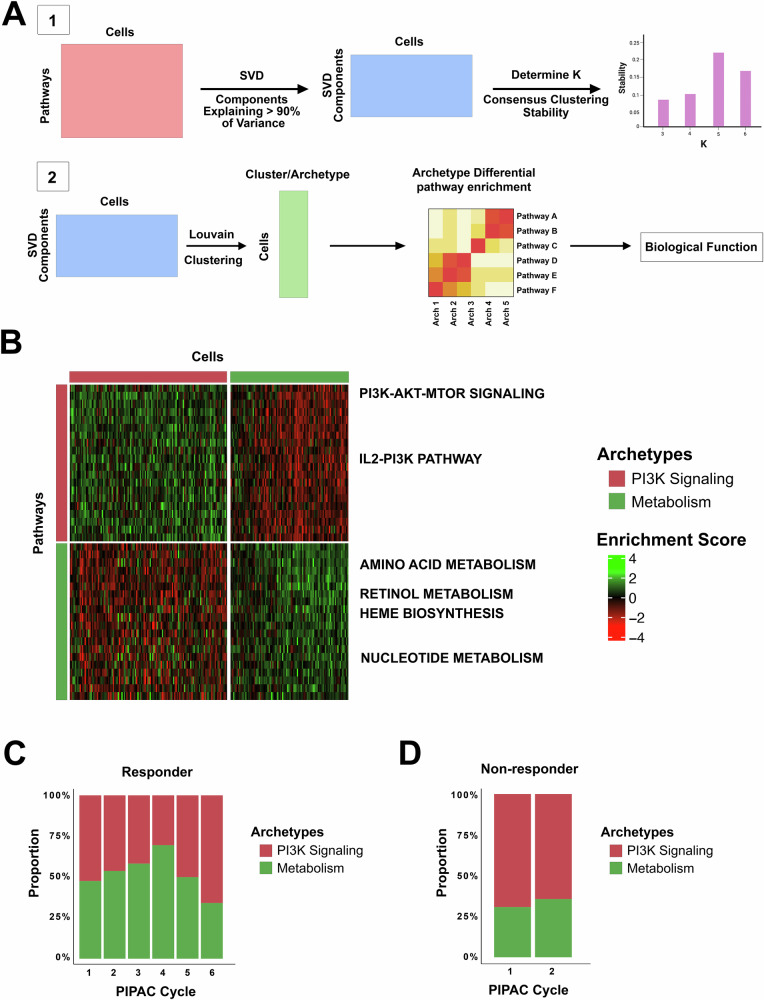 Figure 3
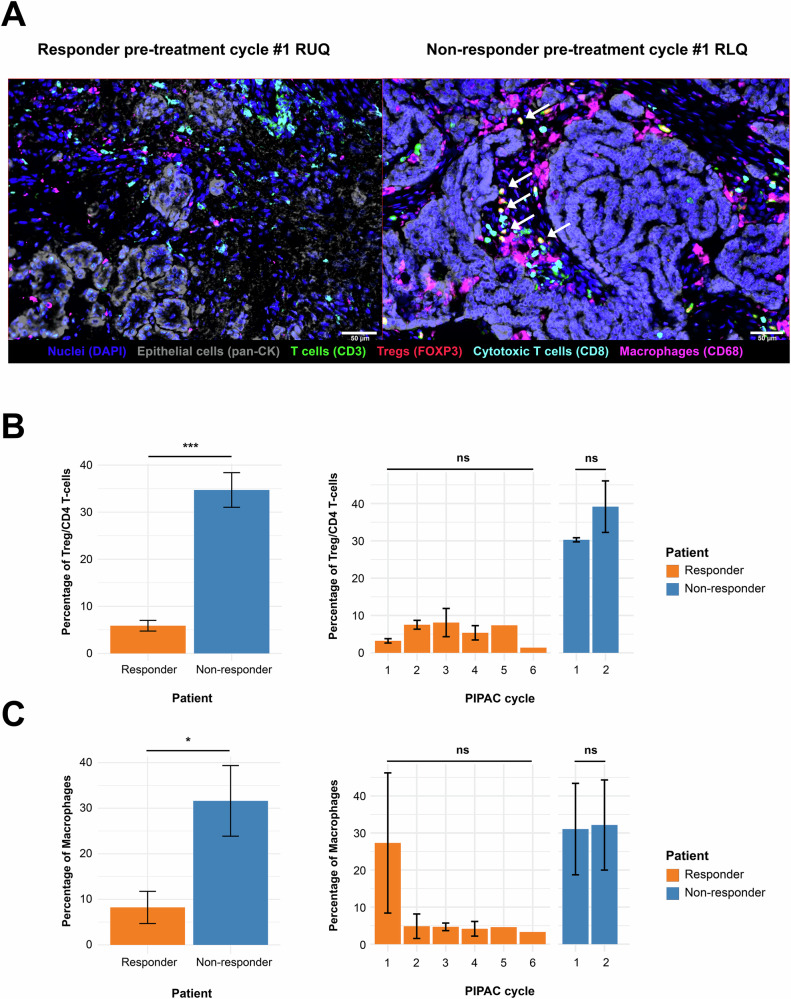 Figure 4
Peer Reviews
No public reviews on file for this paper yet. If you reviewed it on a platform where reviews are public (OpenReview, ICLR, NeurIPS, ICML), you can paste yours below so the community can read it here.
Videos
No videos yet. Explain this paper in a talk, walkthrough, or lecture? Add one.
Taxonomy
TopicsOvarian cancer diagnosis and treatment · Intraperitoneal and Appendiceal Malignancies · Ferroptosis and cancer prognosis