Targeting TRAF3IP2 disrupts cellular energetics through inhibition of NAMPT in triple negative breast cancer
Kurtis Willingham, Amin Izadpanah, Yasmine Rashad, Antonia Reilich, Fatemeh Daneshimehr, Steven Braun, Eckhard U. Alt, Reza Izadpanah

TL;DR
Disrupting TRAF3IP2 in triple-negative breast cancer cells reduces energy production and increases cell death by affecting key metabolic pathways.
Contribution
This study reveals that TRAF3IP2 inhibition disrupts cellular energetics in TNBC by targeting NAMPT and altering metabolic pathways.
Findings
TRAF3IP2 inhibition decreases NAMPT expression and NAD/ATP production in TNBC cells.
Disruption of TRAF3IP2 affects AMPK/LKB1 and mTOR pathways, increases ROS, and reduces cell viability.
Metabolic heterogeneity is observed between TNBC models like MDA-MB-231 and 4IC based on OCR responses.
Abstract
Triple-negative breast cancer (TNBC) is characterized by extensive metabolic alterations that enable its sustained growth therapeutic resistance. Nicotinamide phosphoribyltransferase (NAMPT) catalyzes the first and rate-limiting step in the nicotinamide dinucleotide (NAD) salvage pathway. Elevated NAMPT is associated with increased aggressiveness and poor prognosis in multiple cancers. Previously, we showed the role of TRAF3IP2 in TNBC tumorigenesis. Here, we aim to show that the anti-tumorigenic effects resulting from TRAF3IP2 inhibition are driven in part by decreases in cellular energetics in TNBC cells. Results show that inhibition of TRAF3IP2 leads to significant decrease in NAMPT expression, reduced NAD and ATP production, and disruption of TNBC bioenergetics through cell line-specific alterations in glycolysis and mitochondrial function. Notably, the established MDA-MB-231 line…
Genes, proteins, chemicals, diseases, species, mutations and cell lines named across the full text — each resolved to its canonical identifier and authoritative record.
Click any figure to enlarge with its caption.
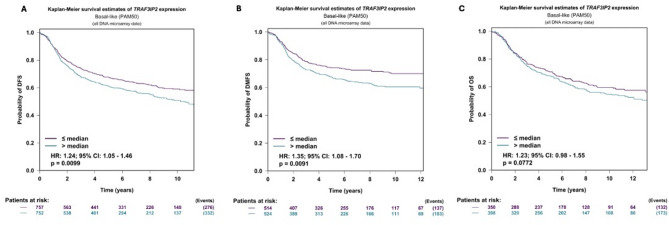 Figure 1
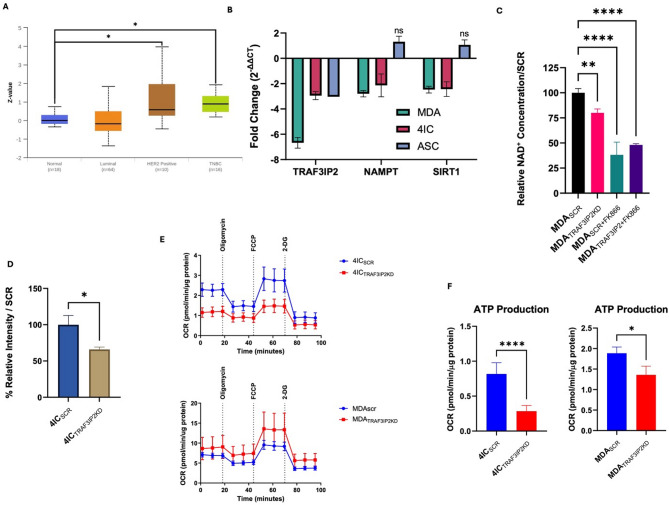 Figure 2
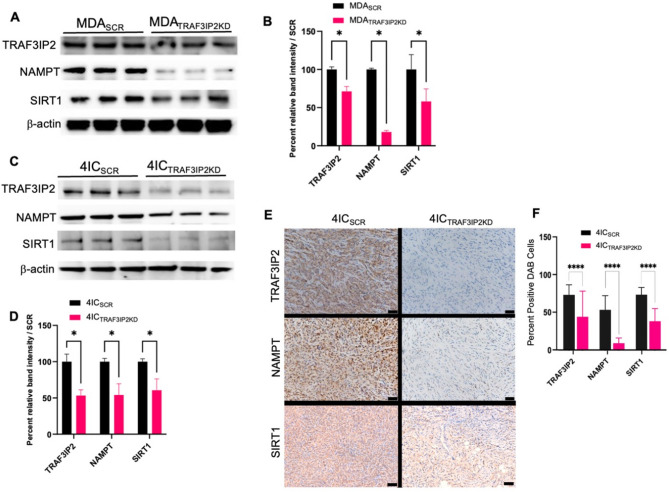 Figure 3
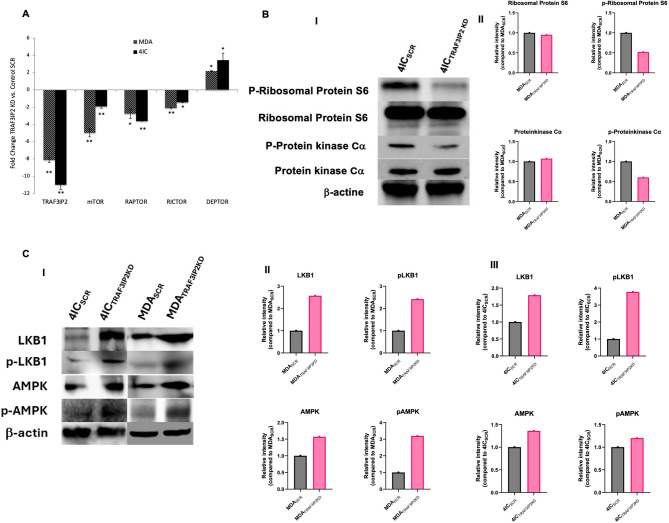 Figure 4
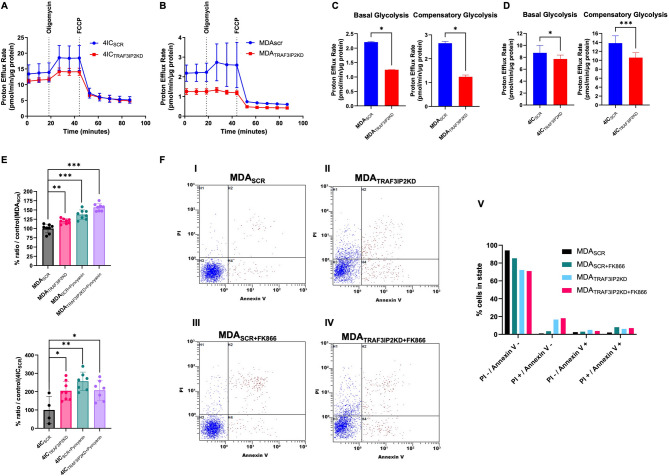 Figure 5
Peer Reviews
No public reviews on file for this paper yet. If you reviewed it on a platform where reviews are public (OpenReview, ICLR, NeurIPS, ICML), you can paste yours below so the community can read it here.
Videos
No videos yet. Explain this paper in a talk, walkthrough, or lecture? Add one.
Taxonomy
TopicsSirtuins and Resveratrol in Medicine · PARP inhibition in cancer therapy · Bioactive natural compounds