An interactive heuristic model to test ecological and evolutionary hypotheses on incipient polyploid species
Juan Sebastián Schneider, Anna Verena Reutemann, Agostina Belén Sassone, Ana Isabel Honfi, Diego Hernán Hojsgaard

TL;DR
This paper introduces a modeling tool to study how new polyploid species form and evolve in complex ecological settings.
Contribution
A scalable, interactive multi-agent model for simulating and analyzing diploid-polyploid interactions and speciation.
Findings
Many polyploidization events are unsuccessful under standard environmental conditions.
Self-fertility and apomixis speed up polyploid establishment and increase success rates.
Ecological niche shifts can either promote coexistence or displacement of cytotypes.
Abstract
Polyploidization is associated with lineage-specific changes that promote divergence and speciation. Knowledge about the establishment of neopolyploids is fragmentary. We use an open-source multi-agent software to build a scalable easy-to-use command center for analysing complex diploid-polyploid interactions. The workspace is a multilayered environment whose eco-variables fluctuate between generations. Reproductive syndromes, recombinant/clonal inheritance and complex traits (adaptivity, niche breadth, dispersal) are used to elicit fitness values and monitor population spatial dynamics. Neopolyploidization was recurrent, polytopic and heterogeneous in time. Increasing rates of unreduced gametes accelerated the establishment of neopolyploids but removed the role of triploids. Under standard rates and heterogeneous environment, model-based evidence shows that (1) a large proportion of…
Genes, proteins, chemicals, diseases, species, mutations and cell lines named across the full text — each resolved to its canonical identifier and authoritative record.
Click any figure to enlarge with its caption.
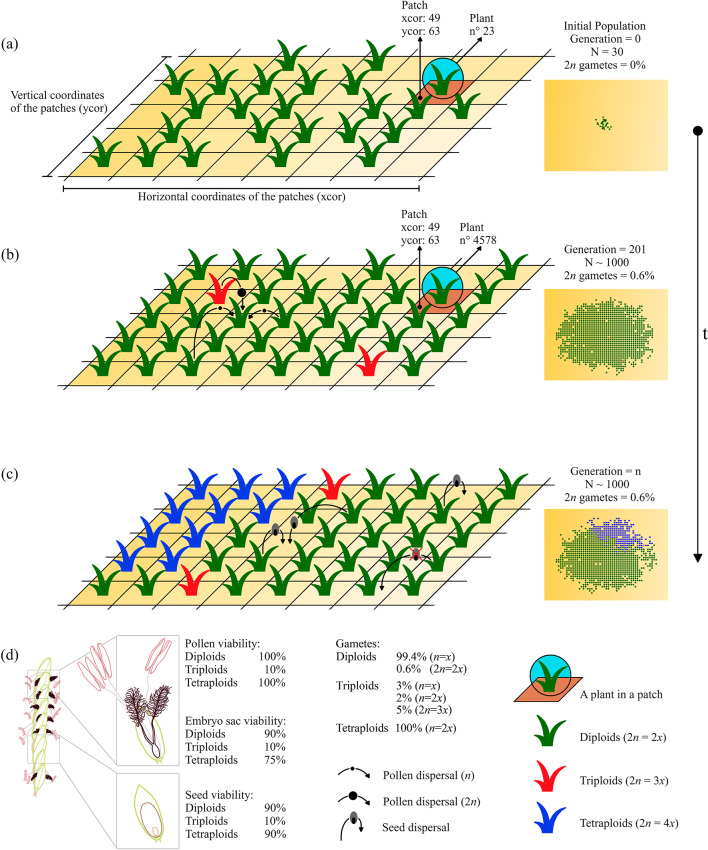 Figure 1
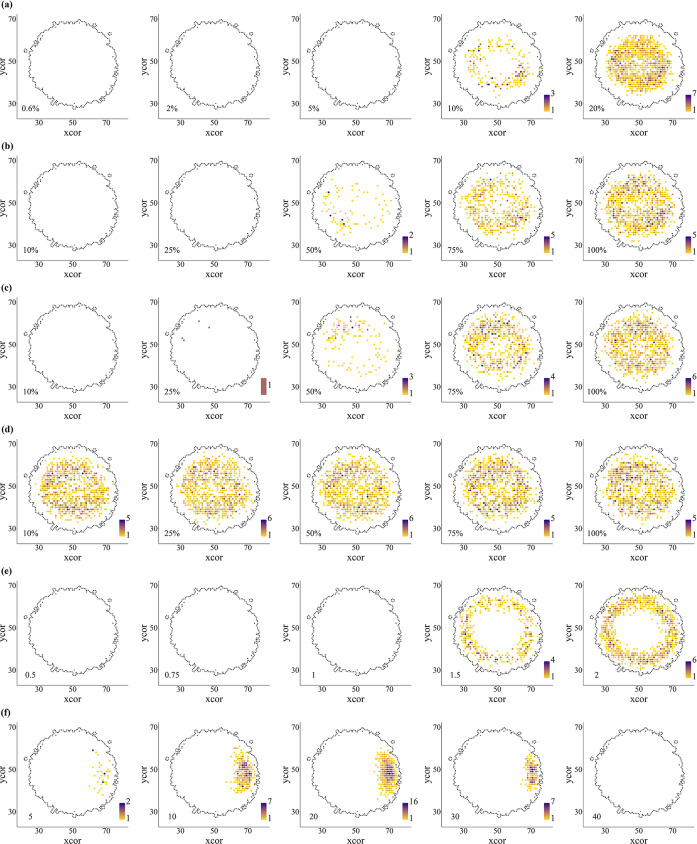 Figure 2
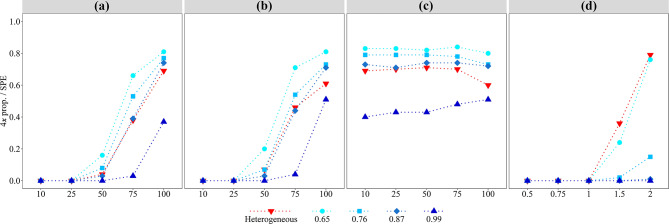 Figure 3
Peer Reviews
No public reviews on file for this paper yet. If you reviewed it on a platform where reviews are public (OpenReview, ICLR, NeurIPS, ICML), you can paste yours below so the community can read it here.
Videos
No videos yet. Explain this paper in a talk, walkthrough, or lecture? Add one.
Taxonomy
TopicsEvolution and Genetic Dynamics · Chromosomal and Genetic Variations · Genomics and Phylogenetic Studies