Dynamic tuning of Bloch modes in anisotropic phonon polaritonic crystals
Junbo Xu, Ke Yu, Xiang Ni, Enrico M. Renzi, Lei Zhou, Yanzhen Yin, Zhou Zhou, Zhichen Zhao, Tao He, Di Huang, Kyoung-Duck Park, Zhanshan Wang, Andrea Alù, Tao Jiang

TL;DR
Researchers developed a way to dynamically control light at the nanoscale using a graphene-gated crystal, enabling adaptive nanophotonics.
Contribution
The study introduces electrostatic tuning of anisotropic phonon-polaritonic Bloch modes for dynamic nanoscale light manipulation.
Findings
Electrostatic gating reshapes the band structure of phonon polaritonic crystals.
Dynamic modulation enables selective amplification of Bloch mode resonances.
On-demand switching of far-field leakage is achieved through band steering.
Abstract
Phonon polaritons, arising from the coupling of photons with lattice vibrations, enable light confinement on deeply subwavelength scales. Phonon polaritonic crystals (PoCs), leveraging these inherently low-dissipation excitations, have further shown exceptional potential for nanoscale light manipulation through engineered Bloch modes. Yet, their static nature has so far hindered dynamic modulation, thus limiting their adaptability for real-time applications. Here, we demonstrate in situ electrostatic control of low-loss anisotropic phonon-polaritonic Bloch modes in α-MoO3 patterned into a periodic hole array with a graphene gate. Through theoretical calculation and real-space nano-imaging, we show that electrostatic gating dynamically modulates key characteristics of Bloch modes in hybrid α-MoO3/graphene PoCs. Critically, gating reshapes the PoC band structure, spectrally aligning…
Genes, proteins, chemicals, diseases, species, mutations and cell lines named across the full text — each resolved to its canonical identifier and authoritative record.
Click any figure to enlarge with its caption.
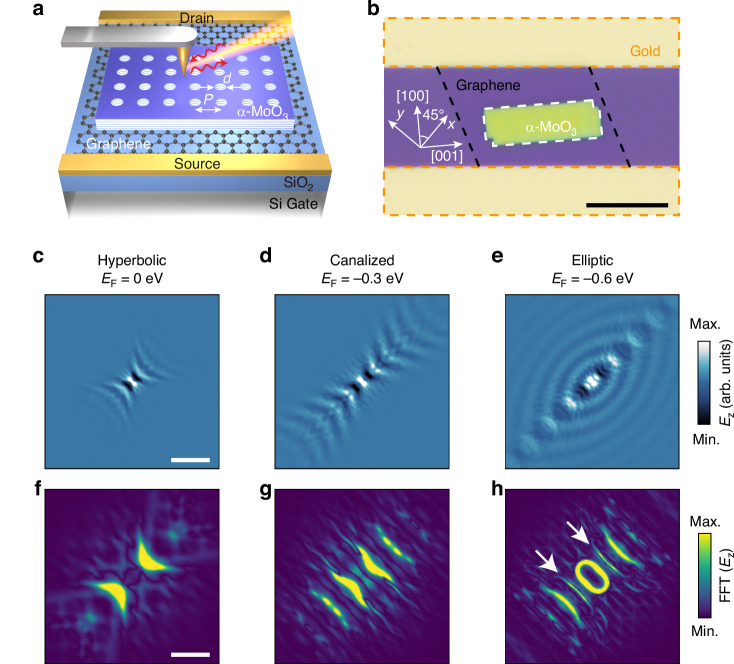 Figure 1
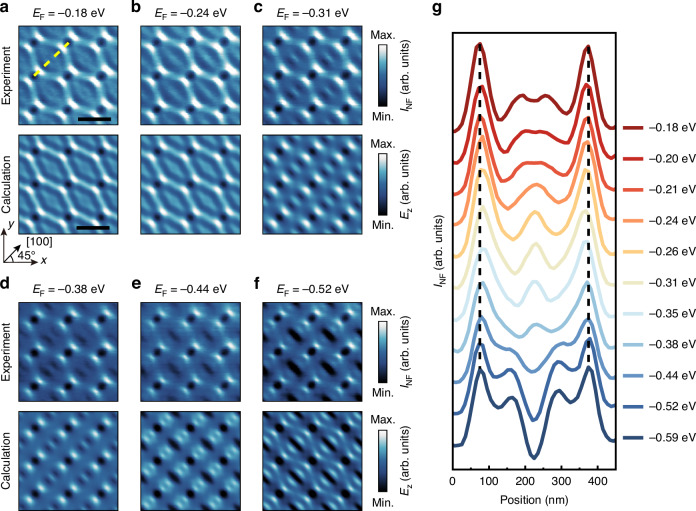 Figure 2
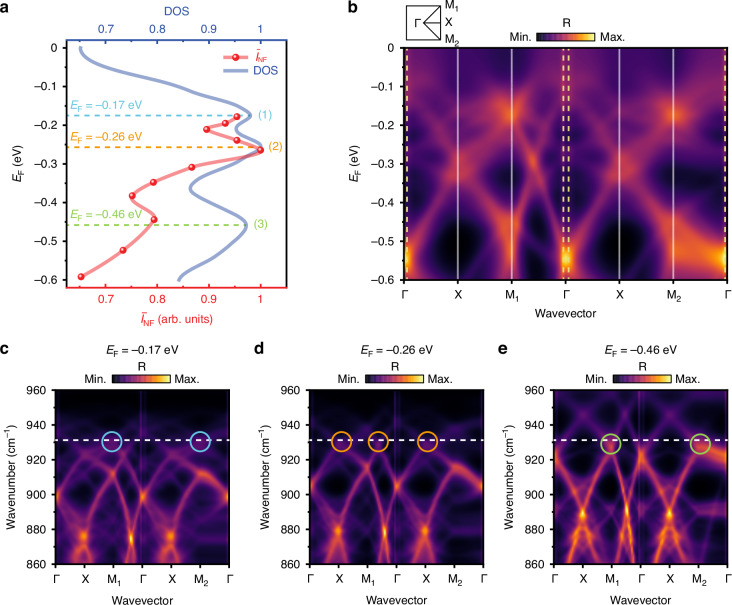 Figure 3
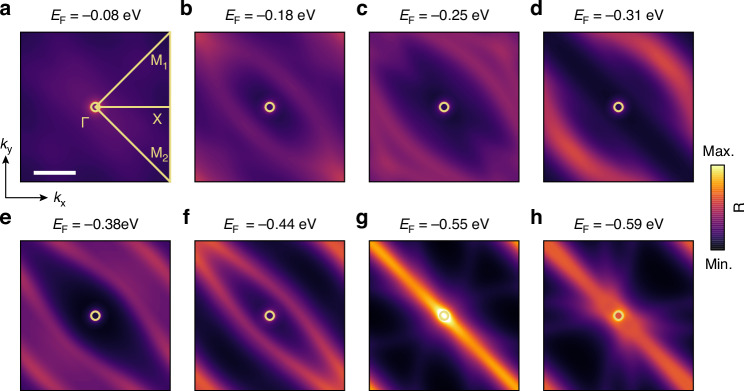 Figure 4
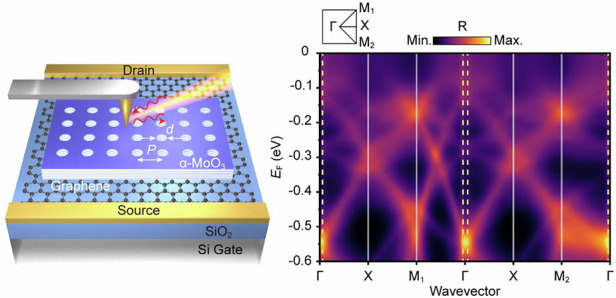 Figure 5
Peer Reviews
No public reviews on file for this paper yet. If you reviewed it on a platform where reviews are public (OpenReview, ICLR, NeurIPS, ICML), you can paste yours below so the community can read it here.
Videos
No videos yet. Explain this paper in a talk, walkthrough, or lecture? Add one.
Taxonomy
TopicsMechanical and Optical Resonators · Plasmonic and Surface Plasmon Research · Thermal Radiation and Cooling Technologies