Fuel-Powered Soft Actuators: Emerging Strategies for Autonomous and Miniaturized Robots
Cheng Zhou, Zhoutao Li, Hailong Wei, Guorong Zhang, Fengrui Zhang, Xiaoshuang Zhou, Hongwei Hu, Guanggui Cheng, Jianning Ding, Shi Hyeong Kim, Ray H. Baughman, Xinghao Hu

TL;DR
This paper reviews fuel-powered soft actuators, which can enable autonomous and miniaturized robots by converting chemical energy into mechanical motion.
Contribution
The paper provides a comprehensive review of working principles, applications, and future directions for fuel-powered soft actuators.
Findings
Fuel-powered actuators offer high power density for long-distance and miniaturized robot operations.
Chemical energy can be converted into mechanical energy through various methods like combustion or charge injection.
Challenges remain in energy supply for soft actuators, but fuel-driven solutions show promise for self-sustaining systems.
Abstract
Fuel-powered soft actuators are elucidated in terms of their high power densities, enabling robots to operate effectively in long-distance or miniaturized environments.The working principles, applications, and potential future improvements of typical fuel-powered actuators are comprehensively reviewed and discussedExisting challenges and the future pathways for fuel-powered soft robots are delineated. Fuel-powered soft actuators are elucidated in terms of their high power densities, enabling robots to operate effectively in long-distance or miniaturized environments. The working principles, applications, and potential future improvements of typical fuel-powered actuators are comprehensively reviewed and discussed Existing challenges and the future pathways for fuel-powered soft robots are delineated. Soft actuators, capable of producing mechanical work in response to external…
Genes, proteins, chemicals, diseases, species, mutations and cell lines named across the full text — each resolved to its canonical identifier and authoritative record.
Click any figure to enlarge with its caption.
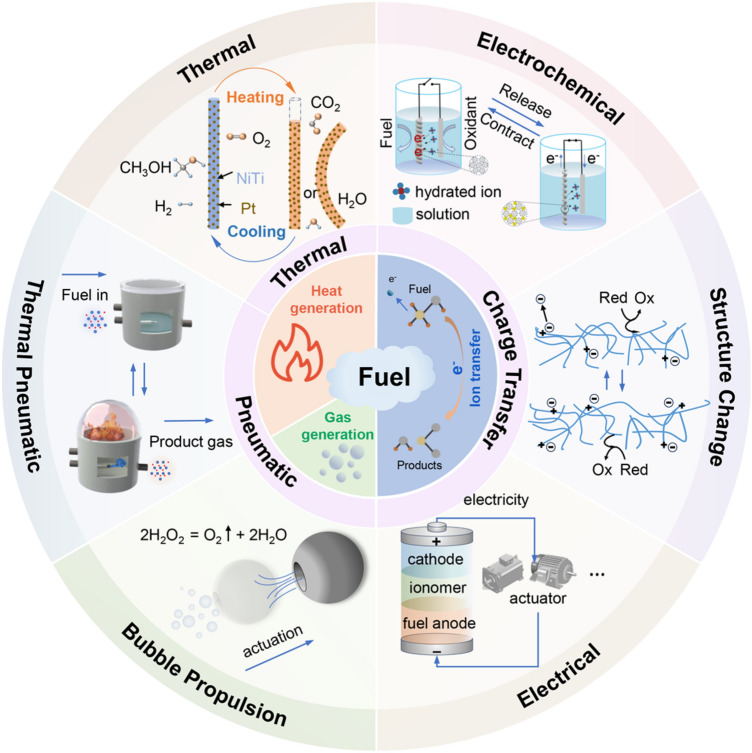 Figure 1
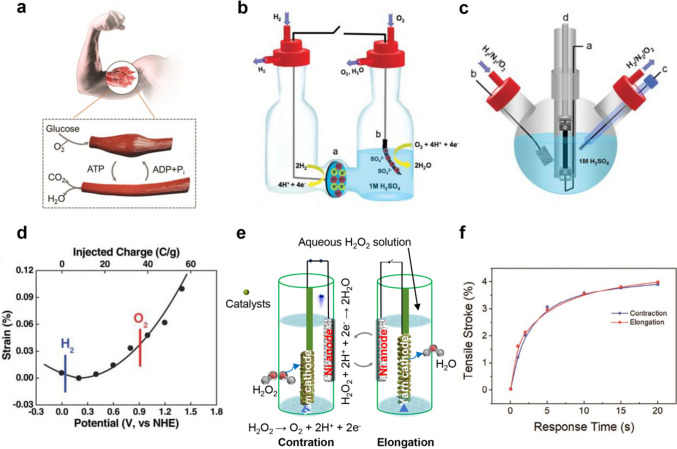 Figure 2
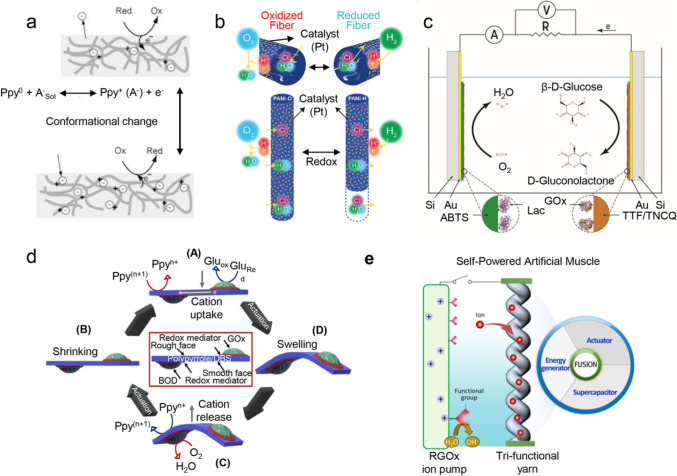 Figure 3
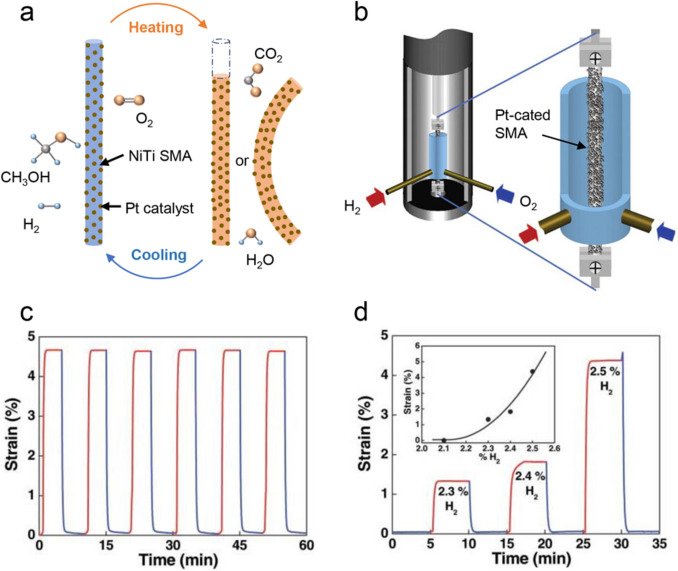 Figure 4
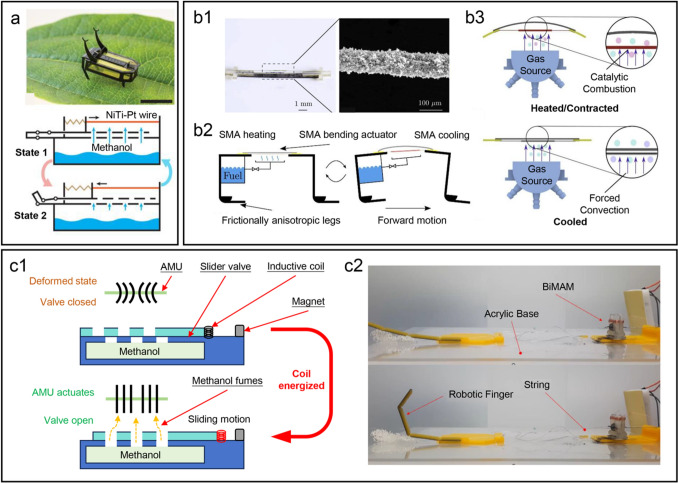 Figure 5
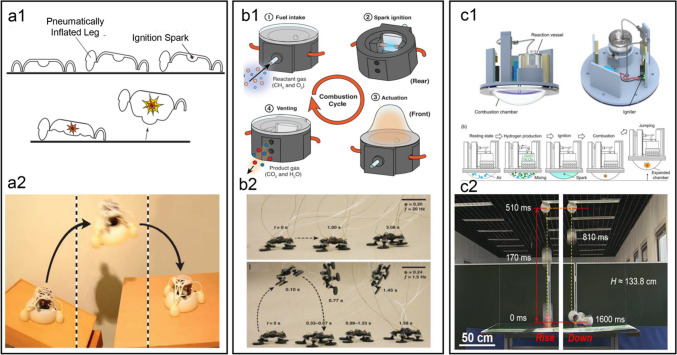 Figure 6
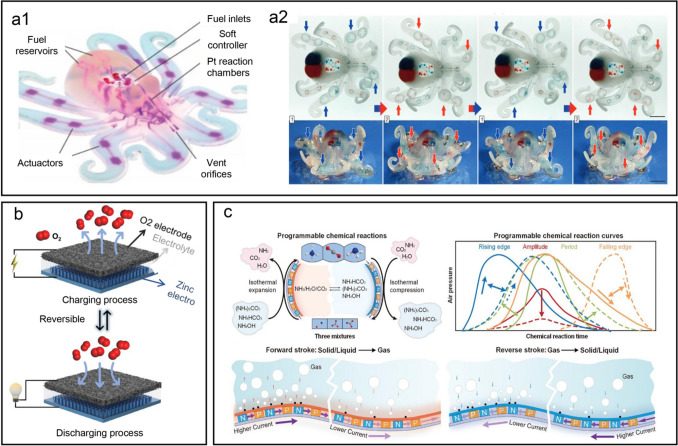 Figure 7
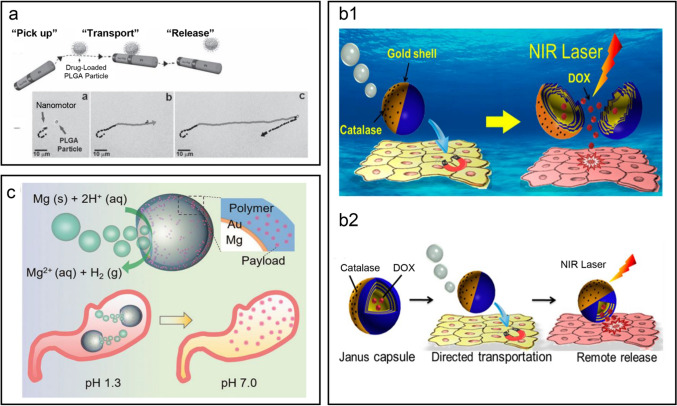 Figure 8
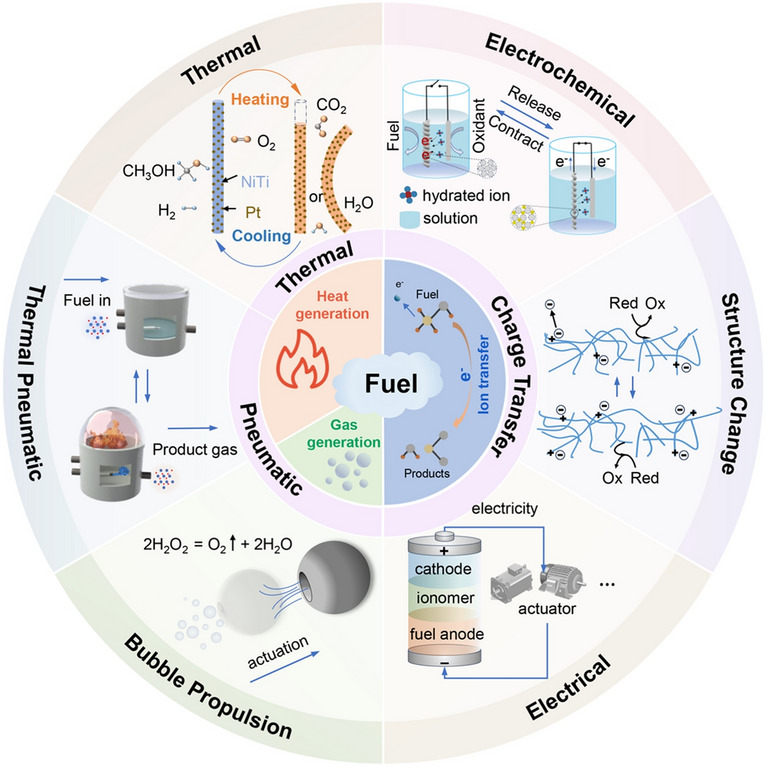 Figure 9
Peer Reviews
No public reviews on file for this paper yet. If you reviewed it on a platform where reviews are public (OpenReview, ICLR, NeurIPS, ICML), you can paste yours below so the community can read it here.
Videos
No videos yet. Explain this paper in a talk, walkthrough, or lecture? Add one.
Taxonomy
TopicsSoft Robotics and Applications · Prosthetics and Rehabilitation Robotics · Dielectric materials and actuators